
Two X-class flares from the Sun cause radio blackouts in the Pacific and Asia

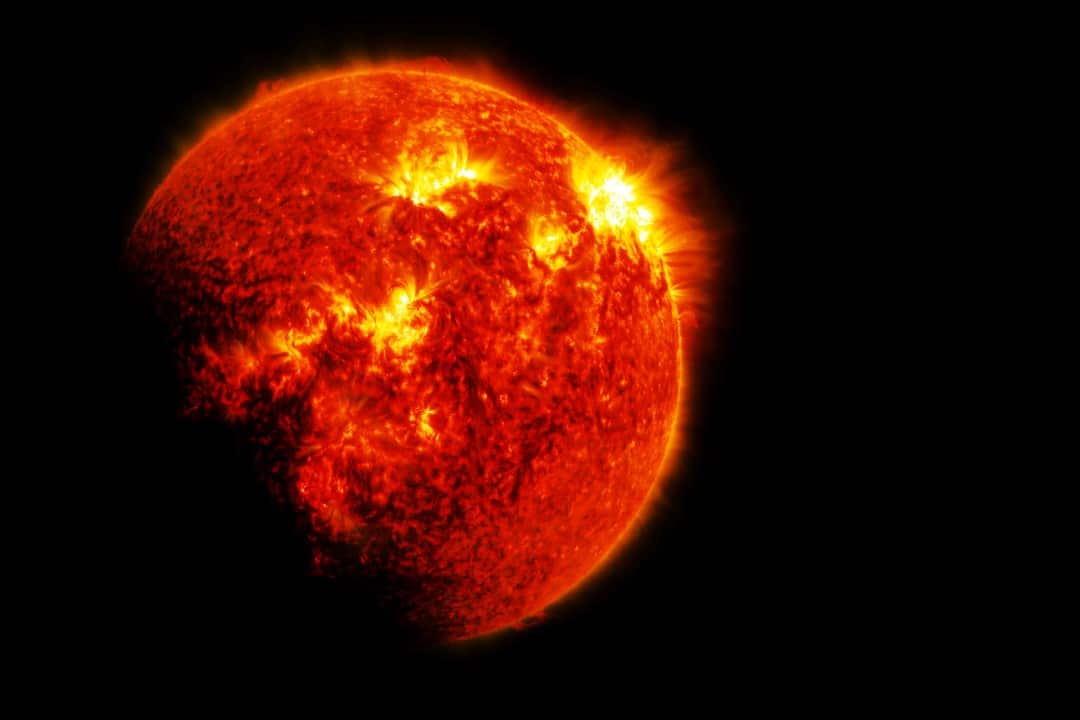
Sol emitted two X-class solar flares just seven hours apart. The first peaked at 01:07 UTC on April 24. The second occurred around 08:13 UTC on the same day. Ambas departed from the active sunspot region AR4419. The events caused brief interruptions in high-frequency radio communications on the day side of the planet.
The first eruption registered intensity X2.4. Ela mainly affected areas offshore of Filipinas and south of Japão. The second, from X2.5, impacted Oceano Índico, including the region close to the island of Socotra. The blackouts lasted a few minutes, but were classified as R3, that is, strong on the NOAA scale.
Região AR4419 focuses on recent activity
Sunspot AR4419 is near the western limb of Sol. Therefore, it tends to disappear from Terra’s view in the coming days. Antes of the X eruptions, the region had already produced several M-class eruptions throughout April 23. One of them reached M4.9.
Esses events preceded the two most intense explosions. AR4419 gained beta-gamma-delta magnetic complexity. Essa configuration favors greater energetic releases. Observadores also noticed a sympathetic rash in separate regions of Sol the day before.
- The first X2.4 started around 00:51 UTC and lasted around 22 minutes.
- The second X2.5 started at 08:01 UTC and ended at 08:18 UTC.
- Ambas generated type II radio emissions, shock wave signal.
- Imagens from the GOES-19 satellite captured the intense flashes.
The data comes from NOAA real-time monitoring. The region can still produce more activity before rotating to the hidden side.

Apagões radio achieve high frequency communications
Radiation from the eruptions ionized the lower layer of the ionosphere. Isso affected radio waves between 3 and 30 MHz. Long-distance Sinais weakened or temporarily disappeared in areas illuminated by Sol at the time of the spikes.
The first event focused outages on Pacífico and parts of Austrália. The second impacted East Asia with greater intensity. Operadores from amateur radio and aviation services reported brief losses of contact on HF bands.
NOAA uses the D-RAP product to map these blackouts. The graphs showed strong absorption in layer D of the ionosphere. Recuperação occurred minutes after the X-radiation subsided.
Coronal mass Ejeções can track events
Initial Análises indicate that the eruptions produced coronal mass ejections. Como to AR4419 is on the western edge, trajectories mostly point away from Terra. Modelos is still evaluating a possible oblique impact.
If solar material arrives, moderate geomagnetic storm conditions may arise. Boreal Auroras would be limited to high latitudes. Até At the moment, there are no predictions of strong direct effects on the Earth’s magnetic field.
Meteorologistas spacecraft continues tracking with coronagraph data. Qualquer update on CME direction comes out in the next few hours.
Como work X-class solar flares
Erupções solar panels release intense pulses of electromagnetic radiation. Elas are measured by X-ray emission in the range of 0.1 to 0.8 nanometers. Class X represents the highest level on the scale, with each letter indicating ten times more intensity.
The radiation travels at the speed of light and reaches Terra in about eight minutes. Upon reaching the ionosphere, the density of charged particles increases. High-frequency radio Ondas, which rely on reflection in these layers, undergo absorption.
Eventos like these are common at the peak of solar cycle 25. Overall Sol activity has been increasing in recent months. Active Regiões like AR4419 contribute to momentary spikes.
Monitoramento continues on the international network
Satélites like NOAA’s GOES-19 provide real-time data. Ultraviolet Imagens shows the flashes and structure of the spots. Outros observatories complement with magnetic field analysis.
Especialistas follows the evolution of AR4419 and other nearby regions, such as AR4420 and AR4421. Algumas has already generated smaller eruptions in the period. Sol should maintain a moderate to high level of activity in the coming days.
Data confirmed from multiple sources indicates that the two X events were the strongest in a recent short interval. Não has reported damage to satellites or terrestrial infrastructure so far.





