Drop in the value of the PlayStation 5 Pro depletes physical stocks and boosts the digital market
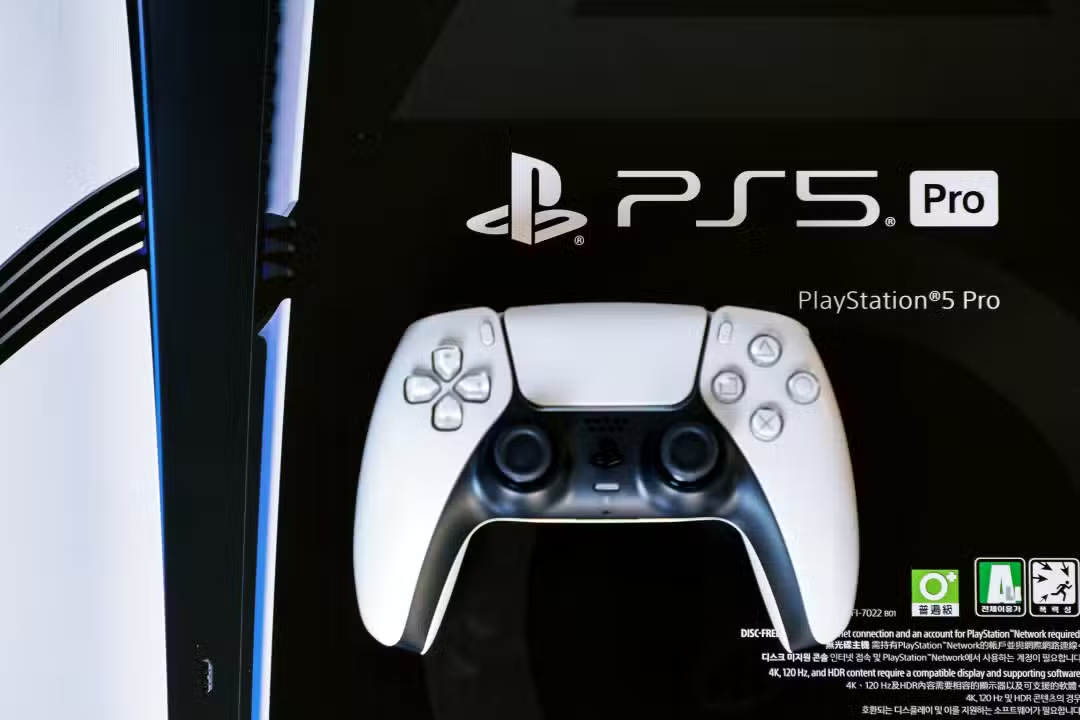
The recent devaluation of the PlayStation 5 Pro caused the sudden depletion of physical stocks in large retail chains and official Sony channels. The move took the technology market by surprise during a period of restructuring in the sector. Consumidores migrated en masse to online sales platforms in search of the latest units available on virtual shelves. The scarcity of the physical device occurs simultaneously with a structural change in player behavior on a global scale.
The disappearance of shelves exposed the fragility of parallel commerce and accelerated the definitive transition to digital media consumption. Unofficial Revendedores, who hoarded the high-performance console in the hope of exorbitant profits, are now facing a scenario of stagnation. The design focused on the digital format changed the dynamics of international distribution. Traditional Lojas feel the direct impact on the survival of their businesses and are looking for new ways to attract the public.
Prejuízo Targets Scalpers After Retail Shift
The practice of buying entire batches of consoles for resale lost strength with the new market reality. Cambistas invested heavily in acquiring premium hardware right after the product was announced. The expectation was to resell the equipment with profit margins of up to three times the original value. The plan failed. Sony has implemented severe user purchasing restrictions and optimized the supply chain to avoid artificial shortages.
The practical result was the stranding of thousands of units in the hands of middlemen. Plataformas of auction and commerce sites between individuals record a sharp drop in prices charged by these independent sellers. Muitos tries to liquidate the stock below the official cost to minimize the financial hole accumulated in recent weeks. The risk associated with this type of commerce has increased significantly with the manufacturers’ new policies.
The lack of an official guarantee, the absence of technical support and the risk of system blocking keep end buyers away. Consumers prefer to wait for restocks in authorized stores rather than risk large amounts on the gray market. Essa The public’s change in attitude stifled the main source of income for organized resale groups. The stranding of high-value products immobilized the capital of these operators.
Transição Accelerated for the Diskless Ecosystem
The Japanese manufacturer’s business model points to the gradual elimination of disc readers. The base version of the most recent console already reaches consumers without the physical reading component. The piece is sold separately as an optional accessory for those who still have old collections. Essa strategy reduces manufacturing, transportation and storage costs on a global scale. The digital format maximizes the company’s profitability by eliminating physical logistics.
The absence of a built-in reader directly affects the physical store chain. Traditional retail has always depended on the sale of games on disc and the used title market to keep its doors open. The drastic reduction in the circulation of physical media forces merchants to rethink the use of commercial space. The sales focus has migrated to high-value-added products that complement the user’s virtual experience.
The new consumption profile requires quick adaptations from store managers and retail buyers. Establishments now highlight peripheral equipment that improves the performance of online games and immersion in virtual worlds.
- Monitores and televisions support 120Hz refresh rates for fluid images.
- Unidades high-speed SSD storage for internal memory expansion.
- Elite Controles with interchangeable parts and precision adjustable triggers.
- Premium Headsets focused on spatial audio and advanced acoustic isolation.
The profit margin on these accessories far exceeds the percentage obtained from selling the console itself. Lojas specialized stores reorganized their windows to display these items in high-traffic locations. The sale of core hardware has become just the gateway to marketing a complete ecosystem of peripherals. The shopkeeper’s real profit lies in the additional items that the player acquires over the years.



Lojas companies seek new commercial identity
The decline of physical media transforms the classic concept of the video game store. The space previously occupied by shelves full of plastic boxes gives way to islands of experimentation. The modern consumer seeks to test the ergonomics of a control or the sound quality of a headset before making a purchase. The retail environment needs to offer something tactile that the internet cannot deliver through a screen.
The sale of digital services assumed the leading role in the daily revenue of large networks. Gift Cartões, game catalog subscriptions and virtual currencies dominate cash registers. The logistics of these products are infinitely simpler and cheaper for the retailer. Não there is a risk of stranded stock, physical damage to the product during transportation or the need for large storage warehouses.
The integration between the physical and digital environment requires constant training of sales teams. Employees went from being mere box deliverers to acting as technology consultants. Eles guides customers on the best subscription options and helps with initial device configuration. Service provision has become the competitive differentiator for those who still keep their doors open on the streets and shopping malls.
The future of home entertainment consumption
The new hardware architecture consolidates the vision of a fully connected and network-dependent environment. The device works as an access terminal to a vast library hosted on remote servers spread around the world. The dependence on high-speed, low-latency internet connections is absolute for the system to function fully. Downloading massive files replaces inserting optical discs in gamers’ daily routine.
Desenvolvedoras software and console manufacturers have aligned their business interests in this direction. Digital distribution eliminates transportation intermediaries and increases the share of revenue that reaches creative studios. The interactive entertainment market follows in the consolidated footsteps of the music and cinema industries. Instant access to thousands of works supersedes the historical desire to own a physical item on the shelf.
The disappearance of game shelves marks the end of an era in international retail. The adaptation of physical spaces reflects the profound change in the way society consumes technology and culture. State-of-the-art hardware acts as the primary driver of this silent transformation in millions of people’s living rooms.
See Also em Latest News (EN)

22-year-old twins die hugging after electrocution in Italy
25/04/2026
Final Fantasy XIV arrives on Nintendo Switch 2 in August with separate subscription
25/04/2026
Xbox announces 15 new games on Game Pass since launch
25/04/2026
Samsung Galaxy Z Fold 8 Wide has leaked dimensions with a lower and wider body
25/04/2026
Apple releases iOS 26.4.2 and fixes iPhone notifications failure
25/04/2026
IPhone Ultra prototype reveals foldable design with Touch ID and 7.8-inch screen
25/04/2026
Marvel Cosmic Invasion gets free demo on all platforms
25/04/2026
Lee Kang-in remains at PSG after refusing 40 million proposal from Al-Ahli
25/04/2026
Reverse engineering converts PlayStation 3 catalog into native computer programs
25/04/2026
New Sony patent suggests that the future PlayStation 6 will have full backwards compatibility with classics
25/04/2026
Red Dead Redemption 2 gains native version for current consoles with 4K graphics and 60 FPS
25/04/2026