
Apple plans to introduce significant changes to the image capture system and color palette of the iPhone 18 Pro and Pro Max models. Recent Informações from Asian vendors indicate the adoption of a variable aperture prime lens. The feature represents a milestone in the company’s hardware engineering.
The transition from a fixed aperture to a movable mechanism allows physical control over the light entering the 48 megapixel sensor. Essa change changes the dynamics of photos in night environments and improves the natural depth of field. Analistas from the technology sector points out that production of the parts has already started in partner factories. The official launch is scheduled for September.
How the new physical light capture system works
The variable aperture mechanism acts in a similar way to the iris of the human eye. In low light environments, the lens expands to absorb as many photons as possible. Imagens night images gain extreme clarity. The system no longer relies exclusively on heavy digital processing. Durante the day, the structure contracts. Isso avoids the excess light that tends to blow out the whites in photographs taken outdoors in strong sunlight.
Até the previous generation, the brand’s smartphones used fixed aperture lenses in all their cameras. Exposure adjustment occurred only through software algorithms and shutter time. Introducing moving parts into the main camera requires complex assembly within the compact chassis. Advanced Usuárioss gain greater creative freedom. Background blur in portrait mode becomes optical rather than purely computational.
Video recording also benefits from this change. Cinematografistas who use their smartphone to capture dynamic scenes gain much smoother and more accurate exposure transitions. The physical mechanism acts quickly. Ele adjusts light without the sharp jumps common with software-only corrections. The visual fluidity brings the final result closer to professional cameras dedicated to cinema.
Movimentação in the Asian supply chain
Relatórios of vehicles specialized in the Asian economy confirm the intense movement on the assembly lines. Fornecedores located in Coreia of Sul and in Taiwan started manufacturing the photographic modules in an accelerated manner. Analyst Ming-Chi Kuo had already anticipated this technological transition in documents aimed at venture investors. The anticipation of production guarantees the volume necessary to supply the global market in the first week.
The integration of new hardware requires fine adjustments to the iOS operating system. The engineering team needs to synchronize the physical movement of the lenses with the Pro line image processors. The rear assembly will continue to display three distinct lenses on the square block. The ultrawide and telephoto cameras will receive occasional sharpness updates. The absolute focus of financial development remains on the main sensor.
- Mecanismo physical light control on 48 megapixel sensor.
- Redução of visual noise in photographs captured at night.
- Transição smooth between different depth of field levels.
- Trabalho combines the brand’s computational photography algorithms.
- Fabricação of parts initiated by industrial partners in Taiwan and Coreia.
Assembling these components on a large scale poses severe logistical challenges. The precision required by moving parts reduces the margin of error tolerated in factories. Quality Inspetores evaluate the durability of the mechanism against daily impacts and fine dust. Water resistance certification requires extra sealing around the new mobile module.
Updated color Paleta with titanium finish
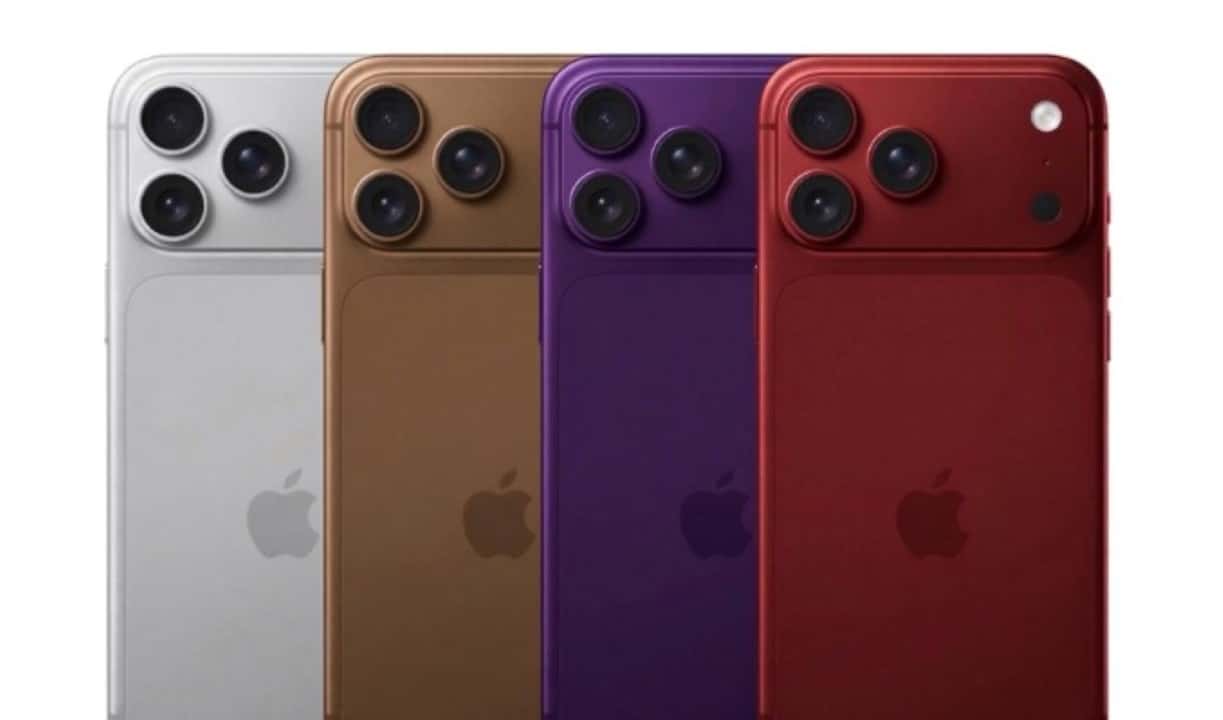
The external design of the devices will also undergo a profound visual renovation. The main color of the new line is given the commercial name Dark Cherry. The tone presents an intense dark red with nuances of wine and burgundy. Essa option replaces the Cosmic Orange used in the iPhone 17 Pro. The finish seeks to deliver a sophisticated and discreet appearance for the corporate environment.
The metal of the camera island reflects light differently than the rest of the glass back. The brushed titanium interacts with the reddish tone depending on the user’s viewing angle. Imagens of industrial prototypes circulate on Asian technology social networks. The metallic material keeps the structural lightness of the device intact. Scratch resistance remains a priority in the chemical anodizing process.
The industrial design team tested three other shades during the secret prototyping phase. Light Blue offers a light blue aimed at an audience that prefers cold and clean colors. The Dark Gray delivers a dense gray that approaches graphite. The Silver maintains the brand’s tradition with a classic, shiny silver look. Traditional absolute black was left out of final production tests.
Cronograma assembly and arrival at physical stores
The company’s calendar follows a strict pattern of announcements in the second half of the year. The month of September focuses the attention of the global mobile technology market. The Pro and Pro Max models usually hit shelves around two weeks after the official presentation. The early production of the cameras means that the schedule runs without serious disruptions at the factories.
The absence of delays in the supply chain reassures majority shareholders. The initial sales volume depends on the immediate availability of the devices in physical stores around the world. Consumidores who prioritize photographic quality form the main target audience of this specific generation. The physical change in the lens justifies the investment for those who use their smartphone as a daily audiovisual work tool.
The accessory ecosystem will need to adapt to the new, slightly larger rear module. Fabricantes of protective covers already receive preliminary plastic molds to start their own mass productions. The perfect fit guarantees protection of the mobile mechanism against accidental falls onto the asphalt. The technology market follows each stage of assembly until the moment the devices reach the hands of end consumers.