
Divers register Orion capsule in the ocean for unprecedented analysis of thermal protection
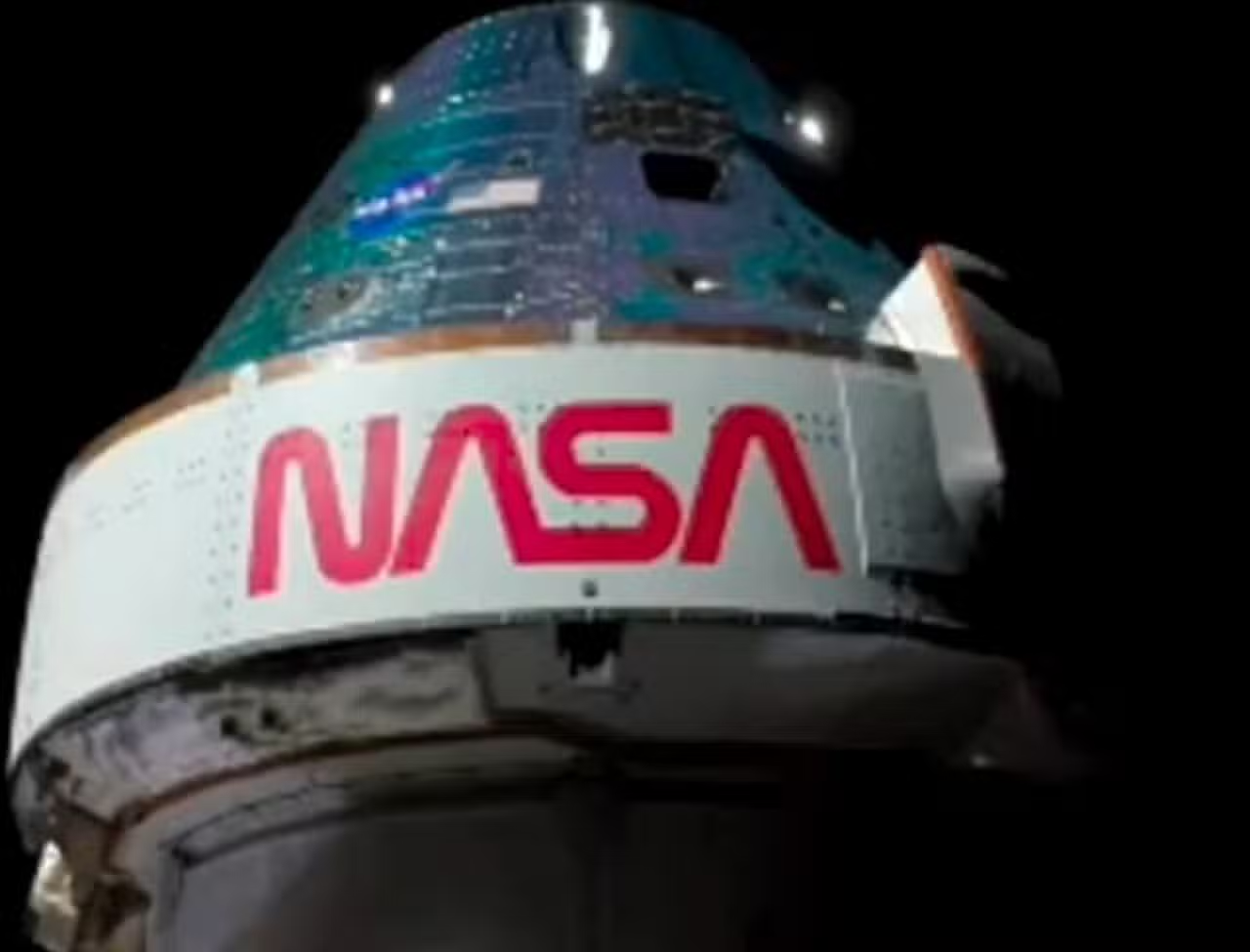
The American space agency adopted an unprecedented visual strategy to assess the integrity of the Orion capsule after the conclusion of the Artemis 2 mission. Mergulhadores of Marinha of Estados Unidos captured underwater images of the command module in the first moments after Oceano Pacífico’s impact with the waters. The registration occurred even before the ship was lifted onto the deck of the rescue ship. The tactic aims to preserve crucial visual data about the state of the external structure.
The main focus of the operation is on the vehicle’s heat shield. The piece faces extreme temperatures during friction with the Earth’s atmosphere on the return journey from lunar orbit. Engenheiros aerospace companies now use this photographic material to identify possible flaws or irregular wear in the protective material. Immediate analysis prevents prolonged exposure to oxygen and sea salt from masking the real damage suffered during reentry.

Naval Operação provides unprecedented visual perspective of the command module
Recovery logistics required precise alignment between flight control teams and military vessels. Diving professionals waited in fast boats at the exact coordinates calculated for landing. The approach occurred minutes after the main parachutes touched the water surface. Essa quickly ensured the capture of photographs of the lower part of the ship still submerged. The bottom-up angle breaks with the traditional pattern of aerial monitoring.
Especialistas describe the documented scenario as a rare technical opportunity. The silhouette of Orion floating in the sea provides information about the module’s waterline and stability. High-resolution Câmeras, protected by waterproof cases, recorded millimetric details of the fuselage. The thermal shock of the incandescent structure with the cold ocean water represents one of the moments of greatest physical stress for the materials that make up the ship.
Unexpected Desgaste in the previous mission led to a protocol change
The concern about the base of the capsule has its roots in the results obtained in the unmanned test flight in 2022. From Durante to Artemis 1, technicians identified a loss of charred material greater than the limits established by computational models. Pedaços of the casing came loose unevenly. The phenomenon raised an alert in the lunar program board. The safety of future crews depends on the absolute integrity of this thermal barrier.
The shield endures heat exceeding the thousands of degrees Celsius mark as the ship decelerates from hypersonic speeds. The modifications applied to the Artemis 2 design needed rigorous practical validation. The images taken underwater serve as the first visual proof of the behavior of the new chemical compound used to manufacture the part. The comparison between the ship’s condition at sea and footage taken by drones in the sky creates a complete picture of the degradation.
The first visual reports point to structural performance within safety margins. The absence of deep flaws in the protective layer indicates that the engineering corrections were effective. The crossing of thermodynamic data with underwater photographs will occupy the agency’s laboratories for the next few weeks. Cada image pixel passes through contrast filters to reveal microcracks invisible to the naked eye.



Sincronia of equipment and personnel at the time of impact
Carrying out this type of photographic record in the open sea involves complex navigation and safety variables. Waves and sea currents make it difficult to stabilize the lens. The rescue team followed an approach route designed to avoid collisions with the capsule bobbing in the water. Data collection followed specific approach steps.
- Posicionamento anticipated tactical divers in primary drop zone.
- Utilização of depth sensors attached to filming equipment.
- Comunicação in real time with the control center to release the safe area.
- Mapeamento 360 degree photographic of thermal base before atmospheric oxidation.
The use of cutting-edge underwater technology complements telemetry received via satellite. The Orion’s internal sensors transmit temperature and pressure data until the systems are turned off. The photograph acts as a physical confirmation of the numbers generated by the onboard computers. The redundancy of information characterizes the new phase of deep space exploration.
Transferência for land installations defines next testing phase
Marinha’s ship now transports the command module back to the mainland to begin technical disassembly. The capsule will go to a clean room, where special cranes will lift the structure for millimeter inspection. Engineers will use the underwater photos as a reference template. The aim is to check whether shipping or lifting has caused additional damage to the carcass.
Validation of the heat shield represents a decisive milestone for the Artemis 3 schedule. The next stage of the program involves the return of astronauts to the surface of Lua. The crew module must demonstrate extreme reliability to receive final flight clearance. Regulatory agencies require material proof that the vehicle withstands the most adverse conditions possible during re-entry into the Earth’s atmosphere.
Impacto of new visual techniques in aerospace engineering
The success of the joint operation sets a new standard for space vehicle rescue. Immersive post-landing documentation is no longer an isolated experiment and becomes part of official procedure manuals. The knowledge acquired with Orion will serve as a basis for the development of commercial ships and cargo modules for private companies. The aerospace industry closely monitors the results of these structural analyses.
Transparency in the dissemination of underwater images reinforces the mission’s technical communication. Sharing visual records allows universities and independent research institutes to also study the behavior of materials. Heat shield assessment remains the top priority for ground teams. Laboratory work has just begun, and careful disassembly of the capsule will reveal the true impact of the lunar journey on the metallic structure.
See Also em Latest News (EN)

Apple’s portable computer with M4 chip and 16GB reaches an unprecedented retail price of $999
03/05/2026
Capcom plans to release Resident Evil 10 and recreation of the original classic by 2029
03/05/2026
Microsoft releases up to fifty percent discount on Xbox Series X directly at the console store
03/05/2026
South Korean manufacturer reduces the value of the Galaxy Watch Ultra by 40% and puts pressure on the premium market
03/05/2026
Valve releases four independent games for free for permanent redemption on Steam accounts
03/05/2026
Heirs to the British throne intensify public commitments due to King Charles’ health treatment
03/05/2026
New Samsung Galaxy A16 5G hits the market with Super AMOLED screen and software support until 2030
03/05/2026
Learn how to identify spying traces on WhatsApp and activate blocks against cyber profile cloning
03/05/2026
King Charles’ cancer progression reduces schedule and accelerates transition from crown to Prince William
03/05/2026
Former player Daniel Alves returns loan to Neymar’s family and ends financial ties
03/05/2026
Worsening health of King Charles accelerates transition of power to William and Kate in the United Kingdom
03/05/2026