
Chery’s new sports utility vehicle innovates with a modular cabin that turns into a seven-seater pickup truck

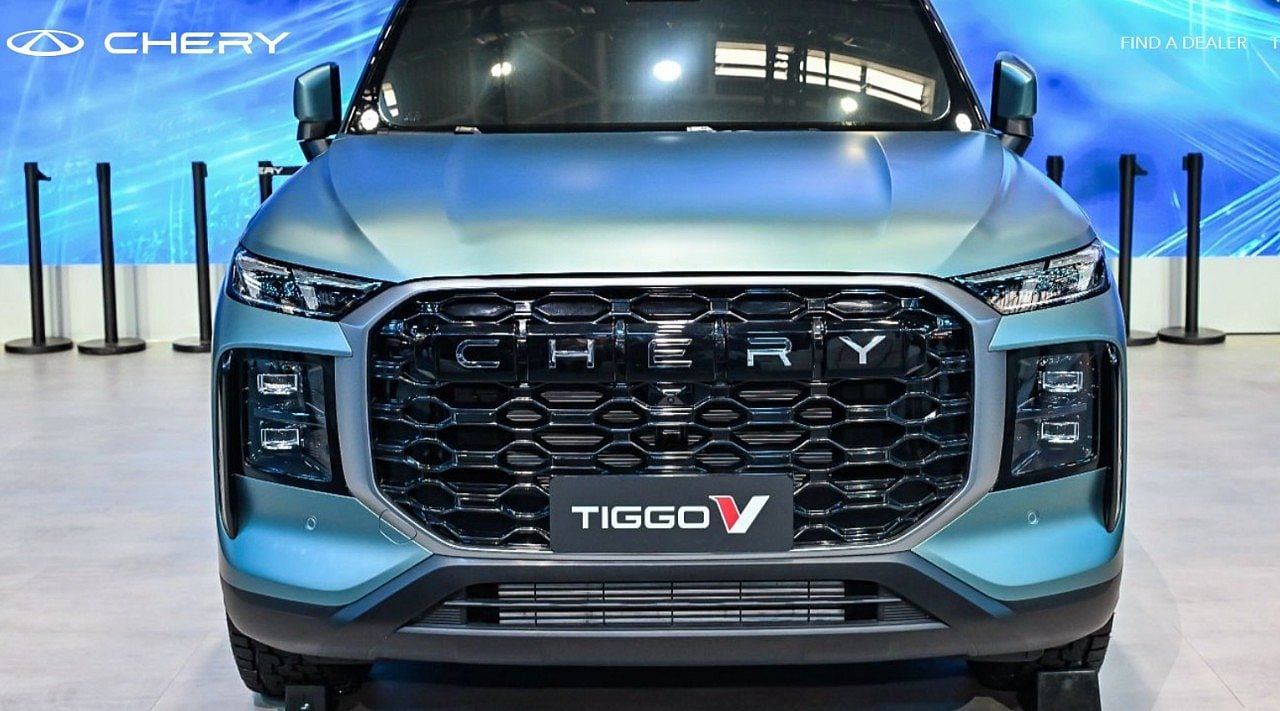
Asian automaker Chery officially revealed the unprecedented Tiggo V during the activities of Auto China 2026, an event held in the city of Pequim. The vehicle arrives on the global market with a proposal that challenges traditional standards in the automotive segment, combining the characteristics of a seven-seater sports utility vehicle with the functionality of a light pickup truck. The engineering behind the project relies on a highly modular cabin, developed to allow the rear section to be quickly reconfigured by users. Essa approach serves large families who also need space to transport bulky loads in specific everyday situations.
The unprecedented model takes the top-of-the-line position in the Tiggo family. Ele is positioned above the already known Tiggo 9. The presentation at the Chinese fair marks an important step in the manufacturer’s international expansion. The company seeks to consolidate its presence in competitive markets through technological innovation. Especialistas from the automotive sector note that the merger of categories reflects a clear shift in consumer behavior. The public demands more and more versatility in a single product without giving up comfort during urban or road trips.

Versatile Arquitetura and interior space transformation
The great technical difference of the project lies in the use of a monocoque platform adapted to support structural changes in the passenger area. Diferente of conventional sports utility vehicles found in dealerships, where the third and second row seats simply fold down to form a flat floor, the new vehicle allows the rear seats to be completely removed. Essa feature effectively transforms the end portion of the cab into a closed bucket. The format delivers the utility of a light cargo vehicle with the drivability of a conventional passenger car.
The manufacturer highlights that the interior transformation is quick and intuitive. The process does not require the use of complex tools or specialized technical assistance. Engineers developed quick-release rails and latches that ensure occupant safety when the seats are installed. The components are removed within a few minutes. Essa engineering solution solves a historical problem with seven-seater models, which often suffer from a lack of luggage space when all seats are occupied by passengers.
Configurações available for different usage profiles
Para To maximize the utility of the project, the automaker structured the car’s interior to offer six distinct spatial arrangement configurations. Essa multitude of options allows the owner to adapt the vehicle exactly to the needs of the moment. The flexibility of the cabin is the central point of the product launch campaign in the Asian market.
- Family Modo with seven full occupants for group trips and daily commutes.
- Modo utility vehicle with bucket of approximately 600 liters of volumetric capacity.
- Configuração with movable dividers to safely accommodate long and irregular loads.
- Layout dedicated to the transport of leisure equipment and outdoor sports practices.
- Opção with expanded luggage space for extended trips with fewer passengers.
- Mixed Modo that maintains some assembled seats and simultaneous cargo area in the same environment.
The physical dimensions of the car directly contribute to the success of this modularity. The wheelbase measures exactly 2,800 millimeters, ensuring a generous usable area between the front and rear axles. The interior height of the cabin reaches 1,297 millimeters. Esse expressive number significantly facilitates the movement of people inside the car. The high ceiling height makes access to the rear rows much more ergonomic, reducing the discomfort common when boarding and disembarking for adult passengers in the third row of seats.
Desempenho on uneven terrain and immersion capability
The main focus is urban versatility and family use. However, the vehicle has technical specifications for forays off the asphalt. The ground clearance reaches 220 millimeters. The measure surpasses the vast majority of sports utility vehicles aimed exclusively at the city. Essa lift protects the lower components of the chassis against impacts on rocks or ditches, allowing the driver to travel on dirt roads, rural roads and poorly paved sections without severe restrictions or risk of mechanical damage.
The ability to overcome flooded sections is another highlight in the engineering project, varying according to the mechanical set chosen by the buyer. The version equipped with a hybrid engine supports crossing water up to 700 millimeters deep. The exclusively combustion-powered option reaches the 650 millimeter mark. Complementando the adventurous credentials, the frontal attack angle allows you to face ramps and obstacles with an inclination of up to 30 degrees. The suspension received a specific calibration to balance shock absorption on uneven surfaces with the stability necessary for travel on high-speed highways.
Eficiência energy and engine options in the portfolio
The new model’s propulsion portfolio was structured into two distinct fronts to meet different global infrastructure realities. The most technological variant has a plug-in hybrid system, which can be recharged at the socket and promises an average consumption of 16.7 kilometers per liter of fuel. Esse number equates to a consumption of 6.0 liters for every 100 kilometers driven. The traditional combustion version delivers an average of 12.8 kilometers per liter, representing the logical choice for consumers who live in regions where the charging station network is still incipient or non-existent.
The manufacturer chose to keep the exact combined power numbers confidential in this initial presentation phase. The maximum torque was also not revealed by the automaker. The brand’s executives ensure that the driving force is fully capable of moving the total mass of the car, even operating at its maximum cargo and passenger capacity. The hybrid architecture uses the Super Hybrid technology developed by the automaker itself, a system already consolidated in other products in the line that manages the transition between electric and combustion engines in a way that is imperceptible to the driver.
Estratégia commercial and prospects for the international market
The introduction of this multifunctional concept appears as a direct response from the company to the growing global demand for cars that can play multiple roles in the routine of modern families. In a global market largely saturated by traditionally designed sports utility vehicles, the commitment to extreme modularity works as a major competitive differentiator. The general lines and central idea of this car had already been anticipated to the public through a design study revealed the previous year, which now comes to life in its definitive series production form.
The launch schedule reinforces the company’s intention to expand its participation in strategic international markets over the next few years. With regard to the Brazilian market, Caoa Chery, the operation responsible for the official representation, production and distribution of the brand’s vehicles in the country, has not yet issued statements confirming the import or nationalization of the product. Crucial Detalhes such as the suggested price list, the standard equipment package for the América of the Sul and the exact date of availability at dealerships remain undefined, awaiting the next steps of the automaker’s corporate planning.





