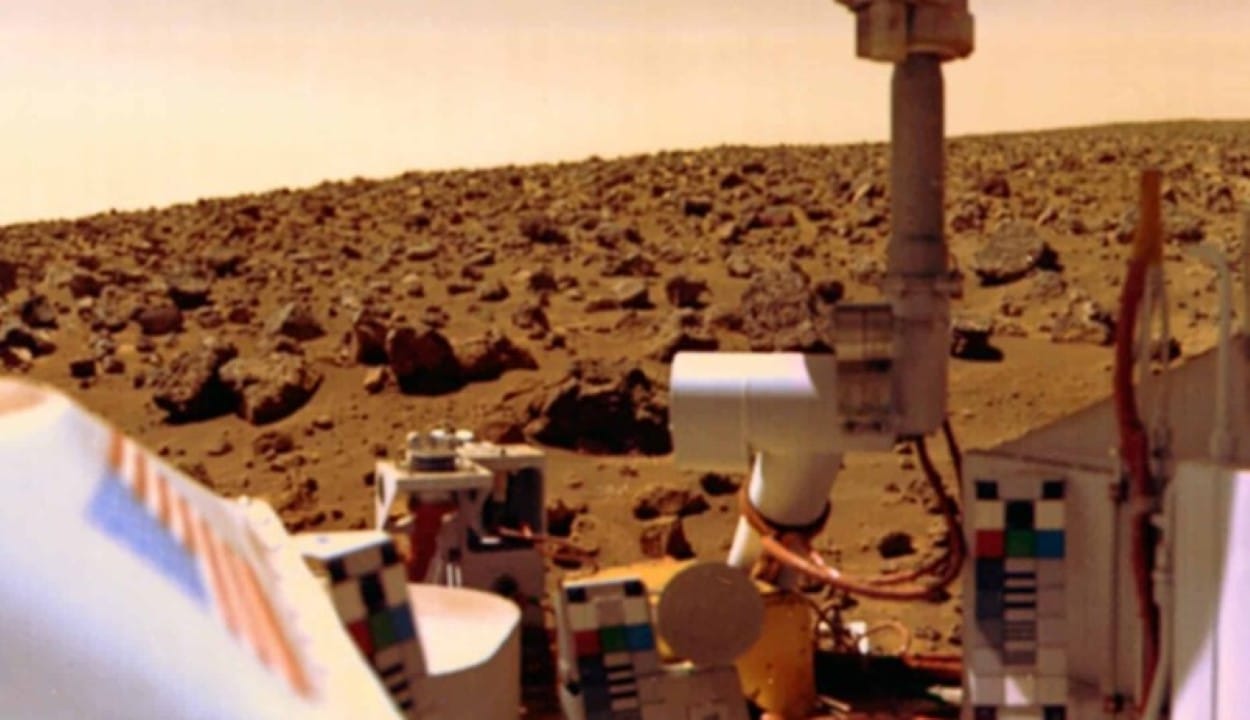
The American space agency’s Curiosity exploration robot revealed the presence of a diverse mix of organic molecules in the soil of Marte. Entre substances found are chemical compounds widely considered to be the “building blocks” for the origin of life on Terra, offering new insights into Planeta Vermelho’s past.
The identification of more than 20 organic compounds is the result of an unprecedented chemical experiment carried out by the rover, which provides crucial clues about the ability of Marte to have harbored life in remote times. The findings suggest that the Martian surface has the ability to preserve the types of molecules that could indicate the existence of ancient life, especially due to the presence of nitrogen heterocycles, which are the basis for the formation of nucleic acids, such as DNA and RNA.
Moléculas essential for the formation of life

The discovery of these components in Martian rocks indicates that the fundamental “ingredients” for life, as we know it, were present on the planet and were preserved over time. Isso does not mean a confirmation of a past life, but rather that the conditions for its emergence were favorable. The characterization of organic matter is seen by Nasa scientists as an essential pillar in the exploration of habitability and the ongoing search for signs of life on other worlds.
The study highlights that the presence of complex organic molecules, in itself, only confirms that Marte possessed the necessary elements to sustain life, without, however, attesting to its past existence. Confirming ancient microbial life, if it existed, would require direct analysis of rock samples in terrestrial laboratories.
Evidências preserved in Cratera Gale
The molecules were identified in clay-rich sandstones located at Cratera Gale. Cientistas estimate that these geological formations are approximately 3.5 billion years old. The ability to preserve this chemical diversity, even in the face of space radiation and intense geological processes that have operated over billions of years, is a key point of the discovery.
The analyzed samples were collected in sediments from ancient lakes and rivers that once existed in Cratera Gale. Ambientes with high clay concentrations are considered ideal for the accumulation and conservation of organic matter over long periods. Esse factor reinforces the theory that the planet had environmental conditions conducive to life in the distant past. The article with the findings was published this Wednesday, 21, in the magazine Nature Communications.
Desafio to confirm extraterrestrial life
Apesar is excited about the findings, Curiosity’s experiment has limitations. The rover’s current technology does not allow differentiating whether the organic compounds found come from a possible past life in Marte or whether they were formed by geological and chemical processes without the intervention of living beings, in a process known as abiotic production. Meteoritos that reached the Martian surface are also a possible source of organic material.
Para advance understanding and verify whether the molecules are truly traces of life, researchers emphasize the need to send rock samples to be analyzed at Terra. Somente With the sophistication of terrestrial laboratories, it would be possible to carry out conclusive tests that could distinguish between the biotic and abiotic origins of these compounds. Amy Williams, Ciências Geológicas professor at Universidade at Flórida and mission scientist for the Curiosity and Perseverance rovers at Marte, points out that having evidence of the preservation of ancient organic matter is essential for assessing the habitability of an environment and for searching for signs of life in the form of preserved organic carbon.
Curiosity’s Ongoing Mission in Marte
The Curiosity rover, affectionately nicknamed by scientists, was launched in 2011 and landed on Cratera Gale in 2012. Ele is part of the Mars Science Laboratory mission and is the largest exploring robot ever sent to the planet. Seu’s main goal is to answer a fundamental question: “Did Marte ever have the right environmental conditions to sustain small life forms?”.
Desde Beginning its operation, Curiosity has used its tools to collect chemical and mineral evidence that Mars hosted habitable environments in its past. The robot continues to explore the planet’s rock record, investigating a period when the neighboring world could have supported microbial life. The most recent experiment, which detected organic molecules, was conducted in 2020, in the Glen Torridon region, inside the Gale crater.
Compostos unreleased organics detected
Entre Among the more than 20 chemical substances identified by Curiosity, some important findings stand out that deepen the understanding of the composition of Marte.
- Molécula with nitrogen:The rover detected a nitrogen-containing molecule that has a structure similar to DNA precursors. Esta is the first time that a chemical with this characteristic has been identified in Marte, representing a significant advance.
- Benzotiofeno:Também identified benzothiophene, a sulfurous chemical composed of two rings. Compound Esse is often found in meteorites, suggesting that some of Marte’s organic material may have reached the planet through cosmic impacts.
Scientist Amy Williams adds, in a note released by Universidade of Flórida, that the same type of material that “rained” on Marte from meteorites is what fell on Terra. Ela suggests that this likely provided the essential building blocks for the emergence of life on our own planet, reinforcing the connection between interplanetary chemistry and biological development.