New line of premium televisions from the Asian brand arrives on the Japanese market with advanced panel


Electronics manufacturer TCL confirmed the arrival of the X11L television line on the Japão market. The equipment uses the proprietary SQD-Mini LED system to create high definition images. The official announcement took place during the company’s global partner conference, held in early 2026. The model already has active commercial distribution and consolidates sales in territories such as Estados Unidos, China and Tailândia. Asian expansion reinforces the company’s catalog.
The device is part of the brand’s high-end screen category. The product architecture merges small-sized light-emitting diodes with the Super Quantum Dot structure. The intersection of these two technical fronts provides superior control over the lighting of the entire panel. Accuracy in color palette reproduction also presents significant gains compared to previous generations. The visual leap is noticeable. Consumers and experts initially got to know the device at the CES 2026 fair, held in the city of Las Vegas.
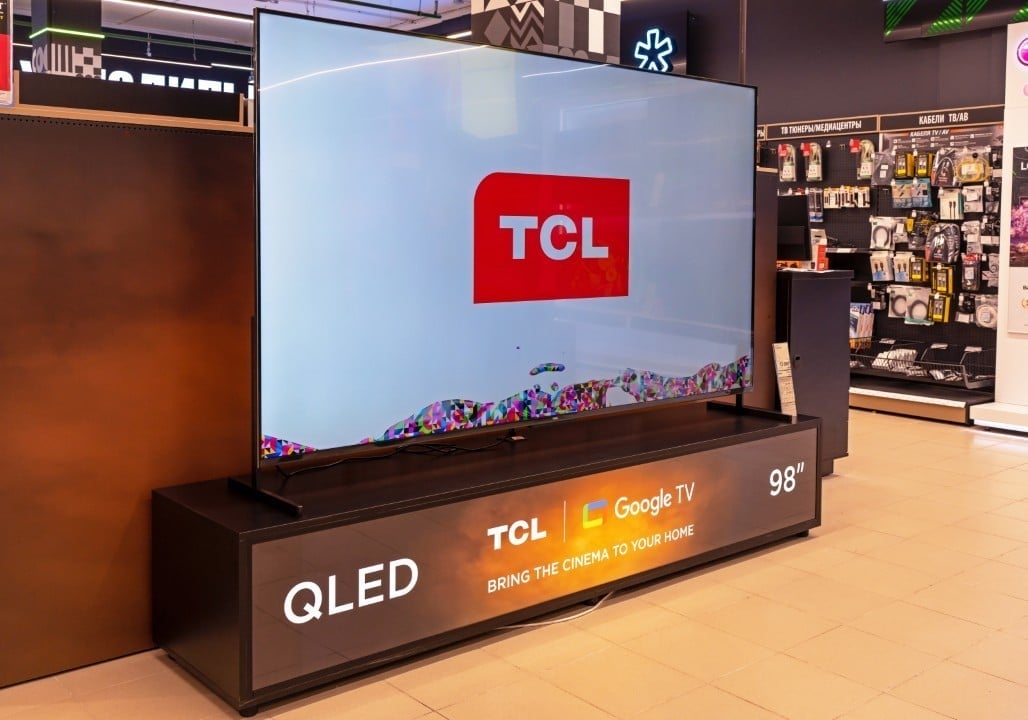
Arquitetura luminous and contrast control
The acronym SQD identifies the Super Quantum Dot engine developed by the company’s engineers. The system eliminates the use of separate modules in red, green and blue colors, a common standard in the industry. The product engineering adopts a single source of pure white light to illuminate the pixels. The method generates an extremely uniform chromatic scale. Visual interference between different tones almost completely disappears when watching films and series.
The device achieves full coverage of the BT.2020 color space when playing complex scenes. The peak brightness reaches an impressive 10,000 nits in the larger inch versions. The intensity of the light makes it easy to see minute details in materials recorded with high dynamic range. The TSR AI processor works behind the scenes of the system. The component analyzes each frame of the image to adjust brightness and contrast parameters in real time.
The local dimming mechanism operates with extreme precision in distributing light across the screen. The panel fragments the display area into thousands of independent lighting blocks. Fine division eliminates light leakage around bright objects placed on dark backgrounds. The contrast of the image gains depth and recreates absolute black tones. A dedicated chip and a set of new generation lenses manage the individual activation of each light sector.
Panel Estrutura and available dimensions
The television houses the liquid crystal panel called WHVA 2.0 Ultra. The part leaves the assembly lines of CSOT, an industrial screen manufacturing division belonging to the same corporate group. The color filter has undergone rigorous technical revisions to improve the visual fidelity delivered to the viewer. The screen’s native contrast received specific calibrations using an algorithm exclusive to the Asian manufacturer.
The surface of the screen has a special coating focused on low reflection of external light. The material’s reflectivity index scores just 0.5% in laboratory tests. The film blocks interference from ceiling lamps or open windows in the installation environment. The external design of the device follows the aesthetic standard called ZeroBorder. The black frame around the glass is minimal in thickness. The format conveys the sensation of a floating image on the living room wall.
The distribution of lighting zones varies according to the physical size of the equipment chosen by the customer. The manufacturer structured the catalog into three main dimensions to supply international retail shelves:
- The giant 98-inch version operates with 20,736 independent dimming zones.
- The intermediate 85-inch model delivers approximately 14,400 sectors of light control.
- The 75-inch entry option works with 11,520 independent blocks of light.
The volume of zones in all versions easily exceeds the average found in conventional televisions on the market. The high density of the small diodes guarantees uniformity of light from one end of the screen to the other. The thickness of the metal enclosure measures less than two centimeters in the thinnest areas of the structure. The narrow profile makes it simple to attach the product to wall brackets or solid wood panels. The remote control supplied in the box has variations in the button layout depending on the country of sale.
Sistema sound and gaming connectivity
The equipment’s audio project was born from a direct collaboration with the Danish brand Bang & Olufsen. The internal acoustic set includes a central box, side surround sound outputs and two subwoofers dedicated to deep bass. The robust setup eliminates the immediate purchase of external soundbars or home theater systems. The volume reaches high levels without distorting the actors’ vocal frequencies or the sound effects of explosions.
The rear connection plate meets the stringent demands of high-end video game users. The device offers four ports in the HDMI 2.1 standard with full support for full bandwidth. The technical specification allows the transfer of images in 4K resolution with high frame refresh rates. The response time to console control commands occurs in fractions of a second, guaranteeing an advantage in competitive matches.
The Google TV operating system manages all smart functions and screen navigation. The platform organizes video on demand applications into a unified, easy-to-understand interface. The software accepts natural voice commands through virtual assistants integrated into the control’s microphone. Transitioning through menus and opening programs occurs fluidly thanks to the high processing capacity of the internal hardware.
Estratégia Trading and Benchmarks
The inclusion of the product in Japão consolidates the company’s global presence in the highly sought-after high-cost segment. Japanese consumers demonstrate a historical preference for large screens with faithful reproduction of cinematic colors. The quantum dot system enters into direct commercial competition against other imaging technologies already consolidated in the archipelago. The company organized exclusive technical meetings with local partners to detail the functioning of the internal machinery.
The Chinese parent company already sells devices in its domestic market with significant numbers. The top-of-the-line 98-inch model costs 58,499 yuan on the country’s major e-commerce platforms. The 85-inch version costs 33,499 yuan for the end consumer. The 75-inch size registers a sticker value of 18,499 yuan. The values are impressive. Direct conversion points to figures close to 1.37 million yen, 780 thousand yen and 430 thousand yen, respectively.
The Japanese division of the brand has kept official local prices completely confidential until now. The exact date for the start of sales in physical stores in Tóquio and other large cities still needs to be confirmed by management. Ásia’s regional distribution schedule guides the next logistical steps of the operation. The panel’s technical innovation earned a gold award in screen technology during the electronics fair held in January.