

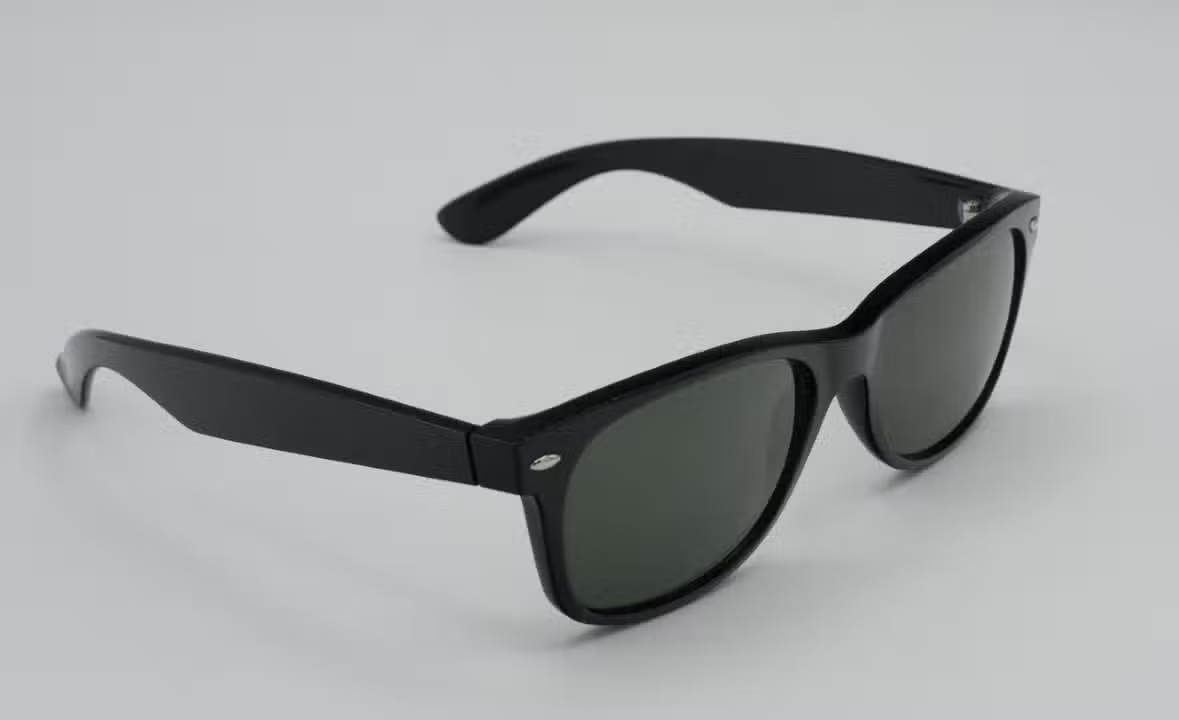
An accidentally released update code confirmed the development of a new wearable device by the South Korean manufacturer. The application responsible for tracking nearby devices received a preliminary version that explicitly mentions support for smart glasses. The discovery occurred during tests of the user interface that will equip the brand’s future smartphones. The market was awaiting an official position on the company’s entry into this specific segment.
The leak ends months of speculation about the company’s response to direct competitors in the augmented reality sector. The accessory focuses on voice commands and media capture rather than complex visual projections. The strategy points to a product for everyday use integrated with artificial intelligence services. The movement increases the competition for space on consumers’ faces.
https://twitter.com/TheGalox_/status/2048846913240187064?ref_src=twsrc%5Etfw
Vazamento in application reveals details of the accessory
The confirmation came through the software used to quickly pair equipment in the ecosystem. The program change log listed compatibility with the new product format. Analistas Technology found the command lines in the installation files intended for tablets. The company did not issue statements regarding the early exposure of the data.
The equipment carries a front camera with a resolution of 12 megapixels positioned on the frame. Microfones captures directional audio. The right stem houses a touch-sensitive surface for manual volume control and music track playback. A small light indicator alerts people around you when video recording is active.
The chosen shape is reminiscent of classic sunglasses with thick frames. The manufacturer chose to develop the industrial design internally without establishing partnerships with traditional brands in the optical sector. The final weight and color options still remain confidential in research laboratories. The construction uses lightweight materials to avoid discomfort during long periods of continuous use. The matte finish hides fingerprints in the touch area.
Dedicated Processador and absence of screens mark the project
The device’s internal architecture prioritizes battery consumption efficiency. The core component is a chip designed specifically for lightweight augmented reality tasks. The technical choice allows the frame to maintain proportions similar to those of ordinary glasses. Heavy processing takes place on the paired smartphone via wireless connection.
The project rules out the use of transparent displays or holographic projections on the lenses. Interaction relies almost entirely on sonic feedback and vocal commands. The user receives information through speakers built into the rods. The absence of visual components reduces production costs. The autonomy of continuous use also increases significantly with this engineering decision.
Pairing with the cell phone happens automatically as soon as the accessory is removed from the case. The connection uses updated local area network and short-range radio transmission protocols. The management app displays the exact percentage of charge remaining on each side of the frame. The system also allows you to locate the device in case of loss by emitting high-frequency sound signals. Signal stability guarantees fluid audio.
Sistema operational Google integrates virtual assistant
The equipment’s software base uses a newly created platform for wearable devices. The digital environment was optimized to work without a traditional graphical interface. The virtual assistant processes user requests and performs actions directly within smartphone applications. The answer arrives in spatial audio format.
The native toolset covers many daily functions. The system allows you to perform tasks without having to touch your cell phone screen. Capabilities confirmed by the leaked code include:
- Registro of photographs and videos from the user’s perspective
- Controle music playback with automatic ambient volume adjustment
- Gerenciamento of home appliances connected to the same wireless network
- Leitura loud text message and calendar alerts
- Immediate Sincronização with smart watches and headphones from the same line
Artificial intelligence acts as the brain of the operation during everyday use. The program understands the context of the questions and provides answers based on the owner’s location and routine. The technology translates signs and menus captured by the camera in real time. Natural language processing makes communicating in noisy environments easier.
Conexão with watches and headphones strengthens the brand’s ecosystem
The commercial strategy involves creating a network of devices that constantly exchange information. Smart glasses work as an extension of the sensors already present on the consumer’s wrist and ears. The watch may vibrate to indicate a notification viewed by the frame’s camera. Fluid integration tries to lock the customer within the manufacturer’s product line.
The wearable technology market gains a new strong competitor with large-scale production capacity. The global distribution infrastructure makes it easier for the product to reach several countries simultaneously. The sector still lacks a device that convinces the general public to adopt technology in their daily lives. The focus on practical functions tries to overcome the barrier of aesthetics. The absence of screens eliminates the exaggerated futuristic look.
Fontes from the components industry point out that the official presentation should take place in the second half of the year. The launch event for the next phones with a foldable screen appears as the most likely stage for the reveal. The accessory should reach stores positioned as a luxury item for technology enthusiasts. Commercial success will depend on the balance between the final price and the real utility offered by artificial intelligence tools.
The development of this specific hardware demonstrates a shift in the way large corporations see the future of personal computing. The cell phone remains the center of data processing. Accessories take on the role of peripheral interfaces that facilitate the collection of information from the physical environment. The transition occurs gradually to get users used to the constant presence of cameras and microphones in clothing.