
X-ray emission confirms presence of supermassive black holes in Webb’s red dots

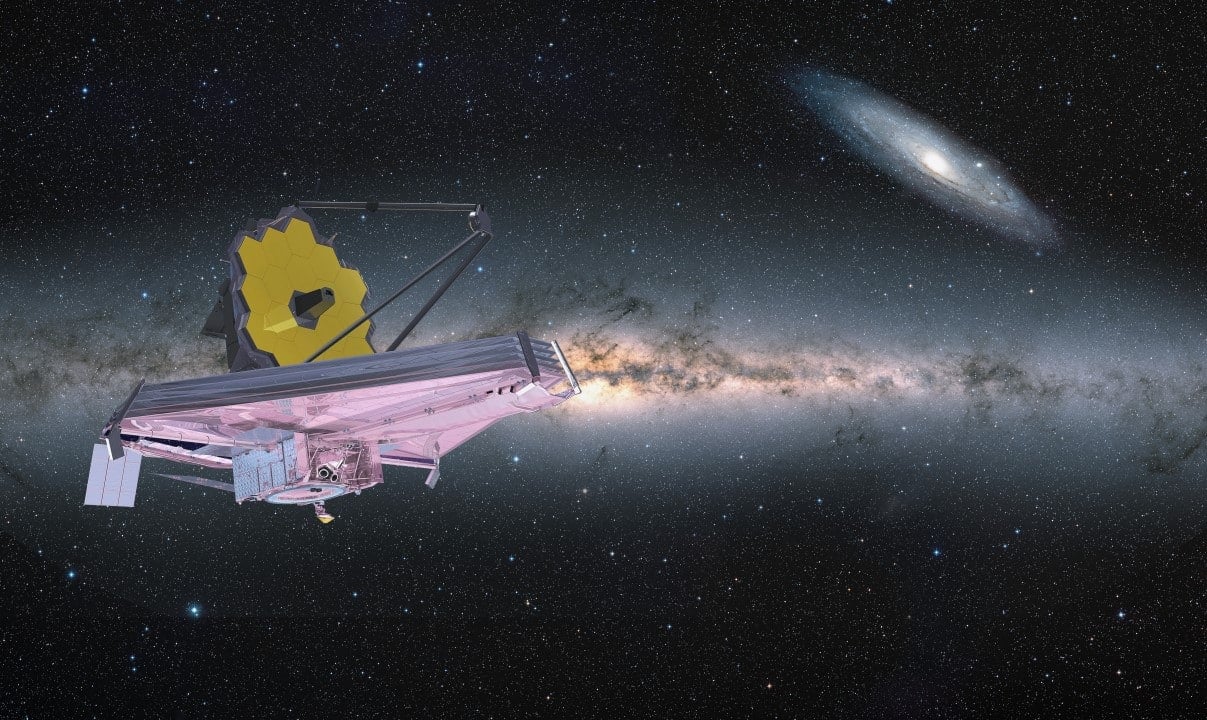
A recent detection of X-rays resolves one of the biggest debates in modern astronomy. Pesquisadores identified an energetic emission that exactly coincides with the location of red dots captured by Telescópio Espacial James Webb. The discovery proves that these structures house supermassive black holes in full activity. The find brings together information from different high-precision space equipment. Science gains a new observation tool.
The data crossing involved records from Observatório of Raios X Chandra, managed by the American space agency. Astrônomos consider the event a milestone comparable to the detection of dark energy in the late 1990s. The theoretical confirmation establishes a direct link to understanding the origin of galaxies in the first billion years after Big Bang. Especialistas now revise current cosmological models based on new evidence collected in deep space.
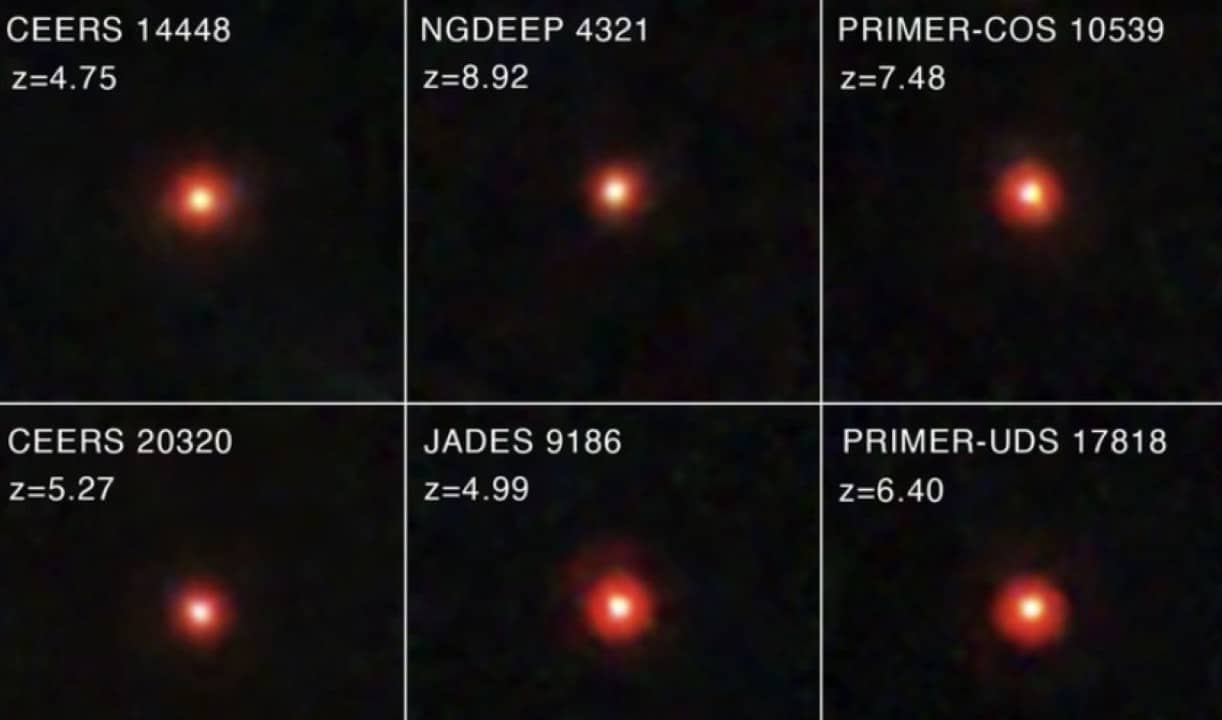
Cruzamento Cross-Observatory Data Reveals Ancient Power Source
The signal cataloged under the identification 3DHST-AEGIS-12014 remained archived on Chandra’s servers for more than a decade. Astronomer Andy Goulding, Universidade researcher of Princeton, conducted the analysis that brought the record to light. Ele was unaware of the magnitude of the information until crossing the coordinates with Webb’s recent mapping. The exact overlap of the points surprised the investigation team. Perfect alignment eliminated the possibility of instrumental error.
The Chandra equipment has spent years tracking millions of radiation sources scattered across the cosmos. The work required patience. The relevance of this specific point only emerged with new infrared observation technology, capable of penetrating the dense space dust that blocks visible light. The energy measured in the signal resembles the behavior of quasars. The process generates violent agitation. Essas extreme galaxies contain black holes that swallow matter at high speed and eject radiation across the universe.
Propriedades object physics challenge traditional models
The reddish structures present characteristics that differ from the pattern observed in other spatial formations. Scientists seek to understand how these celestial bodies maintain stability under extreme conditions of pressure and temperature. The spectral analysis provided precise details about the composition and thermal behavior of the analyzed region. The telescopes operated at maximum capacity to capture the correct frequencies.
The data collected points to an unusual combination of structural factors:
- Dimensões compacts that do not exceed a few hundred light years in total diameter.
- Coloração deep red indicating relatively low surface temperatures by the cosmic standard.
- Assinaturas water vapor chemicals operating in a thermal range of 1,700 to 3,700 degrees Celsius.
- Posicionamento extreme temporal with existence dated to approximately 11.8 billion years ago.
- Níveis of density and energetic activity that contradict the classical rules of galaxy formation.
Esses celestial bodies record temperatures lower than Sol and most cataloged stars. The exception is low-mass red dwarfs. The presence of water in the gaseous state provides valuable information about the local physical environment and space fluid dynamics. Complementary Medições from the Hubble telescope confirm that the current image reflects the state of the universe in its early days. The light traveled for billions of years until it reached the lenses of equipment in Earth orbit.
Teorias on cosmic formation gains new perspectives
The emergence of supermassive black holes represents a persistent obstacle for astrophysics. The researchers divide their bets into two main hypotheses of structural development. The first suggests a gradual build-up from the merger of smaller black holes over eons. The second proposes the direct collapse of gigantic gas clouds with millions of solar masses. The debate consumes resources and time for space agencies.
Ambas lines of thought come up against the issue of chronological time. Giant black holes appear very early in the timeline of the observable universe. The mathematical models indicate that there would not be enough time to complete this growth process through normal means. Identifying the red dots provides the missing piece to resolve the temporal inconsistency. The collected material suggests an evolutionary shortcut in the formation of these gravitational anomalies.
Active Power Dinâmica Explains Intense Radiation in Space
The scientific community works on the premise that red dots function as gas shields. Essas immense clouds hide the core where the supermassive black hole develops in secret. The central object consumes the matter around it continuously and aggressively. The friction of the material generates a colossal release of thermal and light energy. The phenomenon changes local gravity.
The extreme heating makes the cloud glow brightly in the infrared spectrum. Jatos of charged particles can escape gravitational attraction through specific magnetic channels. Essa matter travels through outer space in opposite directions at very high speeds. The mechanism justifies the X-ray emission detected by the space observatory so clearly. Radiation passes through entire galaxies without losing its main signature.
The feeding process explains the similarity with the radiation of already known quasars. The growing black hole produces waves of multiple simultaneous lengths. Infrared light pierces cosmic dust while X-rays reveal the violence of the expanding core. The combination of signals creates a unique signature in the universe. Astronomers use this pattern to locate new sources of energy in distant galaxies.
Investigação from the early universe advances with infrared technology
The space telescope project focused precisely on the search for the origins of cosmic structures. The space agency calibrated the mirrors to capture the oldest and most distant light possible. The central objective involves mapping the evolution of galaxies from primordial darkness to today’s spiral and elliptical shapes. The meeting of the X-ray signal with the infrared image attests to the success of the mission. The billion-dollar investment in equipment shows practical results.
The joint work of the two observatories shows the power of multiwavelength astronomy. The latest equipment sees cold, distant objects through space dust. The veteran satellite captures high-energy radiation generated by catastrophic events. The union of technologies delivers a complete panorama of celestial phenomena. The combined observation strategy sets the new standard for intergalactic research.
The validation of the theory about gas clusters changes the understanding of the evolution of space. Astronomers now have concrete evidence about the transition period of the young universe. The data collected will serve as the basis for formulating new stellar catalogs and computer simulations. Space research continues to monitor the region in search of other similar signs that confirm the rule. Continuous mapping of the night sky ensures a constant flow of information to terrestrial laboratories.





