Nintendo announces new hybrid console and confirms Zelda Ocarina of Time remake for launch
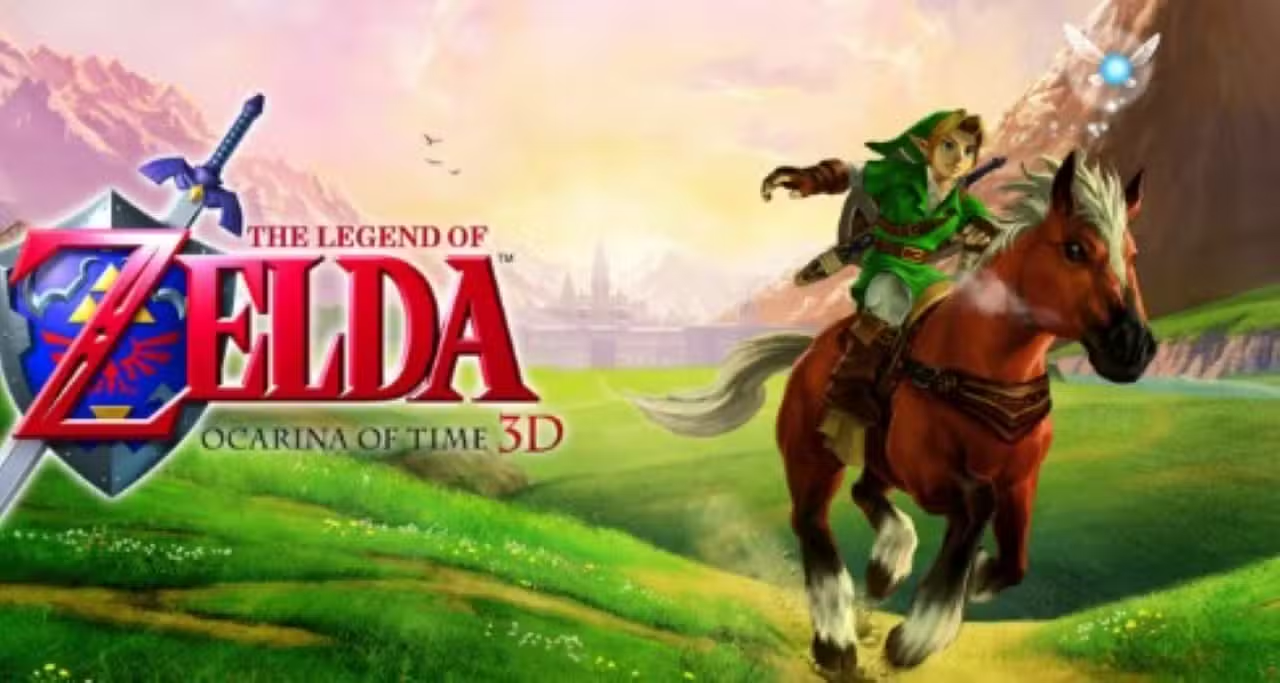
The year 1998 marked the digital entertainment industry with the definitive transition of adventures to the three-dimensional environment. The introduction of lock-on mechanics and open-world exploration set the standards for development for decades to come. Duas decades and a half later, the impact of that time returns to the center of attention in the technology market. The evolution of electronic components has allowed those original ideas to be revisited from a new technical perspective. The video game sector was awaiting a move from the Japanese giant to renew its hardware cycle.
Nintendo officially announced its new generation console, maintaining the hybrid proposal that has established the company in recent years. The new hardware arrives accompanied by a total recreation of the classic The Legend of Zelda: Ocarina of Time. The strategic move seeks to attract both the nostalgic public and new consumers who have recently entered the brand’s ecosystem. The presentation focused on demonstrating the equipment’s ability to run complex titles in a portable format. The device replaces the current model and ends a long period of speculation in the financial market.
『제르다의 시대의 오카리나』의 메자리메이크특,
(소스:https://t.co/Isv8LRAJxQ) pic.twitter.com/NQfhSRF9CE
—चर्चाफिल्म (@चर्चाफिल्म)2026년 3월 27일
Liquid crystal Tela and custom processor ensure increased resolution
The new device maintains versatility of use between portable mode and connection to high definition televisions. The manufacturer chose to use an eight-inch LCD panel on the equipment’s main screen. The technical decision prioritizes production cost control and component durability. The company’s goal is to offer a competitive global retail price from day one. Analistas from the sector pointed out the possibility of more expensive screens, but the strategy focused on the accessibility of the hardware for the general public.
Internally, the equipment houses an updated partnership with semiconductor manufacturer Nvidia. The custom chip integrates modern artificial intelligence technologies for real-time image enhancement. The system uses the dynamic resizing method known as DLSS to deliver resolutions close to 4K when the device is connected to the charging base. The processing power allows studios to develop more complex projects without compromising overall performance.
The device’s thermal management received special attention from hardware engineers. The case has a redesigned ventilation system to dissipate the heat generated by the new processor during long sessions of use. The internal battery was enlarged to compensate for the energy consumption of the larger screen and more powerful chip. Factory tests indicate autonomy similar to that of the previous generation, varying according to the graphical requirements of each software run.
Clássico adventure receives new graphics engine and orchestrated soundtrack
The title that accompanies the launch of the device has undergone a complete structural reconstruction process. The developers abandoned the original codes and used a contemporary graphics engine to recreate the realm of Hyrule from scratch. The technical team focused on preserving the visual identity of the original work while modernizing all technical and artistic aspects. The project required years of internal planning and involved veterans who worked on the game in the 90s.
The improvements implemented in the software cover several areas of audiovisual production and gameplay.



- Modelos of characters and scenes remade with high definition textures and realistic volumetric lighting.
- Trilha original sound replaced by full arrangements recorded by a professional symphony orchestra.
- User Interface redesigned to make it easier to navigate and manage items during the action.
Além of the aesthetic updates, the game presents direct modifications to the fluidity of the user experience. Developers have tweaked older puzzles and progression mechanics that had caused players frustration in the past. The pace of the adventure has become more agile and dynamic. Transitioning between areas of the open map and loading dungeons occurs almost instantly, taking advantage of the read speed of the new internal solid-state storage. Água’s infamous Templo has been given clear visual markings to guide navigation.
Library Transição keeps physical and digital games running
The transition between hardware generations often requires consumers to abandon their old collections to adopt the new system. The Japanese company confirmed that the new console is fully backwards compatible with the previous platform. Physical cartridges purchased in recent years work natively in the recently announced device compartment. The functionality meets one of the most recurring requests from the gaming community and guarantees the preservation of the investment made by customers.
The digital environment also follows this continuity policy established by the manufacturer. The account system automatically migrates purchase history, cloud save data and the list of registered friends. Users will not need to pay additional fees to access titles they already have in their virtual libraries. The online store was restructured to unify the catalogs of both generations into a single interface.
Algumas producers are already preparing software updates so that old games can take advantage of new hardware. Títulos that previously suffered performance drops will be able to run at higher frame rates and better resolutions on the new console. The process occurs automatically as soon as the system detects the old game inserted on the device. The strategy strengthens the value of the brand’s ecosystem compared to direct competitors in the technology market.
Mass Produção aims to avoid unit shortages at global launch
Logistical planning for the product to arrive in stores began months in advance. The manufacturer began large-scale production to avoid the stock-out issues that have plagued the technology industry recently. Assembly lines operate at maximum capacity in Ásia industrial hubs. The distribution centers spread across América, Norte, Europa and Japão have already started receiving the first commercial batches. Transportation uses sea and air routes to guarantee the simultaneous date.
The system architecture was developed to facilitate the work of partner studios around the world. Technical documentation and authoring tools use well-known computer industry standards. The process of converting games from other platforms has become faster and cheaper for third-party companies. Grandes developers from the West and East already have access to the final programming kits and are testing their graphics engines on the hardware.
The initial release calendar demonstrates the support of these external producers for the new equipment. The first year of the console will feature new projects from studios that previously encountered technical barriers to publishing their work in the company’s ecosystem. The strategy of combining a strong brand of proprietary software with massive support from partners defines the manufacturer’s business model. The market projects a high sales volume in the first weeks of availability in international retail.
See Also em Latest News (EN)
Samsung Galaxy S26 Ultra works as a webcam via USB without additional software
02/05/2026
Crimson Desert gains rematch mode with 69 re-advanceable bosses in update
02/05/2026
China opens first humanoid robot factory with production of 10,000 per year
02/05/2026
OnePlus and Nothing increase smartphone prices in India with increases of up to 50 dollars
02/05/2026
Prime Video announces the release of season 5 of Invincible with a confirmed date
02/05/2026
Taj Jackson refutes report about alleged family profit from Michael Jackson film
02/05/2026
Germany defends greater defensive autonomy after the US withdraws 5 thousand soldiers; NATO reacts
02/05/2026
Scientists find complete DNA ingredients in asteroid 300 million km away
02/05/2026
Resident Evil gets new trailer for live-action film with release date
02/05/2026
Forza Horizon 6 demands 156 GB on PC and scares players with record size
02/05/2026
Piqué loses control in FC Andorra game and generates repercussions
02/05/2026