

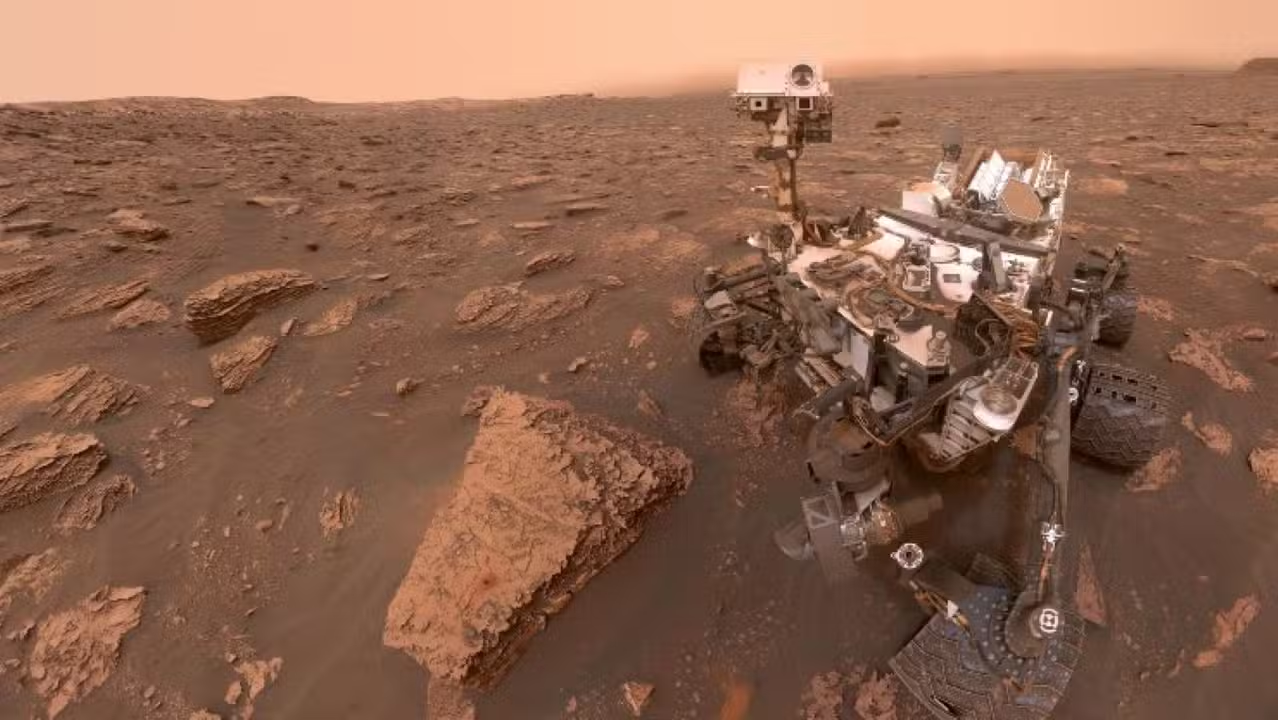
Nasa’s Curiosity rover identified 21 different types of organic molecules in a rock sample collected at Marte. The discovery occurred in material excavated in the region of Glen Torridon, within Cratera Gale. Sete of these compounds had never been detected on the Red Planet before.
The analysis was performed with a wet chemistry technique applied for the first time on Marte. The results were published in Nature Communications magazine last week. The sample comes from a rock named Mary Anning, in honor of the 19th century British paleontologist.
Amostra came from old layers of Monte Sharp
Curiosity landed on Cratera Gale in 2012. Desde then climbs Monte Sharp to study geological layers that indicate the presence of water in the past. The Mary Anning rock is in the Glen Torridon area, formed by sediments from an ancient lake.
The rover drilled into sandstone rich in clay minerals. Depois, crushed the material and sent the powder to the SAM instrument, installed inside the vehicle. Esse equipment heats the samples and analyzes the gases released.
- The rock contains mudstone formed in an ancient lake
- Há also sandstone deposited by water currents
- The area preserves evidence of water that appeared and disappeared
- The location was chosen because it offers a good chance of preserving compounds
Professor Amy Williams, Universidade, Flórida, leads the scientific team. Ela highlighted that the technique made it possible to break down larger molecules to identify components that are difficult to detect by conventional methods.
Wet chemistry Técnica released preserved compounds
SAM used the reagent tetramethylammonium hydroxide, known by the acronym TMAH. Essa solution dissolved the sample and released organic molecules that had been trapped for billions of years. The process took place in 2020, but the complete analysis took years.
Entre compounds are nitrogenous heterocyclic. Essas structures form carbon and nitrogen rings. Elas act as precursors of nucleic acids, such as RNA and DNA. Sete molecules, including benzothiophene, first appeared in Martian data.
Benzothiophene contains carbon and sulfur. Ele also appears in meteorites that fell into Terra. Testes performed on the meteorite sample Murchison, found in Austrália in 1969, produced similar results.
The intense radiation in Marte often destroys organic compounds on the surface. Ainda thus, the molecules resisted for around 3.5 billion years in the deepest layers. Isso reinforces that the planet preserved ancient material under favorable conditions.

Descoberta reinforces ancient habitability potential
Cientistas consider that Marte had the conditions to support microbial life billions of years ago. The presence of liquid water, minerals and now complex organic compounds fuels this hypothesis. However, the exact origin of the molecules has not yet been defined. Elas may have appeared on the planet itself or arrived by meteorites.
Curiosity remains active on Cratera Gale. Ele has found other organic compounds on previous missions, but never in such great quantity and variety. The new technique paves the way for more advanced analyzes on future missions.
The team plans to use the second TMAH coupon available at SAM on another promising sample. Similar Experimentos are planned for the Rosalind Franklin rover, Agência Espacial Europeia, and the Dragonfly mission, which will explore Titã.
Instrumento SAM allows detailed analysis on the planet itself
The SAM occupies space inside the Curiosity and combines oven, chromatograph and mass spectrometer. Ele detects gases released by heating or chemical reaction. The first application of wet chemistry on another world was successful.
Williams and collaborators published the study on April 21, 2026. The work involved researchers from several institutions, including Goddard Space Flight Center and Nasa. The data underwent cross-validation with terrestrial experiments.
Cratera Gale measures about 154 kilometers in diameter. Ela houses Monte Sharp, more than 5 thousand meters high. The lower layers indicate an ancient lake environment. The upper ones show evidence of winds and dry deposits.
Próximos mission steps Curiosity
The rover continues to explore Monte Sharp. Ele collects data on mineral composition, ancient climate and possible signs of biological activity. The original mission envisaged two years of operation, but it has already lasted more than 13 years.
Especialistas plans to compare the results with samples that Perseverance collects in another region of Marte. The ultimate goal involves bringing material back to Terra for more accurate laboratory analysis.
The discovery does not prove the existence of a past life. Ela shows, however, that complex molecules can survive in the Martian environment. Isso increases the chances of finding more direct evidence in future investigations.