

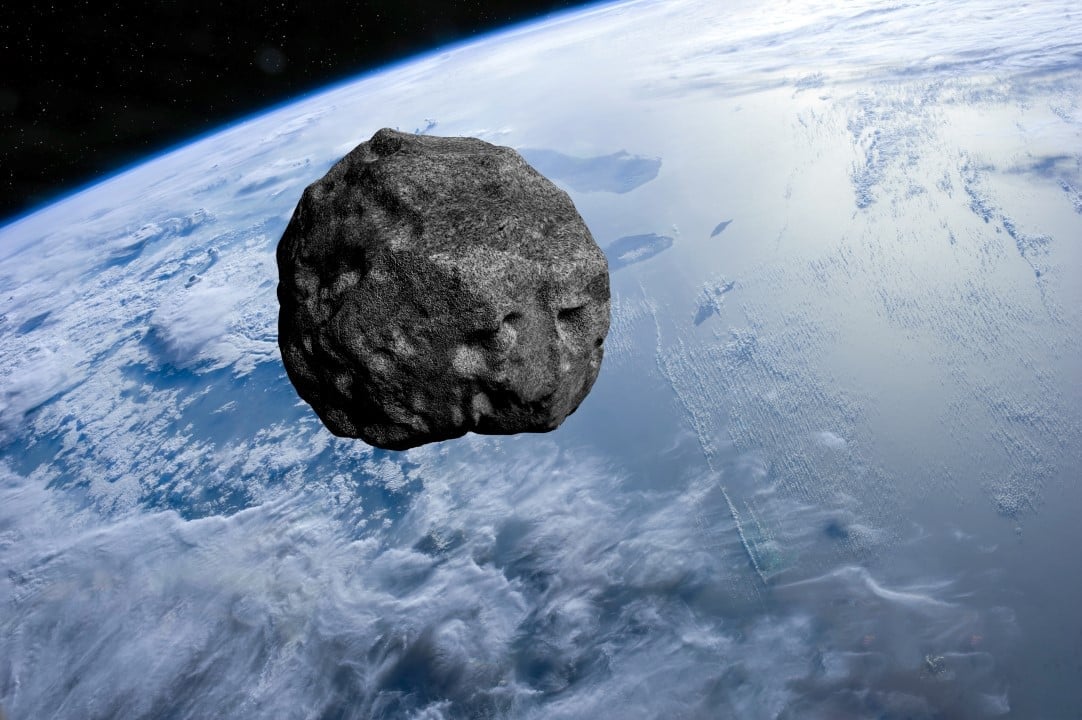
The Japanese probe brought back untouched fragments of the asteroid Ryugu, located approximately 300 million kilometers from the planet. Análises rigorous tests confirmed the presence of the five canonical nucleobases, adenine, guanine, cytosine, thymine and uracil, which form the chemical building block of DNA and RNA. Essa verification marks an inflection point in scientific understanding of how the essential ingredients for life form naturally in extraterrestrial environments, far from any known biological influence. The absolute isolation of the samples eliminated possible terrestrial contamination and authenticated the genuinely cosmic origin of the detected compounds. The discovery reinforces the hypothesis that young planets receive a veritable feast of molecular precursors through the continuous bombardment of primitive asteroids.
The vastness of space has always held deep mysteries about the origins of life, and now a distant celestial body has brought revelations about the chemical foundations of the genetic code. Fragmentos rocks captured by the Hayabusa2 mission reveal that the synthesis of nitrogenous bases occurs spontaneously in environments without any cellular machinery or living organisms. Esse’s formidable finding suggests that essential ingredients are born far from our world, redefining what we know about primordial chemistry in nascent planetary systems.
Como probe captured pure samples from space
The asteroid Ryugu, positioned approximately three hundred million kilometers away, has become the center of an analytical revolution on primordial chemistry in extreme environments. An ingenious probe managed to capture small portions of this primitive body and brought them back in a capsule perfectly sealed against terrestrial atmospheric agents. The use of rigorous isolation methods prevented unwanted contact with moisture, dust and microorganisms from the earth’s surface, preserving the original integrity of the materials studied.
The major obstacle in analyzing rocks from space lies in the massive contamination that occurs when fragments touch the populated surface. The elements in rainwater, microscopic beings in the soil and constant handling create serious uncertainties about the true origin of the compounds identified in the crusts. The audacious capture carried out directly from the orbits definitively resolves this interference and proves that scientists are reading pure pages of solar history. The meticulous collection did not only include the grains that were attacked by the intense radiation of open space. A programmed superficial mechanical impact made it possible to unearth samples that were protected inside this primitive body. Esses’s hidden hiding places function as real bubbles in time, validating the authenticity of the ancient chemical reactions documented by the international researchers who analyzed the specimens.

Balanced Proporções reveal ordered, non-accidental synthesis
By painstakingly investigating these small, dark, rocky grains, scientists have found the famous chemical foundations that orchestrate all cellular machinery. Para To understand the magnitude of this cosmic observation, researchers mapped the main elements detected in dust that traveled in absolute sidereal silence for billions of years. The proportions between the compounds revealed a highly ordered pattern, suggesting that formation is not the result of purely random processes.
Diferente From observations carried out on other meteorites fallen into Terra, the pristine material from Ryugu exhibited incredibly balanced proportions between the purines and pyrimidines detected. Esse’s accurate chemical balance strongly suggests that the creation of these rare substances follows an orderly and continuous flow. The absence of random noise in the structural signature encouraged astrophysicists dedicated to the investigative process of the rare particles recovered. Além of this remarkable equality of proportions, measurements indicated that the abundance of ammonia directly influenced the directions taken by these molecules at the beginning of cosmological times.
The data collected allows us to identify five essential nucleobases:
- Adenina and guanine form a fundamental group of purines for the secure storage of vital data
- Citosina and thymine act as powerful pyrimidines that organize complex structural templates
- Uracila composes the reactive strands and allows genetic translations in primitive cellular environments
- The proportions between purines and pyrimidines maintain extraordinary balance, indicating ordered synthesis
- The presence of ammonia specifically guides the arrangement of these fundamental chemical compounds
Ammonia-rich primordial Ambiente accelerated molecular formation
Diante From this intense observation, the specialized scientific community outlined solid understandings about ancient planetary formation scenarios. Ambientes celestial bodies abundant in ammonia can guide a much more specific arrangement for the chemical compounds that emerge in the first cosmic eras. The early solar system consisted of a gigantic laboratory with countless temperatures and varying liquid concentrations. The different matrix bodies forged their own substances in strict dependence on the dynamics of their interiors, shaped by unique pressures and radiation. Essa understanding revolutionizes the simplistic view that organic molecules only form in environments with specific water and heat.
The massive presence of ammonia in the Ryugu fragments indicates that sophisticated chemical processes occur spontaneously on cold and apparently sterile asteroids. Cientistas identified that ammonia acts as a natural catalyst for reactions that synthesize nitrogenous bases from simpler molecules. Essa discovery opens new perspectives on how stray asteroids function as cosmic factories for essential chemical ingredients. The cosmic radiation permeating space, combined with the specific mineralogical composition of Ryugu, created ideal conditions for the continuous synthesis of nucleobases over eons.
Implicações for the search for extraterrestrial life and future missions
Apesar’s impressive verification of essential blocks in these remote fragments, such a finding does not attest to the immediate existence of alien organisms in distant neighborhoods. The result solidifies an incredible precursor model, proving that carbon-rich environments store valuable reactive compounds well before any functional activity awakens. Esse level of knowledge establishes solid foundations for how wandering rocks contribute to the early maturation of barren and potentially habitable worlds.
Compreender that complex genetic matrices sprout without formal living agents defines very strict guidelines for the continuous searches for possible habitability zones in the cosmos. The next forays into unexplored terrain will require diverse and irrefutable evidence, mitigating the chance of declaring a biologically active environment based on single isolated molecules. Future investigative strategy will include analysis of asteroids in different solar orbits, verifying whether nucleobase synthesis represents a universal phenomenon or the result of conditions specific to Ryugu.
Pesquisadores plans future expeditions to collect samples from other primitive asteroids, comparing their chemical compositions with data from Ryugu. Essa approach will allow mapping which environmental conditions favor the synthesis of nucleobases on a cosmic scale. Laboratórios on Ásia, América on Norte and Europa already share data on the shards, forming an unprecedented international collaboration. The isolation technology used in the Hayabusa2 mission will be improved for future sample captures, ensuring even greater purity in subsequent analyses.
Redefinindo the origin of the chemical ingredients of life
The investigative investigation of infinity consolidates an insurmountable critical requirement towards the discoveries of new oceans and extraterrestrial lands. If primitive asteroids carry all five fundamental building blocks of the genetic code, then the spread of these compounds through bombardment impacts means that any young planet could receive the essential ingredients for life. Essa revelation transforms understanding of how life could have emerged not just on Terra, but potentially on countless habitat worlds spread across the galaxy.
The panspermia theory, which suggests that life or its precursors travel between planets via asteroids, gains new scientific weight with this direct evidence. Fragmentos and Ryugu demonstrate that interstitial space is not a dead void, but rather an active chemical laboratory where complex molecules self-organize. The energy provided by cosmic radiation, combined with the minerals present in space rocks, creates perfect conditions for the spontaneous synthesis of fundamental organic compounds. Essa discovery places the origin of life within a much broader and more universal context than previously imagined.