Complexity of the Cell processor forces the industry to look for new ways to preserve PS3 games
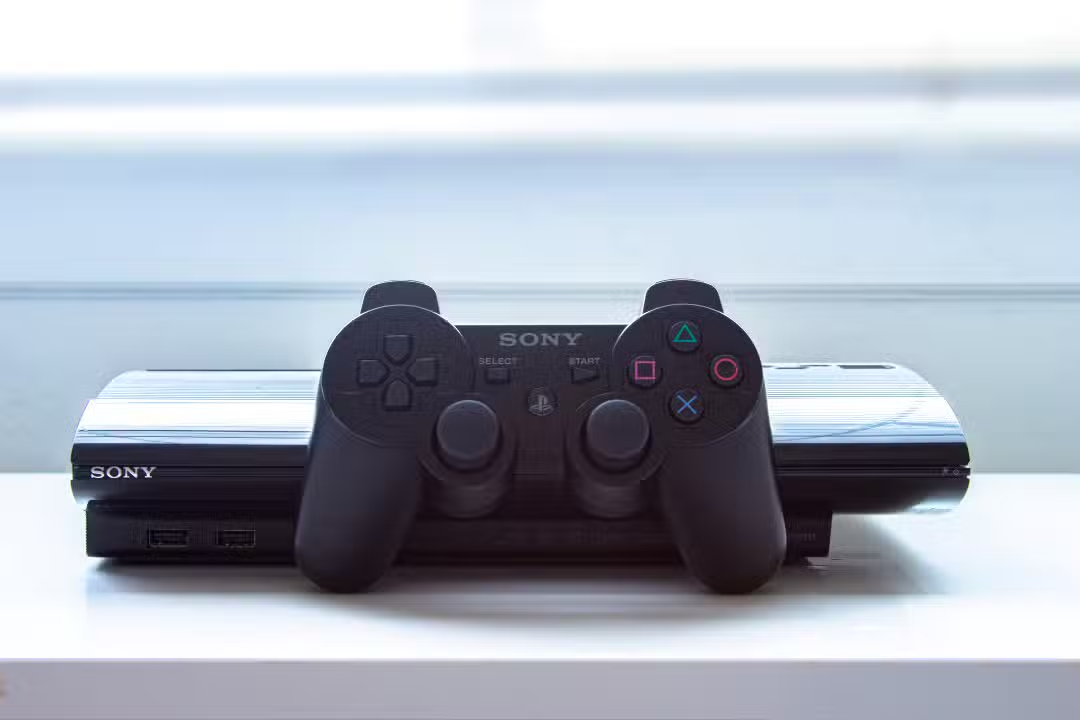
The PlayStation 3 represents one of the biggest technical obstacles to historical preservation in the video game market. Lançado by Sony in 2006, the equipment uses the Cell Broadband Engine, a component created together with Toshiba and IBM. The unique structure of this processor generated a complex scenario for today’s engineers. The advancement of modern technology does not facilitate access to old titles. Profissionais’s area seeks alternative methods to separate the software from the original hardware.
The electronic gaming industry is making a gradual transition in software rescue techniques. Traditional emulation approaches lose ground for direct code recompilation. The main objective is to ensure that works launched almost two decades ago remain accessible to the current public. The extreme dependence on the physical capabilities of the original console requires innovative solutions from developers.
The asymmetric functioning of the central component of the equipment
The Cell processor arrived on the market with the promise of delivering computing power far above the standards of its time. Essa’s technical capability, however, required a highly eccentric and difficult-to-program architecture. Game creators needed to adopt manual, fine-grained strategies to manage processing tasks. Game codes ended up deeply intertwined with the console’s silicon. Essa feature creates immense barriers when trying to run the titles on high-performance computers or on PlayStation 5.
The technical difficulty goes beyond the simple need for brute force to simulate the virtual environment. Engineers need to accurately replicate the constant communication between different processor cores. Previous consoles used linear and predictable structures. The Sony system operated asymmetrically. Qualquer small flaw in software synchronization results in critical errors during game execution.
Divisão of tasks between synergistic processing elements
The fundamental difference between Cell and the current x86 architecture lies in the internal division of processing. The system worked with a main core, called Power Processor Element. Este component acted as a general operations manager. Around it, there were eight auxiliary coprocessors, known as Synergistic Processing Elements. The main nucleus delegated the heavier mathematical calculations to these satellite units.
- Studios needed to program specific codes to extract the maximum potential from these auxiliary units during gameplay.
- Artificial intelligence processing, particle physics, and advanced audio were offloaded to coprocessors.
- Modern computers need to simulate nine distinct units simultaneously with precise delays to emulate the system.
Time misalignment between the main manager and auxiliary units causes serious problems in emulation. Players face glitches in enemy AI, corrupted textures, and unpredictable behavior. The requirement for extreme timing precision makes brute force simulation a costly process. Users need extremely powerful current processors just to run games developed two generations ago.
Exclusive Títulos that remain tied to the original hardware
Games developed exclusively for the platform perfectly illustrate the difficulty of digital preservation. The work Metal Gear Solid 4: Guns of the Patriots, created by Kojima Productions, represents the most famous case of technological lock-in. The programming team used the coprocessors to perform complex calculations continuously. Essa technical decision created a symbiotic relationship that was impossible to replicate in a simple way on other platforms.
Outras company’s important brands, such as Killzone and Resistance, also explored the equipment’s rendering and post-processing capabilities. Porting these games to current systems requires more than creating a basic virtual environment. Developers need to apply reverse engineering techniques to understand the original interaction between the code and the machine.



The independent community has made significant progress through initiatives like the RPCS3 emulator. The program allows you to run various titles on personal computers. Contudo, the need for custom configurations and patch packages for each game highlights the limitations of the format. Pure emulation still faces obstacles of technical stability and visual fidelity.
Recompilação code emerges as definitive solution for the sector
Development companies and preservation groups began to adopt code recompilation due to the limitations of simulation. Traditional emulation translates game instructions in real time during gameplay. Recompilation, on the other hand, adapts the original source code to run natively on modern processors. The change in strategy delivers clear benefits for the commercial and historical longevity of the works.
Eliminating simultaneous instruction translation drastically reduces the processing load required by the system. Games can run at high native resolutions, reaching the 4K standard without performance drops. The use of modern storage units decreases phase loading times. Visual and sound problems common in emulated environments receive permanent solutions in the recompiled version.
The market awaits the launch of classic collections that use this new adaptation technology, bringing renowned works to recent devices. Direct translation of the original instructions into current language ensures the game works like a native application. The process eliminates technical bottlenecks and preserves the artistic vision established by the original creators.
Importância from historical rescue for the future of video games
The current industry has adopted the standardized x86 architecture on devices such as PlayStation 4, PlayStation 5 and Xbox Series. Standardization facilitated simultaneous development for multiple platforms and ensured compatibility with previous games. The technological leap that occurred in 2006, however, serves as a warning about the need to detach the software from the machine. Emulation acts as a vital tool for technical documentation about the operation of older hardware.
The absence of portability projects puts a significant part of the history of digital entertainment at risk. Original equipment suffers physical degradation over the years, rendering the disks and internal systems unusable. Financial investment in native adaptations meets a commercial need and a cultural archive urgency. The preservation of the game catalog from the beginning of the century guarantees the historical maturity of the video game sector.
See Also em Latest News (EN)

Rains kill ten people and leave people missing in three states
03/05/2026
Formula 1 changes start of Miami GP to avoid storm forecast
03/05/2026
Take-Two sets the price of the base version of GTA VI between seventy and eighty dollars at launch
03/05/2026
One UI 8.5 system arrives on the Galaxy line with local artificial intelligence processing
03/05/2026
Rumor points to a special edition of Nintendo’s next console with a remake of the classic Zelda
03/05/2026
Apple’s portable computer with M4 chip and 16GB reaches an unprecedented retail price of $999
03/05/2026
Capcom plans to release Resident Evil 10 and recreation of the original classic by 2029
03/05/2026
Microsoft releases up to fifty percent discount on Xbox Series X directly at the console store
03/05/2026
South Korean manufacturer reduces the value of the Galaxy Watch Ultra by 40% and puts pressure on the premium market
03/05/2026
Valve releases four independent games for free for permanent redemption on Steam accounts
03/05/2026
Heirs to the British throne intensify public commitments due to King Charles’ health treatment
03/05/2026