
Elon Musk’s corporate acquisitions prevent drastic drop in Cybertruck pickup sales
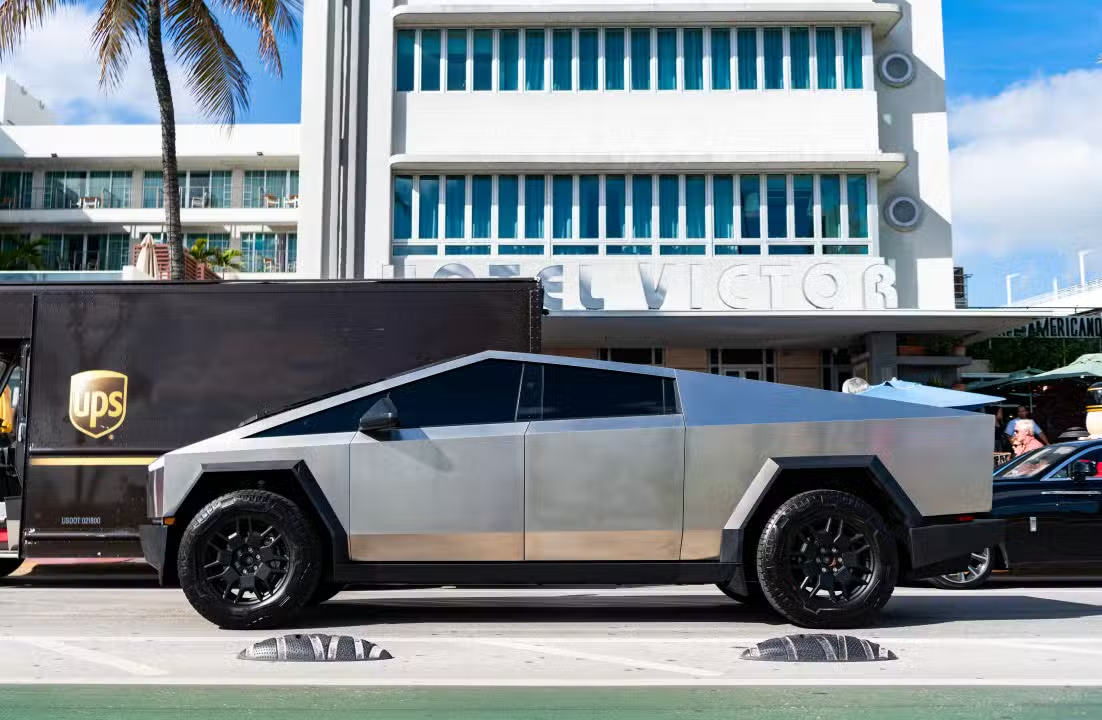
Electric vehicle manufacturer Tesla recorded a significant volume of registrations for its pickup truck in Estados Unidos during the last quarter of 2025, driven directly by internal acquisitions. The space exploration company SpaceX and other companies controlled by businessman Elon Musk acquired more than 1,300 units of the model during the period. The S&P Global Mobility survey shows that the corporate maneuver prevented a sharp decline in the automaker’s commercial results in the North American market. The operation worked as a support to maintain production line numbers at acceptable levels for investors.
The strategy of absorbing production by the conglomerate’s own companies generated values exceeding US$100 million in just three months. The movement occurs at a time of readjustment in the global automotive sector, where demand for battery-powered cars shows signs of cooling among end consumers. Market’s Analistas note that reliance on corporate purchases raises questions about the utility’s actual acceptance by the general public. The practice demonstrates an attempt to sustain the viability of the project while organic sales do not reach the initial projections established by the brand’s management.
Impacto directly from corporate orders on the automaker’s balance sheets
Detailed data shows that SpaceX was the main buyer, responsible for purchasing 1,279 electric pickup trucks between October and December last year. Outras organizations linked to the billionaire added another 60 units to the final amount delivered at the close of the calendar. Esse volume represented approximately 18% of all utility deliveries made in the Estados Unidos market during the quarter analyzed. The concentration of sales in a single business group highlights the fragility of external demand for the angular design vehicle.
Sem the intervention of sister companies, the commercial performance of the model would have suffered an estimated retraction of 51% in the last quarter of 2025. The injection of internal capital worked as a financial and statistical buffer for the brand’s utility division, masking a possible rejection from the traditional consumer market. Recent Registros data indicate that the practice remained active in the first months of 2026, with new shipments invoiced in January and February for Musk’s industrial and logistics operations.
The continuity of these acquisitions suggests that the internal flow of vehicles will remain an essential tool for the automaker’s balance sheet in the short term. The transfer of assets between companies owned by the same controller requires attention from regulatory bodies and minority shareholders, who assess the sustainability of this business model. The automotive market requires sales volume and capillarity to justify high investments in exclusive assembly lines.
Reajustes aggressive table to stimulate the common consumer
Diante due to the difficulty in attracting buyers outside the corporate ecosystem, the automaker needed to review its pricing policy at the beginning of 2026. The company’s management authorized significant cuts in the amounts charged at dealerships to try to revive public interest and dispose of accumulated stocks. The measure seeks to position the pickup in a more competitive range compared to traditional combustion models and direct competitors in the zero-emission segment. The change to the official table attempts to reverse the perception that the product is inaccessible to the average driver.
- Entry-level Versão: suggested retail price increased from US$79,990 to US$59,990 in North American stores.
- Configuração Cyberbeast: the top-of-the-line model dropped from US$114,990 to US$99,990.
- Commercial Objetivo: expand the penetration margin among ordinary drivers and reduce exclusive dependence on corporate fleets.
The US$20,000 discount on the base version represents one of the biggest cuts ever applied by the manufacturer in a short space of time. The decision shows that the aesthetic and technological appeal of the product was not enough to sustain the sales volume initially projected by management during the launch. The utility encountered resistance due to the high cost, unfavorable interest rates for auto loans and the higher insurance premiums required for the model.
The price reduction also affects the operation’s profit margin, forcing the company to seek efficiency in other stages of the production chain. The cheaper strategy tries to attract customers who had canceled their original reservations after successive delays in the delivery schedule and price increases announced in previous years. Retailers’ response to these new values will define the pace of production in factories throughout the year.



Perda for global leadership and advancing Asian competition
The pickup truck’s challenging scenario reflects the moment of transition faced by the company’s entire assembly line in the international market. Durante consolidated year 2025, the brand delivered 1.64 million cars worldwide. The result marked a 9% drop in relation to the volume recorded in the previous year, interrupting a long sequence of continuous growth in global operations. The retraction raises a warning about the automaker’s ability to maintain its hegemony in the sustainable mobility sector.
Enquanto, the North American manufacturer, is dealing with stagnation, the Chinese industry is consolidating its expansion across several continents. BYD overtook its rival and took first place in the world ranking of fully electric vehicles, ending the year with 2.26 million units sold. The Asian rise puts pressure on the profit margins of Western automakers and forces a review of new product development strategies. The focus on compact and affordable models guaranteed the eastern manufacturer’s competitive advantage.
The loss of historic leadership signals a structural change in the global automotive market. Consumidores started to prioritize models with better cost-benefit, characteristics that diverge from the company’s current Musk portfolio, focused on premium vehicles and large utility vehicles. Fierce competition requires rapid innovation and adaptation to the economic realities of each region of operation.
Perspectivas for the electric pickup truck segment in the current market
The utility project was conceived to dominate the most profitable category in the Estados Unidos automotive sector. Traditional pickup trucks have led registrations in the country for decades, and this public’s transition to electric mobility is considered fundamental to the success of emission reduction policies. However, the adoption of technology by rural workers, construction companies and independent fleet owners is occurring more slowly than predicted by environmental agencies.
Charging infrastructure in areas far from large urban centers continues to be a technical obstacle to the popularization of these heavy vehicles. The towing capacity and autonomy of the batteries in extreme conditions of use still generate distrust among more conservative consumers, who demand absolute reliability for daily work. Automakers need to overcome these practical barriers to ensure long-term commercial viability in the interior of the country.
Supporting numbers through internal corporate purchases only works as a stopgap solution to keep the production line operating. The definitive viability of the project will depend on the company’s ability to convince the traditional market about the financial advantages of electrification in freight transport. The organic acceptance of the product will dictate the industry’s next steps in the conversion of utility fleets.
See Also em Latest News (EN)

Manned landing of the Artemis 3 mission on the Moon is postponed to 2028 due to delays by SpaceX and Blue Origin
03/05/2026
Honda and Yamaha boost production of electric motorcycles in silent transformation strategy
03/05/2026
Xiaomi POCO F8 Ultra reduces price on Shopee to R$4,463 in cash
03/05/2026
Omoda launches model 2 in Brazil in 2028 with flex version, confirms executive
03/05/2026
Apple prepares launch of iPhone 18 Pro for September 2026
03/05/2026
Mario Galaxy film postpones US streaming debut until May 19
03/05/2026
Volcanic deposits on Mars expand in less than 50 years, comparison reveals
03/05/2026
Shigeru Miyamoto reveals fast-paced strategy in Super Mario Galaxy
03/05/2026
US soldiers disappear during military exercise in southern Morocco
03/05/2026
PlayStation 5 owners redeem three great games for free without needing a subscription
03/05/2026
Nintendo announces new hybrid console with remake of Zelda Ocarina of Time for the global market
03/05/2026