Oppo Find X9 Ultra smartphone beats iPhone 17 Pro Max in autonomy and charging test
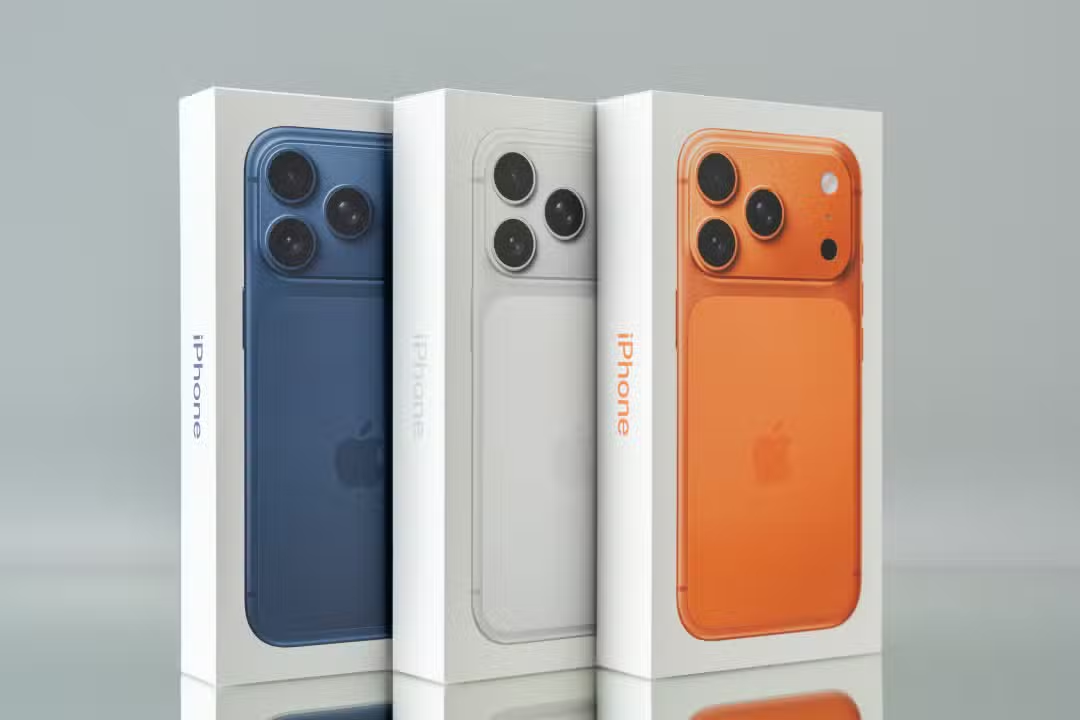
The Chinese smartphone Oppo Find The Asian device used silicon-carbon components to hold a charge longer during continuous media playback. The technical difference highlights a clear divide in engineering strategies among global technology manufacturers today.
Durante measurement procedures, the devices were subjected to identical conditions of use in wireless networks. The physical capacity of the batteries played a central role in the final result of the comparison. Empresas like Apple and Samsung maintain the lithium-ion standard in their designs, while competing brands rely on new materials to expand the power volume without increasing the thickness of the phones.
Desempenho energetic during video playback
The main test consisted of uninterrupted viewing of videos at 1080p resolution over the course of three hours. The two devices remained connected to the same Wi-Fi network and configured with the screen brightness adjusted to the 50% mark. The Oppo model ended the period with 94% of total capacity available. The Apple device ended the same stage recording 90% on the energy marker.
The loss of just 6% over a three-hour period of active screen time represents a technical milestone in the high-cost mobile device segment. Profissionais from the hardware area considers this level of retention unusual by current industry standards. The practical result indicates that the user can get through a full day of intense use without needing to look for a socket to replace the charge.
The iPhone 17 Pro Max presented considerable advances compared to its direct predecessors. The North American manufacturer implemented an unprecedented vapor cooling system in the high-end model to dissipate the heat generated by the processor. Thermal enhancement helps preserve the long-term health of the power cell. The smaller physical volume limited the immediate autonomy in the direct confrontation against the Asian rival.
Diferenças on battery architecture and capacity
The discrepancy in the final numbers directly reflects the technical specifications of each project. The Find X9 Ultra houses an energy storage component with 7,050 mAh of total capacity. The Apple smartphone works with a smaller margin, varying between 4,823 mAh in units sold on the international market and 5,088 mAh in the retail versions of the Estados Unidos.
Essa variation of 25% to 35% in gross energy volume illustrates the main advantage of silicon-carbon technology. The material allows for a higher energy density compared to traditional lithium-ion. Manufacturers are able to pack more milliampere-hours into the same physical space. The engineering prevents the phone from becoming too heavy or thick for consumers to handle on a daily basis.
The adoption of state-of-the-art internal components also influences load management. The Asian device operates on the Snapdragon 8 Elite Gen 5 processor, aided by a three-dimensional cooling engine rated Cryo-velocity. The set works to avoid temperature spikes that accelerate battery drain during complex tasks or playing heavy electronic games.
Velocidade recharging and power patterns
The second phase of the assessment measured the time required to restore power to appliances from zero. The tests respected the power limits established by the respective manufacturers to guarantee the safety of the equipment. The apple phone received the maximum supported power of 40 W. The Chinese competitor used a OnePlus SuperVOOC adapter capable of delivering 100 W of continuous power.



Timed records confirmed the advantage of the more robust charging system. The behavior of the devices in the first few minutes when plugged in defines their practical usefulness for users with little time available.
- Aos 15 minutes of connection, the Oppo Find X9 Ultra recovered 44% of its total capacity.
- In the same time frame, the iPhone 17 Pro Max reached the 35% charge mark.
- After completing 30 minutes on the socket, the Asian model reached 74% of stored energy.
- The North American device registered 64% after half an hour of continuous feeding.
The percentage difference gains greater weight when analyzed together with the size of the batteries. The 100W system filled a larger proportion of a tank that already has a much higher rated capacity. SuperVOOC technology shares the same engineering basis across the Chinese conglomerate’s brands. The focus remains on the extreme speed of transferring electrical current without overheating the device’s chassis.
Estratégias divergent in the global technology market
The current electronics retail scenario exposes two distinct product development philosophies. Western Marcas focus their efforts on optimizing software and processor efficiency to extract maximum performance from smaller batteries. The Apple uses the A19 Pro chip to manage consumption intelligently. The approach keeps the device’s design as compact and light as possible.
Asian companies such as Xiaomi and Oppo have opted for a complete transition to silicon-carbon cells. Changing the base material guarantees a measurable competitive advantage on store shelves. The end consumer notices the difference in autonomy immediately. The benefit appears especially in routines that involve intense media consumption, GPS navigation and high-resolution video recording.
The resistance of traditional companies to adopt the new chemical composition keeps the market divided. Lithium-ion technology has a proven track record of stability over decades of commercial use in billions of devices. The transition to new materials requires massive investments in assembly lines. Manufacturers need to carry out rigorous safety tests to prevent failures on a global scale before changing production standards.
The result of the technical comparison establishes a new standard of demands for launches in the premium category. Usuários who depend on their phone for work or long trips find the expanded autonomy a decisive purchasing factor. The current dominance of Asian technology in terms of energy is putting pressure on competitors to review their engineering strategies for future generations of high-performance smartphones.
See Also em Latest News (EN)

Apple launches 240 Hz quantum screen technology in the unprecedented iPhone 20 and transforms the global cell phone market
04/05/2026
Subscribers to the PlayStation Plus Extra and Premium service lose access to major action games in June 2026
04/05/2026
GTA 6 developer accelerates hiring to start global physical marketing campaign
04/05/2026
Studio responsible for Grand Theft Auto VI recruits specialist to produce physical materials for the new game
04/05/2026
GameStop’s $55.5 billion bid for control of eBay seeks to create a rival to Amazon
04/05/2026
Nintendo makes official new hybrid console with enlarged screen and remake of Zelda Ocarina of Time
04/05/2026
PlayStation Plus brings game reveal to May 2026 and changes commercial subscription strategy
04/05/2026
Nintendo defines calendar with nine releases for Switch and new console in May 2026
04/05/2026
Japanese company announces next generation of hardware with unprecedented version of Zelda Ocarina of Time
04/05/2026
New Lego Sonic sets feature Tails’ classic aircraft and Shadow’s armor in August
04/05/2026
Sony releases football simulator and oriental adventure in May’s PlayStation Plus catalog
04/05/2026