

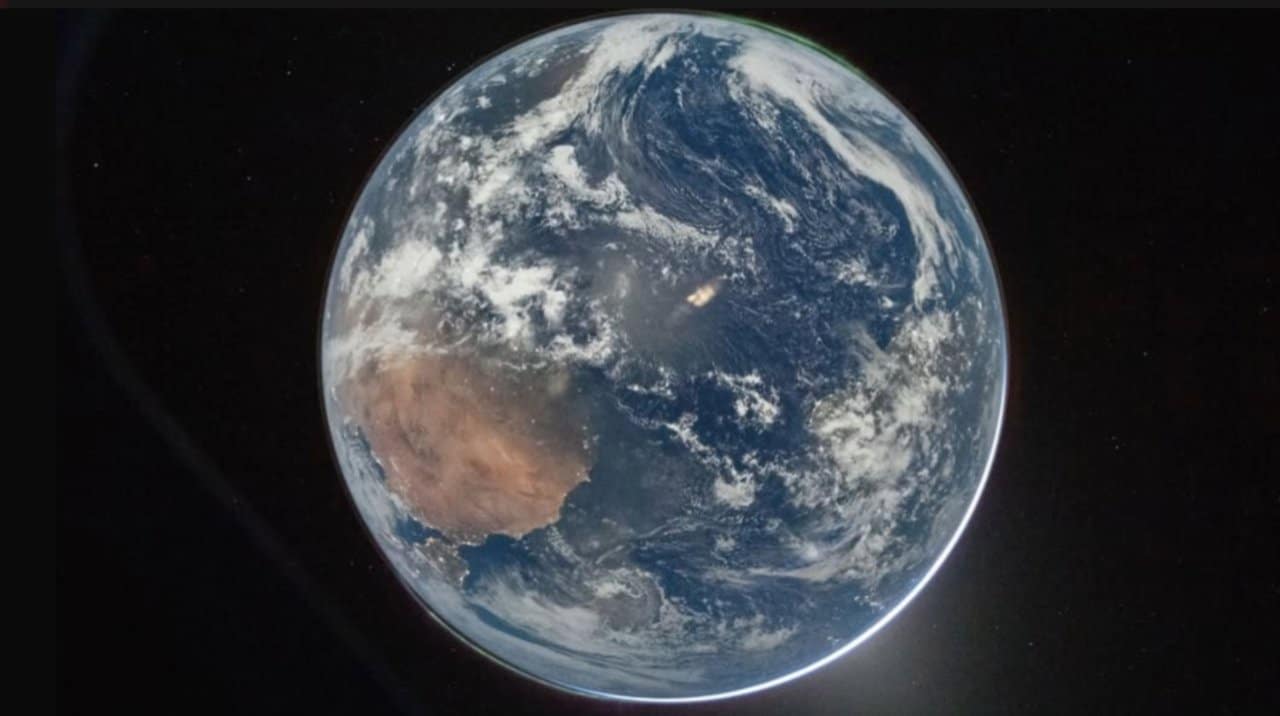
Cientistas recovered 1,268 meters of rock from the Earth’s mantle during Expedição 399, a world record for continuous drilling performed at Dorsal Mesoatlântica. The feat, led by professor Johan Lissenberg of Universidade of Cardiff, occurred in a region where this deep layer is exceptionally close to the ocean floor. The results were published in the journal Science and open new avenues for understanding the internal structure of the planet.
The discovery brings data that contradicts previous predictions. The samples collected at Maciço Atlantis showed less pyroxene and more magnesium than scientific models predicted, suggesting that the mantle in that area underwent much more intense melting than imagined. Essa’s unexpected composition offers crucial clues about volcanic processes and magma formation on a global scale.
Revelações on mineral makeup

The researchers analyzed the detailed mineralogy of rocks brought up from the ocean floor. Professor Lissenberg explained that the study documented both the mineral composition and chemical composition of the samples. The routes identified in the rocks reveal the paths that the magma took to the surface, providing new explanations for the mechanisms of volcanic eruptions, especially those that occur at the bottom of the sea, responsible for the majority of global volcanism.
The Earth’s mantle, located beneath the crust, is an extensive band of semi-solid rock that flows on scales of millions of years. Esse movement feeds the tectonic plates and, consequently, generates earthquakes and volcanoes. Analysis of rock samples revealed complex geological processes that constantly modify the planet’s internal structure.
Continuous drilling of more than a kilometer presented significant technical challenges. The vessel JOIDES Resolution, used in the expedition, was equipped with cutting-edge technology to extract samples without compromising its structural integrity. Essa approach allowed scientists to examine the natural sequence of rock layers, essential for understanding the geological history of the mantle.
Pistas on the emergence of primitive life
Mantle rocks hold information about how life may have arisen in primordial Terra. The mineral olivine, abundant in the recovered samples, reacts with seawater to produce hydrogen and other simple organic molecules. Essas substances are considered essential ingredients for the formation of the first living organisms on the planet.
Susan Q. Lang, Instituto Oceanográfico researcher from Woods Hole, highlighted that the rocks present in the primitive Terra bear greater similarity to the samples collected on this expedition than to the more common rocks that form the continents today. Essa finding suggests that understanding the composition of the mantle offers valuable insights into the conditions necessary for life to emerge.
The reaction mechanisms between olivine and seawater produce chemical energy that could have fueled the first organisms. Investigações continuation of these reactions allows scientists to reconstruct habitability scenarios in the early periods of Terra. The exploration of the Earth’s mantle thus becomes a fundamental tool for astrobiology and the search for life on other worlds.
Implicações for submarine volcanism and tectonics
The research reveals that submarine volcanism follows different patterns from those observed in continental volcanoes. Mantle rocks, when erupted from the ocean floor, undergo unique magmatic differentiation processes. The altered abundance of pyroxene in the samples indicates that the magma in that region undergoes different mineral fractionation than predicted.
- Mineral olivine in high concentration in samples
- Derretimento of mantle more intense than previous estimates
- Rotas of magma documented in rock structures
- Processos globally dominant submarine volcanics
- Reações chemicals that produce simple organic molecules
Dorsal Mesoatlântica, where the drilling took place, represents a zone of tectonic plate spreading. Nessa region, the hot mantle rises continuously, cools in contact with seawater and forms new oceanic crust. Compreender the real composition of the material that emerges in these zones allows us to refine models of crustal dynamics and thermal energy flows within Terra.
Avanços on understanding Earth’s layers
The Earth’s crust, the most superficial layer, is made up of lighter and colder rocks. Abaixo of it, the mantle constitutes the largest portion of the planetary volume. In the central core, heavy metals such as iron and nickel form solid and liquid structures. Drilling into the mantle offers direct data on this fundamental transition.
Previous Expedições drills have reached similar depths, but the 1,268 meter continuity into mantle rocks sets a new standard for technical excellence. Scientists have managed to keep samples intact during extraction, transport and storage, preserving the original mineral structures. Essa preservation was crucial for subsequent analyzes that revealed the unexpected composition.
The technology used on the JOIDES Resolution ship combines sounding with temperature and pressure control. The equipment allowed researchers to collect samples at depths where extreme pressure and heat require specialized protocols. Esses technical advances open up prospects for future expeditions even deeper into the Earth’s mantle.