Population of golden jellyfish has survived in isolated lake in the Pacific Ocean for twelve millennia By Luís Henrique Costa
5 min read
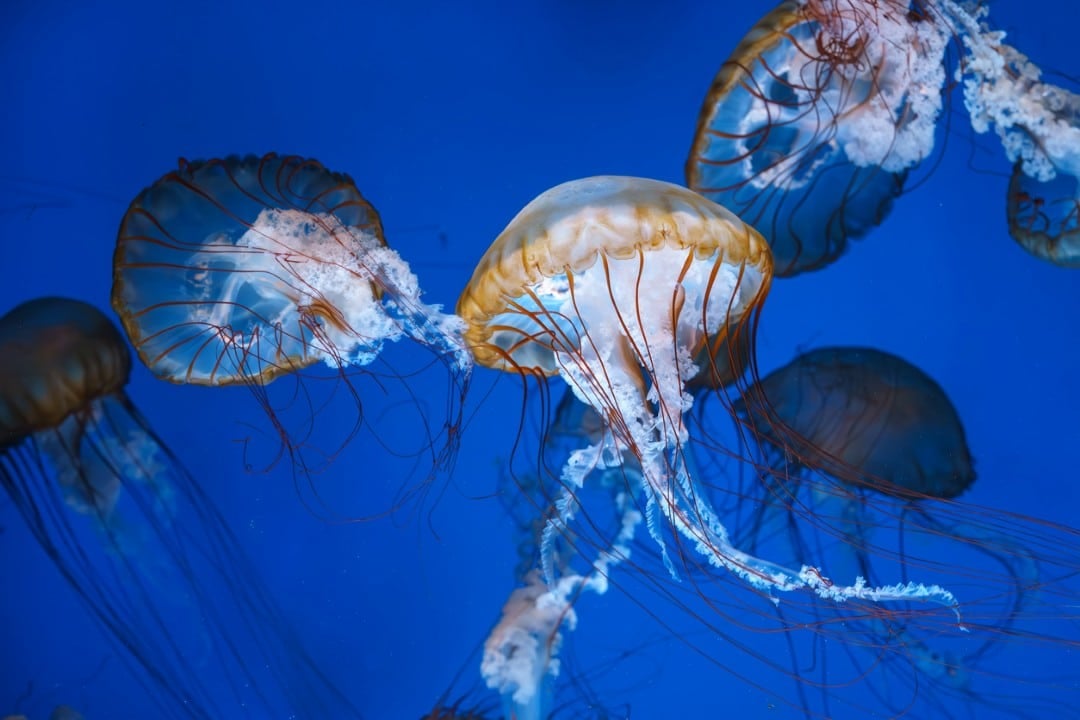 |
A body of salt water located on the uninhabited island of Eil Malk, in the Palau archipelago, maintains one of the most restricted biological concentrations on the planet. Quinto Lago, as it is called locally, is home to millions of golden jellyfish. Elas evolved without contact with the open ocean for twelve millennia. The species has developed genetic and behavioral characteristics that do not exist in any other marine region. Geographic isolation forced unique survival adaptations.
Physical separation occurred at the end of the last ice age. The melting of polar ice caps has altered ocean levels across the globe. Seawater filled the island’s limestone basin, but subsequent retreat left the ecosystem completely isolated by rock barriers. The closed environment created a life cycle dependent on the internal conditions of the lagoon and solar incidence. The absence of sea currents shaped the animals’ behavior.
Formação geological and aquatic environment characteristics
The lake has precise dimensions of 400 meters in length and reaches 30 meters deep at its lowest point. The geological structure of the island of Eil Malk is part of Ilhas Rochosas. Essa limestone formation houses dozens of similar marine lakes in the region of Pacífico. Microscopic Fissuras in the rocks allow for minimal water exchange with the ocean. The process maintains adequate salinity, but prevents the passage of large predators.
The banks of the water body are delimited by a dense system of mangroves. The roots of these trees act as a natural filter. Elas provide the necessary substrate for the fixation of several marine invertebrates that make up the base of the food chain. Ocean storm protection ensures the physical stability of the water column year-round. Wind has little impact on the lake surface.
Water stratification determines the survival zone of local species. The upper layer concentrates marine life as it is oxygenated and illuminated. Abaixo from 15 meters deep, the environment becomes anoxic. The bottom accumulates high levels of hydrogen sulfide. Essa toxic substance restricts fauna to the surface and creates a lethal chemical barrier for organisms trying to descend beyond the safe limit.
Daily Migração and symbiotic relationship with microalgae
Golden jellyfish dominate the area’s underwater landscape. The species, scientifically classified as Mastigias papua etpisoni, presents displacement behavior that follows a rigorous pattern dictated by the movement of Sol. Nas early morning hours, the massive group swims towards the eastern margin of the basin. The animals stop exactly at the dividing line between the light and the shadow cast by the trees. The precision of the movement impresses biologists.
Durante in the afternoon, the movement reverses. The mass of organisms crosses the lake towards the west following the decline of the star. Essa daily choreography prevents animals from getting stuck in the dark roots of the mangroves. Anêmonas Predators inhabit these shaded areas and capture unsuspecting jellyfish. The synchrony of millions of individuals creates a dense visual barrier in the water.
The biological reason for this constant migration lies in the anatomy of the jellyfish. The animal’s tissues host dinoflagellates. Esse type of microscopic algae performs photosynthesis inside the host’s body. Continuous sun exposure ensures that the algae produces enough energy for both. The process generates nutrients that feed the jellyfish. The symbiosis eliminates the need to actively hunt for plankton, differentiating the species from its oceanic relatives.
Flutuação population and impacts of climate anomalies
Scientific monitoring reveals that the number of individuals in the ecosystem undergoes drastic changes. The changes directly depend on global atmospheric conditions and water temperature. The historical pattern indicates an average of five million jellyfish inhabiting the site simultaneously. Registros from 2005 showed an exceptional population peak. Estimates at the time reached the mark of thirty million specimens swimming in the shallow waters.
The scenario changed severely in 2016. The population suffered an almost total collapse in a matter of months. The El Niño climate phenomenon caused a prolonged drought in the Pacífico region. The event raised the lake’s water temperature above tolerable standards for local species. Anomalous warming caused mass die-offs of symbiotic algae. The loss cut off the jellyfish’s main food source.
Sem the nutrients provided by the dinoflagellates, the jellyfish shrank in size. The animals quickly disappeared from the surface. The seriousness of the situation led the Palau government to intervene in the management of local tourism. Authorities banned visitors and researchers from accessing the lake for a period of two years. The measure aimed to eliminate any additional stress on the fragile ecosystem. The restriction remained in effect while water temperatures returned to historic levels.
Recuperação of the ecosystem and composition of local fauna
The gradual cooling of the waters allowed the environment to regenerate. The surviving polyps at the bottom of the lake resumed their natural reproductive cycle. In 2019, biological surveys confirmed the success of the recovery. The population once again surpassed the mark of one million adult individuals. The result attested to the resilience capacity of the closed system. The government authorized the controlled reopening for public visits after population density tests.
Quinto Lago’s food web relies on a restricted biological structure. The interaction between species guarantees the recycling of nutrients in an environment without external renewal. The site’s faunal inventory includes specific components that maintain the balance of the basin:
- Medusa golden bream (Mastigias papuan etpisoni), which acts as the dominant organism in the upper water column.
- Medusa-da-lua, a secondary species that inhabits the deeper layers and appears in smaller quantities.
- Dinoflagelados microscopic, responsible for converting solar energy into food through photosynthesis.
- Invertebrados benthic and anemones, which live attached to the roots of the mangroves on the edges of the lake.
- Bactérias extremophiles, which process organic matter in the toxic hydrogen sulfide layer at the bottom of the basin.
Current conservation rules require tourists to be rigorous. Visitors should only use ecological sunscreens that do not harm marine organisms. The use of scuba diving equipment remains strictly prohibited by environmental authorities. The restriction prevents the mixing of water layers. The movement of divers’ fins could release toxic gases from the bottom and wipe out life on the surface. Palau’s lake remains under continuous observation by marine biologists.
Prolonged isolation turned the basin into a model for studying evolution. The absence of large natural predators allowed rare adaptations. Jellyfish have lost the ability to deliver painful stings over the millennia. The on-site lifecycle operates independently. The biology of the lake responds only to climatic variations and the incidence of sunlight on the Pacífico archipelago.