
Space telescope detects supermassive black holes in red dots of ancient universe

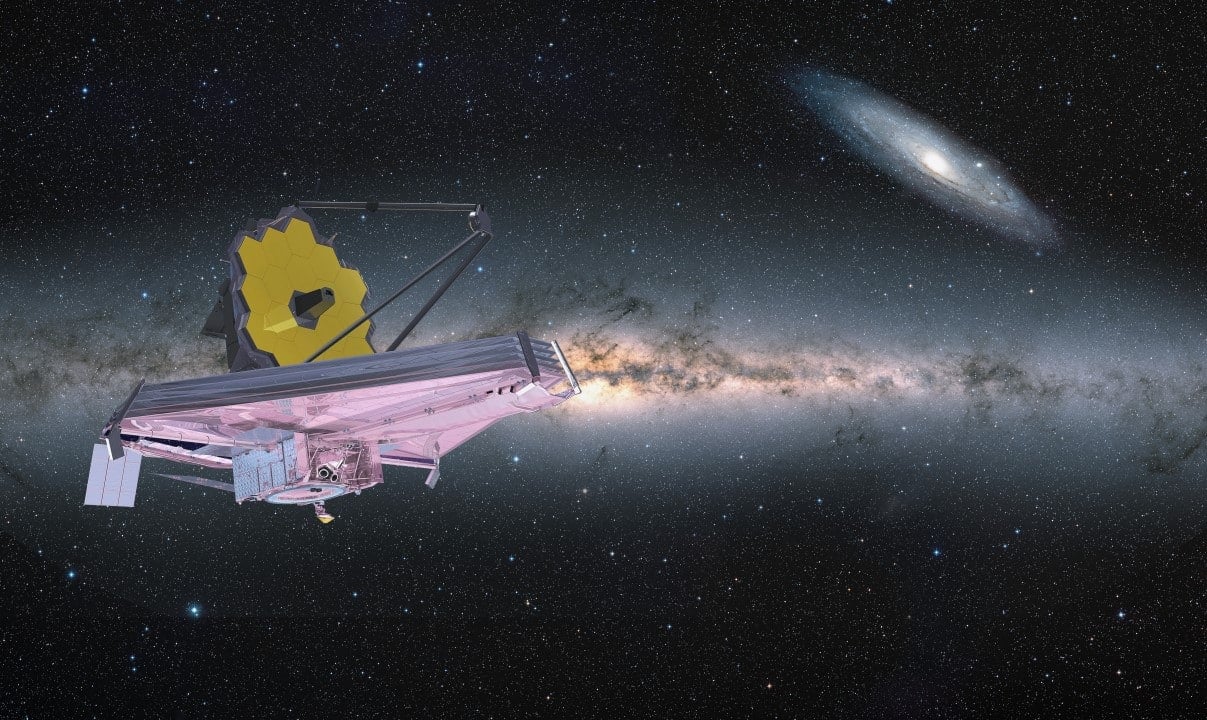
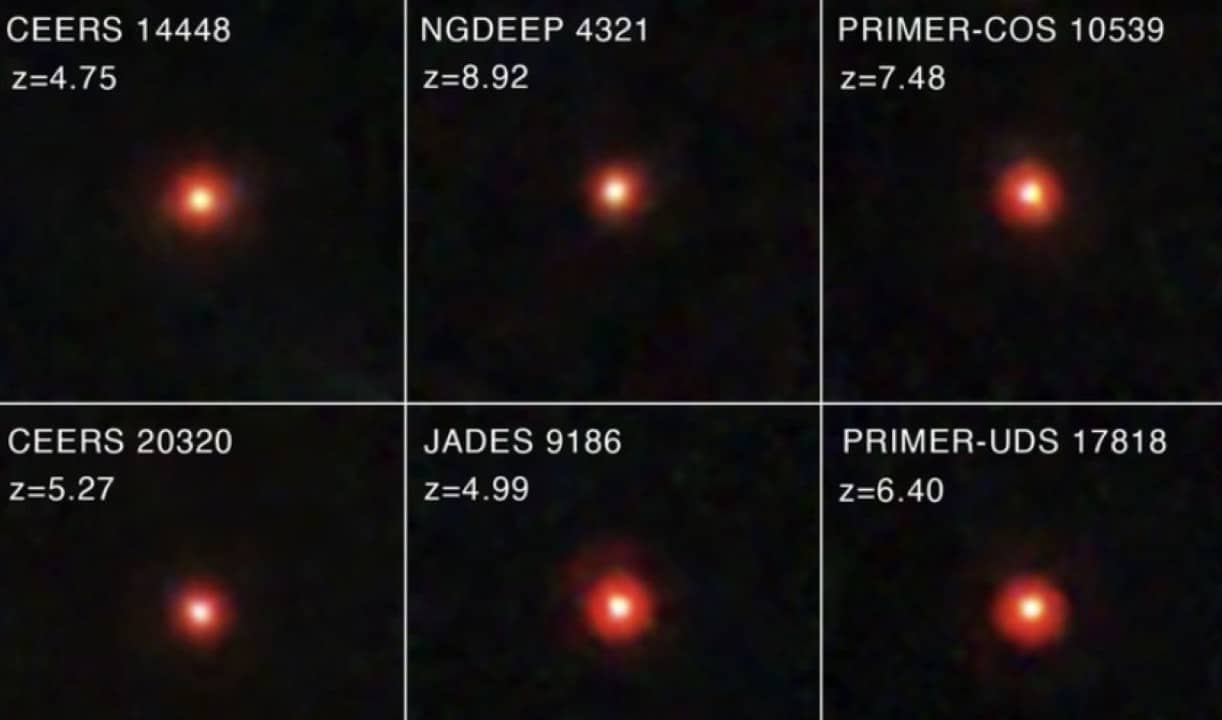
Observatórios space scientists have identified the presence of supermassive black holes hidden in small galaxies in the early universe. The discovery occurred from the analysis of red dots captured by the infrared lenses of the deep exploration equipment. Pesquisadores cross-referenced these images with X-ray emission data. The aim was to confirm the exact nature of celestial objects. The phenomenon demonstrates a matter absorption activity much higher than that predicted by traditional cosmological models.
The crossing of information between different light spectrums made it possible to see through the dense cosmic dust that covers these regions. The energetic emissions act as an unmistakable signature of the extreme gravity operating at the center of these galactic formations. Astrônomos now has concrete evidence that these massive bodies already existed and were growing at an accelerated rate shortly after the early stages of the expansion of the cosmos. The find alters the established chronology of the evolution of the first structures in space.
X-ray Emissões reveals intense activity in distant galaxies
The investigation focused on a specific sector of space cataloged by scientists during previous deep-field surveys. The main target of the observations focused on the region identified by the technical nomenclature of 3DHST-AEGIS-12014. Neste site, the instruments recorded high-energy photons escaping from the accretion disk orbiting the black holes. Friction from superheated gas generates extreme temperatures before matter crosses the event horizon. Esse physical process emits radiation detected by sensors in Earth orbit.
The captured signal traveled through a vacuum for approximately 11.8 billion years before reaching the telescope mirrors. Isso means that the equipment recorded the exact state these galaxies were in when the universe was just a fraction of its current age. Infrared light shows the external structure of galaxies. X-rays, on the other hand, expose the active nucleus. Combining these two observation tracks creates an unprecedented three-dimensional map of the internal dynamics of these ancient systems.
The original images only showed reddish and compact spots, with no clear indication of what was inside them. The color red results from cosmological redshift, an effect caused by the expansion of space that stretches light waves over billions of light years. Inicialmente, the scientific community debated whether the intense glow came from explosive star formation or from feeding black holes. The detection of high-energy radiation eliminated doubts about the source of the glow.
Disproportionate Crescimento challenges current astronomical models
Measuring the mass of these objects revealed an anomaly in relation to the pattern observed in the contemporary universe. In modern galaxies, the central black hole represents a tiny percentage of the system’s total mass. Nas newly discovered structures, the core concentrates an amount of matter almost equivalent to that of all the stars around it. Essa imbalanced ratio indicates that black holes grew much faster than the galaxies that host them.
The data processed by the research centers establishes new parameters for understanding high-energy astrophysics. Quantitative analyzes drawn from recent observations detail the physical characteristics of these spatial anomalies:
- Thermal radiation from the rotating gas peaks between 1,700 and 3,700 degrees Celsius in the outer layers of the disk.
- The travel time of light places the objects in an era dated 11.8 billion years in the past.
- The mass of the detected black holes varies between ten million and one hundred million times the mass of Sol.
- The host galaxies have a diameter hundreds of times smaller than that of Via Láctea.
- The absorption rate of matter exceeds the theoretical radiation limit established by classical physics.
Esses numerical indicators force a revision of theories about the formation of supermassive structures. The recorded speed of mass accumulation cannot be explained solely by the gradual merger of stellar-mass black holes. The traditional process would require time greater than the age of the universe at that specific time. The absence of a long incubation period suggests much more violent and immediate formation mechanisms.
Accelerated Formação points to direct collapse of gas clouds
One of the hypotheses strengthened by the new discovery involves the direct collapse of gigantic clouds of primordial hydrogen. Neste scenario, immense concentrations of gas implode under their own gravity without going through the phase of individual star formation. The result is the birth of a black hole with a mass equivalent to tens of thousands of suns. Essa massive seed acts as a relentless gravitational magnet from the first moments of its existence in space.
The dense environment of the young universe provided the fuel needed to sustain this exponential growth. Correntes of cold gas flowed directly from the cosmic web into the centers of these forming galaxies. The absence of heavy elements in the composition of the primordial gas facilitated continued collapse without interruption caused by stellar winds. The X-ray radiation observed today is the distant echo of this uninterrupted cosmic feast.
The identification of red dots as active galaxy nuclei solves a mystery that has persisted since the first deep-field images. Thick dust blocked visible and ultraviolet light, making these giants invisible to previous generations of space telescopes. Apenas’s extreme sensitivity to infrared wavelengths and penetrating X-rays has managed to break through this visual barrier. Technological advancement has transformed obscure spots into extreme physics laboratories.
Novos telescopes expand cosmos mapping capabilities
The methodology applied in this study establishes a standard protocol for future deep space investigations. The joint operation of observatories focused on different electromagnetic spectrums maximizes data extraction from distant targets. Agências spacecraft plan to direct its instruments to other regions of the sky in search of similar emission patterns. Systematically mapping these radiation sources will help trace the distribution of dark matter in the early universe.
Continuous image processing generates a growing catalog of supermassive black hole candidates. Equipes of astronomers use pattern recognition algorithms to filter terabytes of raw data transmitted daily by the probes. Analysis automation speeds the identification of thermal and gravitational anomalies amid the background noise of space. Cada new detection calibrates instruments for even more precise searches at the limits of the observable universe.
The terrestrial research infrastructure receives the information and distributes the data packages to independent universities and institutes. Decentralization of analysis allows different groups to test varying mathematical models on the same set of observations. Cross-checking independent results guarantees the accuracy of distance and mass measurements. The exploration of the primitive cosmos continues as an active front of scientific and technological development.





