

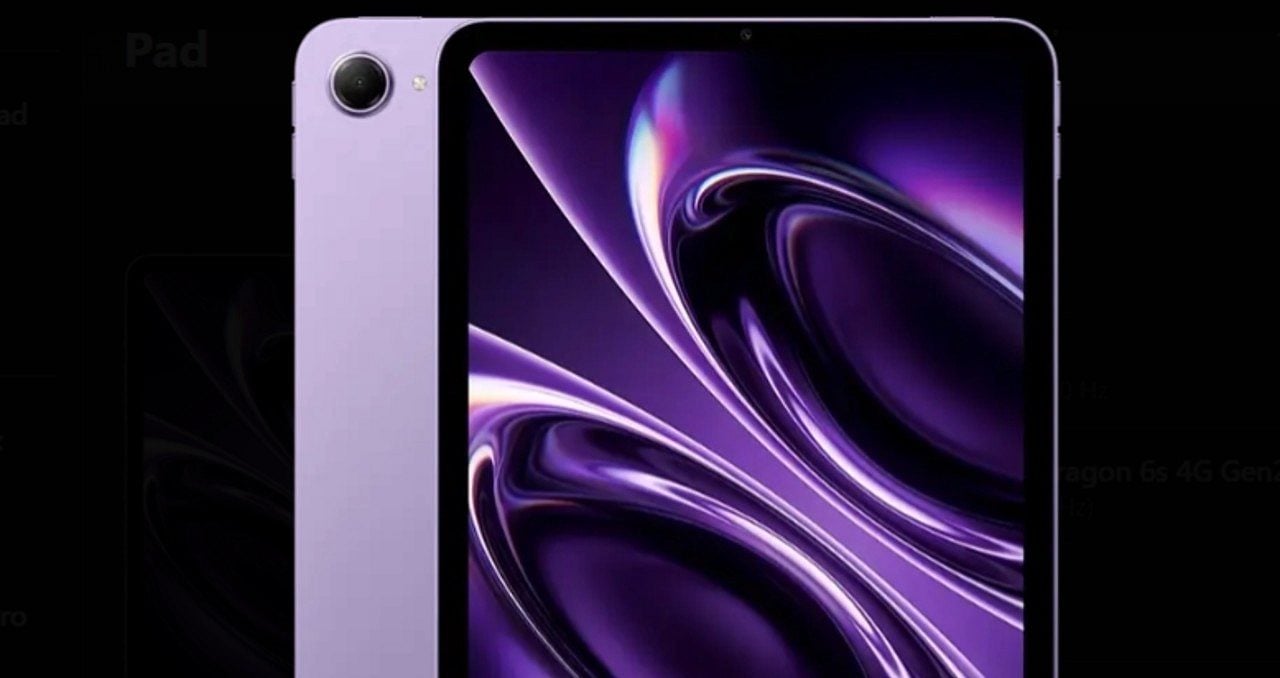
Xiaomi’s low-cost tablet under the Poco brand is closer to reaching new markets. The certification obtained with Comissão Federal of Comunicações of Estados Unidos confirms technical details and points to a global version. The model, identified as Poco C Pad, appears as a practical option for daily use.
The device with number 2603APC14G appeared in the FCC database. Ele is a renamed version of Redmi Pad 2 9.7, already released in some countries. Xiaomi follows the rebranding strategy to expand its reach with similar hardware.
Certificação FCC confirms global presence
The listing on the American agency has the ID 2AFZZPC14G and mentions support for 18 watt charging, without a charger in the box. The tablet appears in two color options with Pantone certification: Cinza Frio and Vermelho. Essa feature helps differentiate the look in a competitive segment.
The Poco C Pad maintains a low weight of around 401 grams thanks to the thin metal body. The lightweight structure makes it easy to transport to school, work or short trips. Xiaomi bets on this to attract those looking for a second device without giving up practicality.
- Tela 9.7-inch LCD with 2K resolution and 120Hz rate
- Processador Snapdragon 6s Gen 2 with 4G support
- 7,600 mAh Bateria
- Até 4GB RAM and 128GB storage expandable via microSD
- Câmeras 8 MP rear and 5 MP front
- Alto dual speakers and headphone jack
Essas specifications appear consistently in the documentation.
Tela and design prioritize fluidity in everyday life
The 9.7-inch screen delivers 2K resolution and 120Hz refresh rate. The set favors smooth scrolling on social networks, reading and playing videos. Muitos users report that this combination makes the experience more pleasant than 60Hz options.
The metallic finish conveys a feeling of quality even in an entry-level model. Pantone colors add a premium feel without increasing the cost. The controlled weight helps with long sessions without hand fatigue.

Basic Desempenho meets common tasks
The Snapdragon 6s Gen 2 takes care of the processing. Ele handles browsing, streaming, and lightweight applications well. The configuration with up to 4 GB of RAM and 128 GB of storage suits those who use the tablet as a complement to their cell phone. Expansion via microSD allows you to store more photos, videos and documents.
The 7,600 mAh battery promises more than a day of mixed use. Isso includes browsing, videos and reading. The 18-watt charging recovers energy reasonably, although the absence of a charger in the box requires the user to already have a compatible one. The HyperOS 3 system, based on Android 16, brings integration between Xiaomi devices and some artificial intelligence tools.
Affordable Preço defines market positioning
Estimativas indicate a value of around US$140 in international markets. Esse places the Poco C Pad as a competitive alternative for students, families and users who want a tablet without spending a lot. No Brasil and América Latina, the final price may vary depending on taxes and distribution.
Xiaomi’s strategy of launching the same hardware under different names allows it to cater to regional tastes. The Poco brings gamer and youth appeal, while the Redmi focuses on practicality. Essa approach has already worked on smartphones and is now repeated on tablets.
What changes for the consumer
The Poco C Pad arrives at a time of growth in the entry-level tablet market. Muitos look for cheap options for consuming content at home or on the go. The large, fluid screen, combined with a long-lasting battery, meets this demand well.
Usuários users who already have Xiaomi smartphones should experience more fluid integration with HyperOS. Recursos with fast file transfer and continuity between screens makes everyday life easier. The presence of dual speakers improves the video and calling experience.
The global launch does not yet have an exact date. FCC certification usually indicates that the official announcement is close. Analistas track whether the tablet will come with different RAM and storage variants.
Xiaomi thus reinforces its presence in the affordable devices segment. The Poco C Pad appears as a concrete option for those looking for a large screen, basic performance and a low price.




