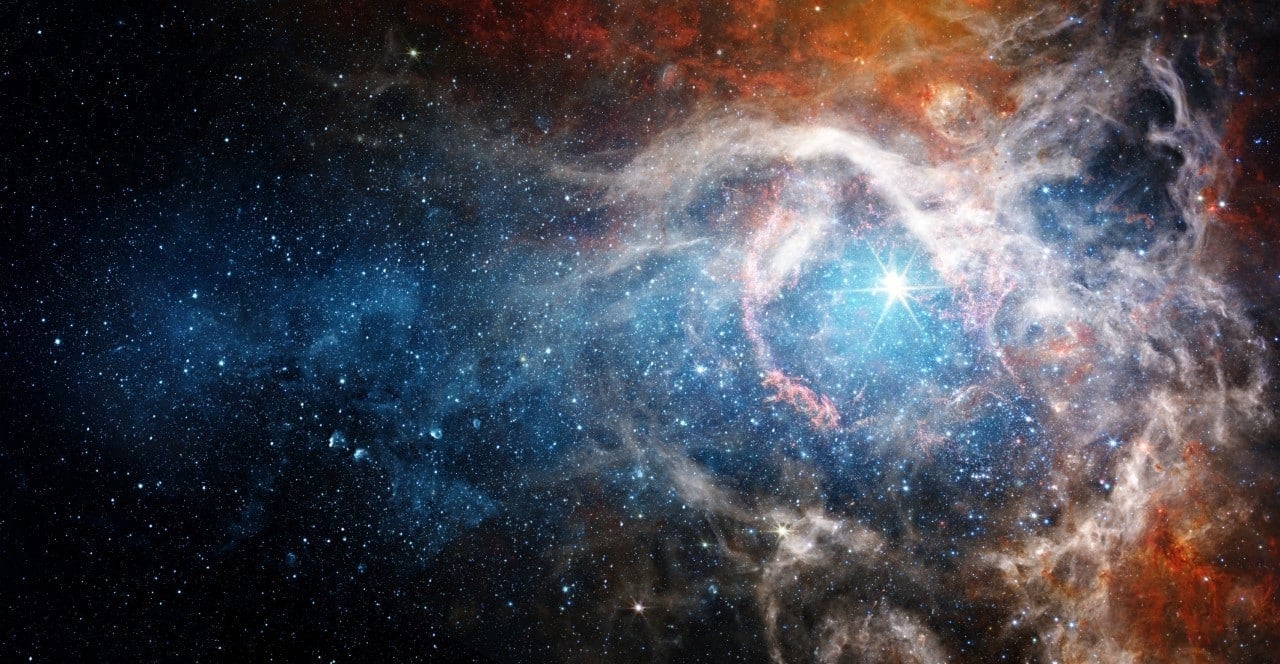
Mais of 350 molecules have been identified in interstellar space over the past hundred years, with the first discovery recorded in 1937. Universo’s chemical catalog grows annually, with dozens of new substances mapped by astronomers using high-precision radio telescopes. Muitas of these molecules function as precursors to biomolecules, providing valuable clues about the potential origin of life in other regions of the cosmos. Porém, confirmation of extraterrestrial life remains a distant objective that demands even more complex and prolonged validation processes.
Processo detection requires months or years of research
Pesquisadores in astrochemistry dedicate extensive periods to the search for cosmic chemical signatures. The work demands extremely high-precision equipment and rigorous methodology to confirm the presence of a specific substance in space. Nebulosas hundreds or thousands of light years away, as well as galaxies beyond the confines of Via Láctea, are frequent targets for observation. Detection of these molecules requires thorough spectral analysis and continuous verification of data collected over months or even years of systematic monitoring.

Modelos computational tests of substances of astrophysical interest are used to predict how their spectra should behave. Apenas After this theoretical prediction phase, researchers seek observational confirmation in telescope data. Quando both phases align perfectly, the detection can be considered reliable and added to the official catalog.
Radiotelescópios capture chemical signatures of Universo
Radiotelescópios work like gigantic parabolic antennas capable of capturing radio waves with lengths much greater than the human eye can perceive. Quando molecules rotate freely like gases in space, this movement releases energy in the form of photons, electromagnetic particles that travel to the instruments on the Terra. Diferentes types of rotation require different energy levels, allowing scientists to identify specific substances by the strength of the recorded signals.
Telescópio Robert C. Byrd of Observatório Green Bank, in Virgínia Ocidental, is a radio telescope that has participated in the discovery of many astromolecules. If a radio telescope can record all the expected signals for a specific molecule — its full spectrum — astronomers can confidently confirm that chemical. Infrared Telescópios, such as Telescópio Espacial James Webb, are also used for this research, although they capture signals that are often more challenging to distinguish from one another.
Rigorous Verificação prevents scientific errors
Enthusiasm for discoveries of cosmic molecules does not always correspond to the scientific rigor necessary for official validation. Encontrar substances in places people are unlikely to ever visit is no simple task, and verifying these observations is an ongoing and demanding process. Moléculas whose signals are weaker face additional scrutiny before they are officially confirmed by the scientific community. In some cases, preliminary findings need to be corrected when further analysis reveals inconsistencies or misinterpretations.
- Nuvens of interstellar dust and gas hundreds of light years away.
- Atmosferas of distant planets orbiting other stars.
- Galáxias beyond the known limits of Via Láctea.
- Regiões of young star birth and forming planetary systems.
Multiple Validação ensures reliability of findings
The explosion of data from modern astrochemical surveys has created new opportunities for research, but it has also increased the responsibility of scientists to verify each discovery before announcing it publicly. The validation process involves multiple steps and may include observations carried out by different telescopes to corroborate the initial findings. Somente, after this rigorous verification, the molecules are added to the official catalog of substances detected in Universo.
The search for signs of life on other planets remains a long-term goal of modern astrochemistry. Embora the detection of precursor molecules of biomolecules is exciting for the scientific community, the definitive confirmation of extraterrestrial life would involve even more complex and time-consuming validation processes. Pesquisadores continue to refine observation and analysis techniques to increase the accuracy of future discoveries, while maintaining the disciplined skepticism that characterizes the scientific approach to this challenging field.