
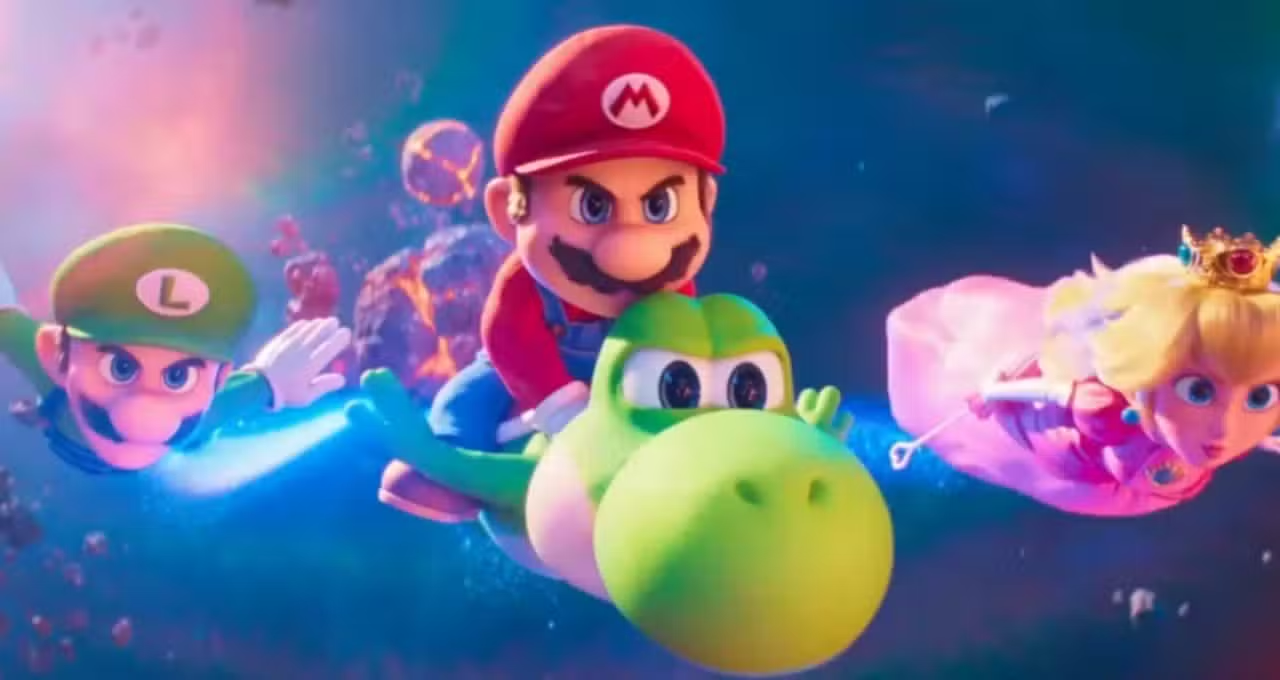
The release of the film Super Mario Galaxy in theaters sparked an intense debate about the challenges of transforming video games into feature films. The production arrived with a significant budget and promised to expand the Nintendo universe, but received polarized reviews. Enquanto’s art direction wins praise for its visual fidelity, the narrative structure raises questions about the feasibility of converting interactive mechanics into a passive experience. The contrast between impeccable form and superficial content sums up the main point of contention between critics and the public.
Desafios narratives in the transposition of the interactive format
The main difficulty faced by the production team lies in adapting a non-linear format to a story with a defined beginning, middle and end. Jogos platforms rely on active exploration, where the player controls the pace of the journey and the time in each scenario. Cinema demands a fixed cadence that often conflicts with the sense of freedom characteristic of the source material. Especialistas point out that the work prioritizes stunning landscapes to the detriment of the emotional depth of the protagonists.

The aesthetic choice maintains the playful spirit of the franchise, but sacrifices the dramatic arc necessary to sustain the viewer’s interest. Sem interactivity to fill gaps, the script needs to provide clear motivations and consistent dialogues. Analistas note that the attempt to balance childish humor with complex references generated an uneven tone. The dynamics between main and supporting characters also suffer from the lack of interaction, leaving the supporting cast reduced to momentary comedic resources.
Excelência technique versus dramatic structure
Apesar’s narrative reservations, art direction and photography reached immediate positive consensus. The vibrant color palette and detailed recreation of rocky planets demonstrate visual ambition rare in projects of this genre. The technical team translated the aesthetics of video games into cinematic language without losing the visual identity established by the Japanese company. The sound department is also highlighted, with a soundtrack that incorporates classical themes in orchestral arrangements that expand the epic scale.
The sound design respects the characteristic effects of jumps and interactions with scenarios, creating a direct auditory bridge with the players’ affective memories. Críticos highlights elements that highlight the contrast between technical excellence and structural choices:
- Ritmo inconsistent during the transition between frantic action sequences and moments of expository dialogue.
- Aproveitamento superficial of the supporting cast, serving only as a momentary comedic resource.
- Resolução from the third act considered predictable, following formulas extensively used in adventure films.
- Cenas of space exploration works as a visual spectacle, but does not advance the main plot.
Recepção fragmented among fans and casual viewers
Initial audience numbers and reactions on social media reflect the same fragmentation observed in professional reviews. Espectadores who grew up following the plumber’s adventures express satisfaction with the respect for visual and sound elements. Muitos, however, report a distance caused by the lack of interactivity that defines the original experience on consoles. The public accustomed exclusively to cinematic language evaluates the production from the perspective of traditional science fiction.
Para this group, direct references to games seem like distractions that interrupt the flow of the story. The difficulty in simultaneously pleasing purist fans and casual viewers highlights the commercial challenge of intellectual properties with consolidated bases. Fóruns discussion threads feature extensive analysis of the release’s cultural significance. One installment celebrates the franchise’s arrival in theaters as a milestone of maturity for the electronic games industry, while skeptical groups use the work as an example of the limitations of translating interactive media into passive formats.
Tendência growing video game adaptations in Hollywood
The debate around Super Mario Galaxy reflects a broader trend in the contemporary audiovisual market. Nos In recent years, major Hollywood studios have intensified their search for consolidated intellectual properties in the video game market. The growing volume of game-based productions indicates the industry’s confidence in the profitable potential of these brands, with budgets that rival the biggest movie franchises. Inconsistency in critical results remains a significant obstacle for producers.
Enquanto some recent adaptations managed to balance respect for the source material with engaging narratives, others ran into the same structural difficulties. The market demands increasingly more sophistication, refusing literal reproductions that do not offer added value to the original experience. Cineastas and writers continue to explore new approaches to overcome the interactivity barrier. The search for a hybrid language that meets the demands of cinema without alienating the gaming community represents the next step for the sector. The current feature film functions as a high-cost laboratory, providing valuable data on consumer behavior and the limits of adapting interactive narratives to the screen.