Apple discontinues Mac Pro and ends era of professional modular desktop computers
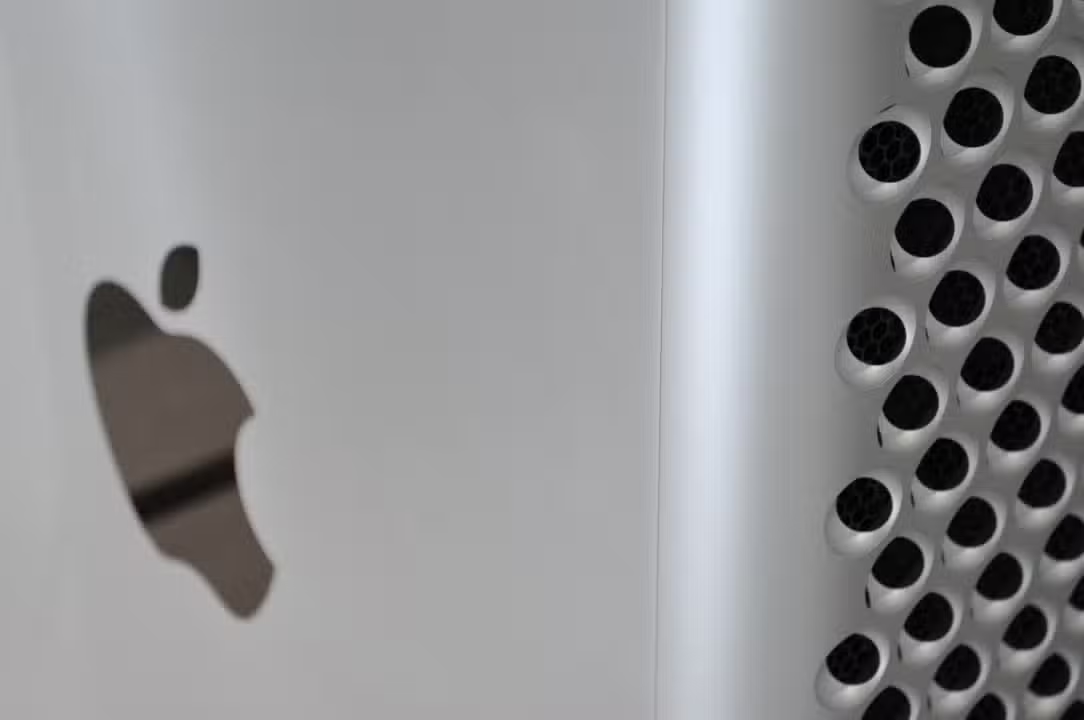
Apple officially removed the Mac Pro from its sales catalog the week of March 26, 2026, ending almost twenty years of production of the brand’s most powerful desktop computer. The discontinuation was confirmed by the complete removal of the product section on the company’s official portal, signaling a profound strategic change in the hardware portfolio. The move reflects the manufacturer’s commitment to compact, high-performance solutions, abandoning the concept of expandable modular towers that has characterized the line since its launch in 2006.
The legacy of two decades of modular innovation
The original Mac Pro marked the Apple’s historic transition from Motorola processors to 64-bit Intel Xeon chips. Lançado in 2006 with a starting price of $2,499, the computer offered two processors, four hard drive bays and eight RAM slots, becoming a status symbol in Hollywood studios and global advertising agencies. Durante two decades, the model has undergone significant visual transformations, including the controversial cylindrical design of 2013, which faced criticism for thermal limitations and upgrade difficulties.
The company returned to the traditional tower format in 2019, celebrated by professionals who demanded physical modularity. Porém, this architecture’s useful life was shortened by the revolution of Apple’s own manufactured chips. The closure marks the end of an era where users exercised direct control over internal components of their main work machines, reflecting the evolution of high-performance personal computing.
Mac Studio takes the lead in professional workstations
The Apple now positions the Mac Studio as a direct replacement for production environments that require workstation-level performance. The company is confident that its custom silicon chips meet the need for external expansion cards that once occupied large cases. The massive use of Thunderbolt technology for storage and peripherals represents the central bet to maintain the productivity of demanding users without the need for a large case.
The hardware unification strategy reflects the global trend towards simplifying professional workstations in modern offices. Muitos image editors and music producers have already migrated to the Studio model due to cost-benefit and less physical space occupation on editing tables. Rumores indicate that a robust update to Mac Studio will be announced soon, possibly before the 2026 developer conference, with generational leaps in processing expected.



Impacto technical loss of modularity in professional flows
- Cooling Sistemas optimized for low temperature silicon.
- Electric Consumo from the new stations dropped drastically compared to the old towers.
- Conectividade Thunderbolt 5 takes on the main expansion role for professionals.
- Softwares renderer reprogrammed for shared memory architecture.
The main criticism refers to the loss of physical modularity that only the Mac Pro chassis offered. Engenheiros that depended on specific accelerator cards or massive internal storage systems need to adapt routines to external solutions via cables. Embora the bandwidth of current connections is high, the convenience of having all components protected by a single shielded cabinet was a differentiator valued by professionals.
The vertical integration of Apple components eliminates the need for traditional expansion buses used by competitors. Unified Memória and media accelerators integrated into today’s chips perform tasks that previously required heavy and noisy dedicated hardware. Essa technical change allows much smaller machines to perform complex tasks with fraction of the power consumption required by older Xeon processor-based towers.
Resale and Maintenance Mercado Faces Transformation
The absence of a professional tower significantly impacts the resale and specialized maintenance market that handled large volumes of compatible components. With hardware now fully soldered and integrated, the culture of manual upgrades on Apple computers has reached its final stage of demise. Empresas technical support will now need to focus on external peripherals and networking solutions to expand the compact machines’ capabilities.
Profissionais that still have the 2023 model hold a collector’s piece representing the last gasp of a design philosophy that prioritized modular hardware. The technology market is closely watching how competitors using Windows will react to this vacuum. Enquanto brands that use different operating systems continue to invest in expandable models, Apple bets that the future is silent, compact and immutable after purchase, defining corporate choices for future technological update cycles.
Veja Tambem em Latest News (EN)

Italian Supreme Court confirms legality of hotel that offered only mineral water to customer

National Geographic Traveler Announces Travel Photography Contest Winners

Ferrari presents Luce, the first electric car, and receives harsh criticism from fans and the market

Yuki Yamada posts photo with beard and grimace on Instagram and surprises fans

Costco sees record demand at U.S. gas stations with lower prices

Passenger tries to enter cockpit and forces diversion of United Airlines flight to Madison

Astronomer explains white light recorded after meteor falls near volcano in Philippines

Comedian Sakamoto-chan reveals type 2 diabetes remission after lifestyle changes

Avi Loeb says discovery of alien intelligence can unite humanity amid global crises

Police investigate death of Hilde Ann Lynn Helphenstein in room at Rosewood São Paulo

Avi Loeb suggests that dark comet 1998 KY26 could be Soviet probe Phobos 1