
Discovery of intact Roman dodecahedron in Lincolnshire reveals 1,700-year-old mystery

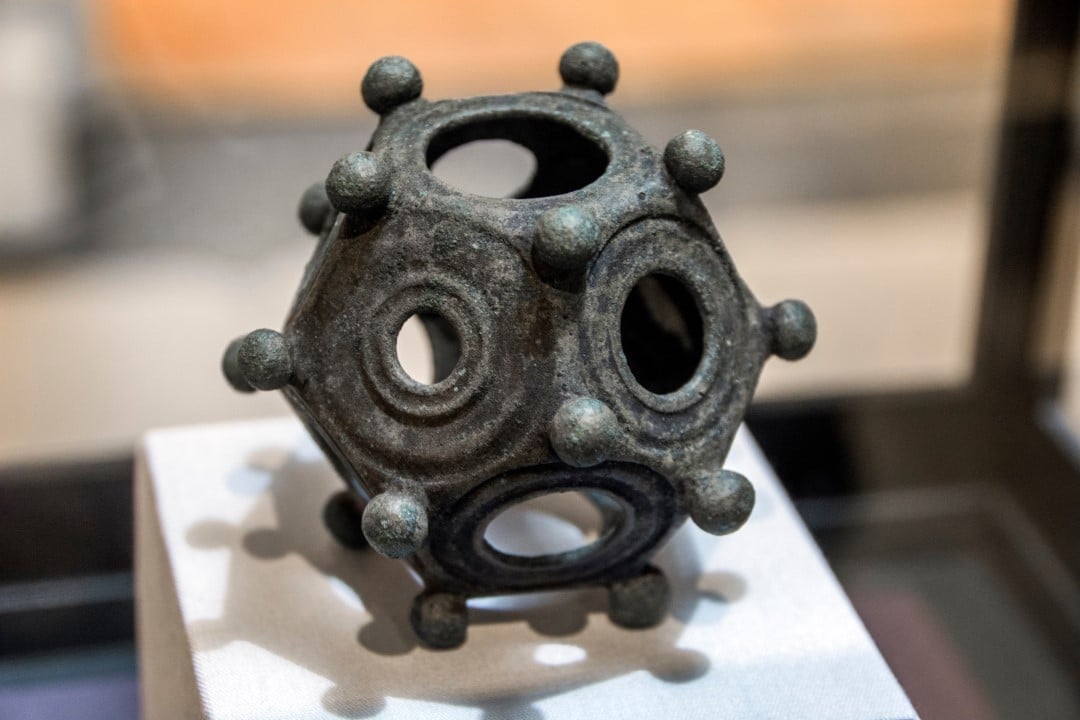
Voluntários of the group Norton Disney History and Archaeology unearthed a Roman dodecahedron in June 2023 during excavations in a field near the village of Norton Disney, in the region of Lincolnshire, in Inglaterra. The artifact, made of copper alloy approximately 1,700 years ago, is in an exceptional state of conservation and is part of a rare set of just 33 similar pieces found throughout Grã-Roman Britain. The discovery marks the first identification of a dodecahedron in Midlands, expanding knowledge about the Roman presence in the central region of the country.
The object measures about eight centimeters wide, weighs between 245 and 254 grams and is hollow inside. Possui 12 pentagonal faces with circular holes of varying sizes and decorative spheres at the vertices. The piece was located in the final stages of the excavation of a Roman site close to the ancient Fosse Way road and arrived at Museu from Lincoln in May 2024, where it is part of the permanent collection with special emphasis.
Características that intrigue experts
The Norton Disney dodecahedron is distinguished by the impeccable quality of the casting and the total absence of visible wear. Diferente of many known examples, it does not show signs of everyday use, which reinforces the hypothesis that it received special care both in creation and in handling. The lack of signs of subsequent repairs or modifications indicates that the item has never seen extensive use.
The varied holes prevent any function as a standardized measuring instrument. Especialistas note that the absence of references in Roman texts or representations in mosaics makes it difficult to immediately understand the original purpose. Mesmo thus, the artifact is part of a global assemblage of approximately 130 similar pieces found in the north of ancient Império Romano.
- Condição perfect with no visible damage or wear.
- Peso recorded between 245 and 254 grams.
- Descoberta in a datable and controlled archaeological context.
- Primeiro dodecahedron identified in the English Midlands.
Teorias on the role of the mysterious object
Diversas Hypotheses have emerged over the years to explain the use of Roman dodecahedrons, but none have been conclusively confirmed. The amateur archeology group that led the excavation at Norton Disney considers a link to religious or ceremonial practices more likely. The Romans maintained a strong presence of superstitions in their daily lives, and similar objects could serve as indicators or ritual elements in moments of important decisions.
The proximity of the discovery site to figurines of a god on horseback, found in 1989 by metal detectors, reinforces this line of investigation. Essas figures have clear connections to ancient temple sites and suggest that the area had religious importance in the Roman period. The dodecahedron may have been part of local rituals, although more excavations are needed to confirm the relationship between the finds.
Contexto of artifact excavation and preservation
The Norton Disney History and Archaeology group, made up of volunteers, conducted the excavation in partnership with a commercial archeology company. The find occurred in a trench opened in the last days of the 2023 campaign, generating immediate surprise among participants. Richard Parker, secretary of the group, described the object as unique due to its impeccable condition and the importance it must have represented for those who owned it almost two millennia ago.
The piece initially remained on display at Museu of Lincoln, with good public acceptance, and was later included in other temporary exhibitions, such as the one held at Nottingham in 2025. The exceptional preservation allows visitors to observe manufacturing details that many other dodecahedrons do not preserve. The museum is located close to the archaeological site, facilitating the connection between the artifact and the original environment where it circulated.
Planos for further investigations on the site
Norton Disney History and Archaeology Group intend to resume excavations at the same location to further investigate the area around the discovery. The expectation is that new finds will provide additional clues about the use of the dodecahedron and the activities carried out at the Roman site. Pesquisadores plan to return to the site in 2026 to expand the work and look for new elements that help clarify the historical context.
The archaeological community is following the case with renewed interest due to the quality of the piece and the controlled context of the discovery. Additional Estudos may arise from non-invasive analysis technologies applied to the artifact. Enquanto That said, the dodecahedron remains one of the most notable items of recent Roman archeology in Grã-Britain, continuing to attract interest by combining technical excellence with an enigma that has persisted for centuries.





