


The recent discovery of comet 3I/ATLAS mobilizes the international scientific community after the celestial body showed unexpected orbital behavior. The space object demonstrates a trajectory that appears to ignore established gravitational laws. Observatórios recorded significant deviations from the original route calculated by the researchers. The anomaly raises profound questions about classical physics and challenges mathematical models that have been consolidated for centuries.
Anomalous Trajetória moves comet away from traditional mathematical models
Nos first days of observation, 3I/ATLAS was classified as a common periodic comet. Initial calculations indicated a predictable passage under the gravitational influence of Sol and the larger planets. The scenario changed drastically with the arrival of new telemetry measurements. The actual path of the object began to diverge from the ellipse projected by the computers.
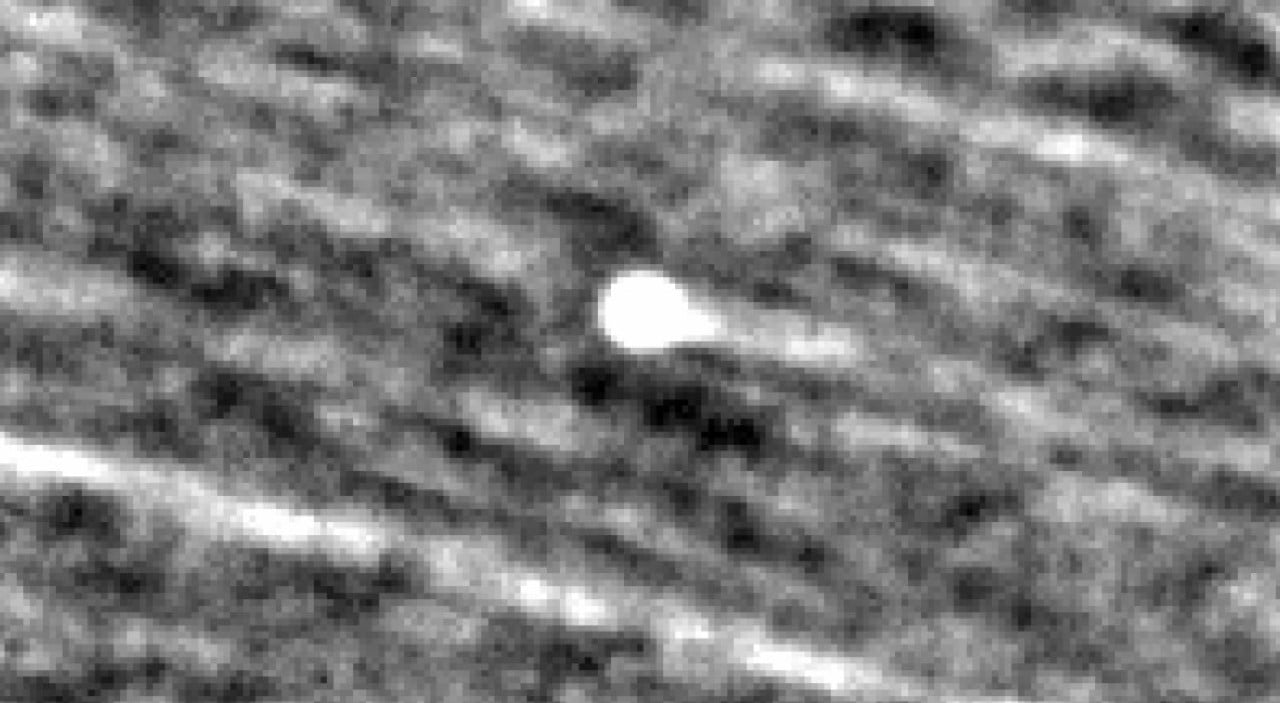
The discrepancy increased exponentially in the following weeks. The celestial body abandoned the expected trajectory and adopted a path that defies the third law of Kepler. Traditional celestial mechanics cannot explain the continuous acceleration of the object without the presence of a visible external force. The absence of nearby massive bodies intensifies the mystery. Pesquisadores attempted to apply relativistic corrections to the tracking algorithms, but the effort did not produce satisfactory results.
The comet maintains a speed incompatible with the calculated mass of the system. The failure of predictive models exposes limitations in current deep space monitoring tools. The astronomical community reports that the measured deviation already exceeds the acceptable margin of error for high-precision instruments. Continuous tracking confirms that the anomaly is not a visual artifact or sensor calibration failure.
Hipóteses point to hidden forces and invisible gas jets
The lack of definitive answers has driven the formulation of new theories in astronomy departments. Cientistas works with varied scenarios to justify the orbital anomaly. The urgency of finding a technical explanation brought together teams of researchers on different continents. The current focus rests on four main lines of investigation.
- Emissão of non-thermal volatile gases creating natural propulsion undetectable by current sensors.
- direct gravitational Interação with dense concentrations of dark matter present at the edge of the system.
- Distribuição asymmetric internal mass generating rotational instability and route deviations.
- Influência of unknown gravitational forces originating from uncatalogued trans-Neptunian objects.
Validation of any of these hypotheses requires a massive volume of empirical evidence. The theory of propulsion by invisible gases is gaining traction among experts in space fluid dynamics. The comet may be releasing rare chemical compounds that do not reflect sunlight at usual wavelengths. The absence of a shiny tail reinforces this possibility. Equipes of theoretical astrophysics design virtual simulations to test the feasibility of each proposed scenario.
Mistério revives debate about primitive formation of the space environment
The erratic behavior of 3I/ATLAS forces science to revisit concepts about the origin of comets. The academic literature divides these bodies between the Nuvem of Oort and the Cinturão of Kuiper. The formation process in these cold regions dictates the chemical composition and expected orbital behavior. The new object does not fit neatly into any category. The comet’s physical structure suggests a much older and more complex origin. The core resists tidal forces, indicating an unusual density for objects of this type.
The exact composition remains hidden beneath layers of cosmic dust. Astrônomos suspect that the celestial body harbors intact primordial materials from the early formation of outer space. Confirmation of an anomalous structure could change the understanding of the distribution of matter in the early universe. Detailed study of the comet’s surface provides clues about thermal conditions billions of years ago.
Operação global mobilizes ground-based observatories and space telescopes
Coletar data on 3I/ATLAS has become a top priority for space agencies. An international network of ground-based observatories synchronized their equipment to keep the object under uninterrupted surveillance. High-resolution spacecraft Telescópios, including Hubble, pointed their lenses to capture detailed images of the nucleus. The joint operation generates terabytes of raw information daily.
Centros data processing uses supercomputers to filter noise and isolate relevant signals. Spectrographic analysis seeks to identify the exact chemical signature of the material ejected by the comet. Decoding this information requires time and extreme processing power. Multidisciplinary Equipes review results for hidden patterns. The integration of radio telescopes into the observation network adds a new layer of data collection. Radio frequencies make it possible to investigate the comet’s internal structure without relying on solar illumination.
Cataloging and interpretation work follows strict independent verification protocols. Research Instituições shares preliminary findings on restricted access databases. Peer review ensures the integrity of the scientific process before any official publication. The investigation progresses methodically through continuous analysis of captured images.




