Galaxy Watch detects risk of fainting five minutes in advance
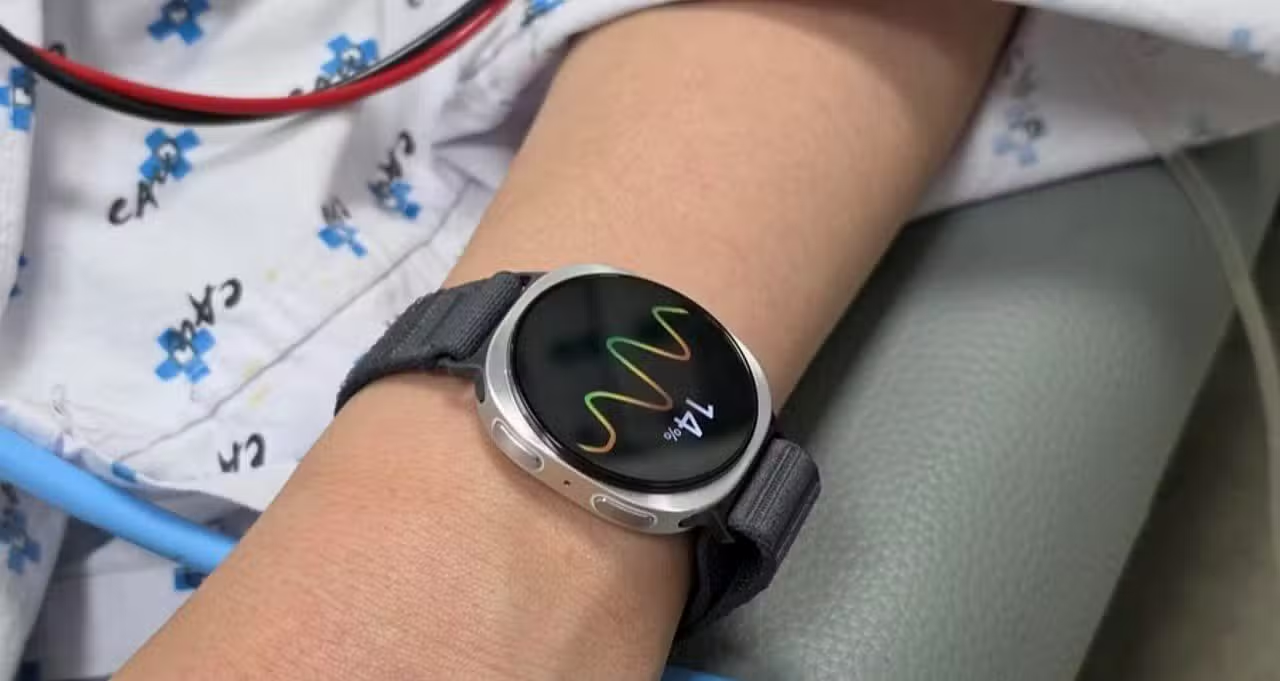
Samsung has validated an innovative system on the Galaxy Watch capable of predicting fainting up to five minutes before they occur. In collaboration with Hospital Universitário Chung-Ang, in Coreia of Sul, the company developed an artificial intelligence algorithm that monitors vital signs through sensors already integrated into the smartwatch. This marks the first time that a commercial wearable device has been able to anticipate these episodes with proven clinical accuracy.
Como the algorithm identifies patterns in heartbeats
The photoplethysmography sensor present in the Galaxy Watch 6 continuously monitors the user’s heart rate variability. Esse component already existed in previous versions of the clock, but its capabilities had not been fully exploited. The novelty lies in the processing of data through artificial intelligence, which identifies microscopic patterns in the heartbeats that precede loss of consciousness.
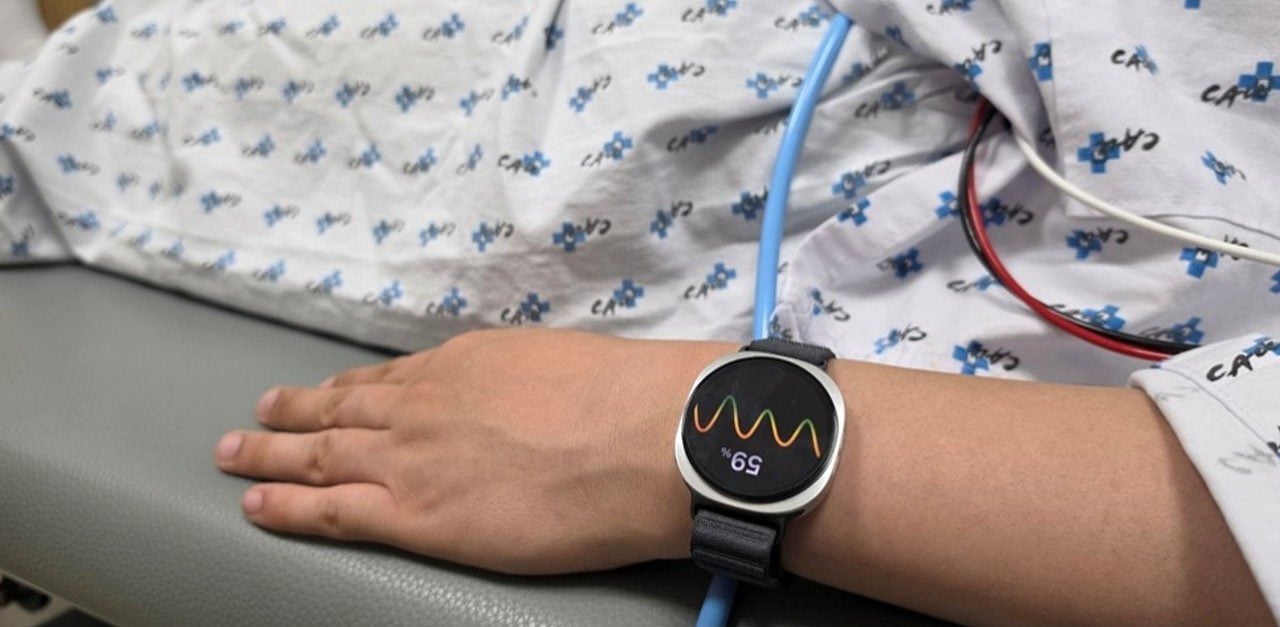
Durante clinical tests, researchers followed 132 patients in a controlled environment. Volunteer Cada underwent induced syncope testing while the watch continuously recorded vital signs. The machine learning algorithm processed thousands of variations to build a robust predictive model. The results achieved 84.6% accuracy in early episode detection.
Impacto clinical real-time prediction
The five-minute warning interval represents a significant advance in preventative medicine. With this advance time, the watch wearer gains a crucial opportunity to position themselves safely before vasovagal syncope occurs. Essa syncope is the most common type of fainting, affecting up to 40% of the world’s population at some point in their lives.
The sudden falls caused by these episodes often result in broken bones, concussions and even brain hemorrhages. Pessoas may faint on stairs, at street intersections, or during activities that require balance. The watch’s alert allows the user to lie down in a safe place, call for help or simply sit down before completely losing consciousness.
Existing Tecnologia with new purpose
Galaxy Watch 6 already had all the necessary infrastructure to carry out this detection. The photoplethysmography sensor had been present since previous versions, but its potential had not been fully exploited. The Samsung leveraged the clock’s local processing power and connectivity to implement the artificial intelligence algorithm without requiring hardware upgrades.



The research was published in the journal European Heart Journal, the main European cardiology publication. Essa validation by independent peers lends scientific credibility to the finding. Jongmin Choi, head of Pesquisa at Saúde at Samsung, highlighted that this discovery marks the transition from reactive to preventative devices. The smartwatch no longer just records events that have already occurred to anticipate real and concrete risks.
- The model predicted episodes with 84.6% accuracy in controlled tests.
- The average lead time was five minutes before the event.
- The sample included 132 patients undergoing induced syncope tests.
- The signals were collected via a commercially available PPG sensor.
- Nenhum additional hardware was required to implement the functionality.
Caminho for availability and regulatory approval
The Embora feature is not available to the public at this time, the Samsung signals its arrival in near future models. The Galaxy Watch 8, the latest version in the line, already monitors sleep apnea and detects irregular heartbeats. Essa technology base facilitates the integration of the new syncope prediction system in upcoming releases.
The next step involves regulatory validations in different countries. Órgãos like the FDA us Estados Unidos and European health agencies need to approve clinical use of the feature. Esses processes ensure the technology meets internationally recognized safety and effectiveness standards. Samsung works with medical institutions in parallel to expand clinical trials in different populations and less controlled environments.
Revolução of wearable devices in medicine
Esse development reflects a larger trend in the wearables market. Smart Relógioss are no longer mere accessories for basic step and calorie tracking, but are now functioning as continuous medical sensors capable of detecting serious health conditions. The combination of improved sensors, fast local processing and artificial intelligence algorithms has created an ecosystem where diagnostics that were once exclusive to office settings can now occur on the user’s wrist. Essa democratization of health monitoring technology expands access to preventive tools for the general population.
Veja Tambem em Latest News (EN)

Italian Supreme Court confirms legality of hotel that offered only mineral water to customer

National Geographic Traveler Announces Travel Photography Contest Winners

Ferrari presents Luce, the first electric car, and receives harsh criticism from fans and the market

Yuki Yamada posts photo with beard and grimace on Instagram and surprises fans

Costco sees record demand at U.S. gas stations with lower prices

Passenger tries to enter cockpit and forces diversion of United Airlines flight to Madison

Astronomer explains white light recorded after meteor falls near volcano in Philippines

Comedian Sakamoto-chan reveals type 2 diabetes remission after lifestyle changes

Avi Loeb says discovery of alien intelligence can unite humanity amid global crises

Police investigate death of Hilde Ann Lynn Helphenstein in room at Rosewood São Paulo

Avi Loeb suggests that dark comet 1998 KY26 could be Soviet probe Phobos 1