


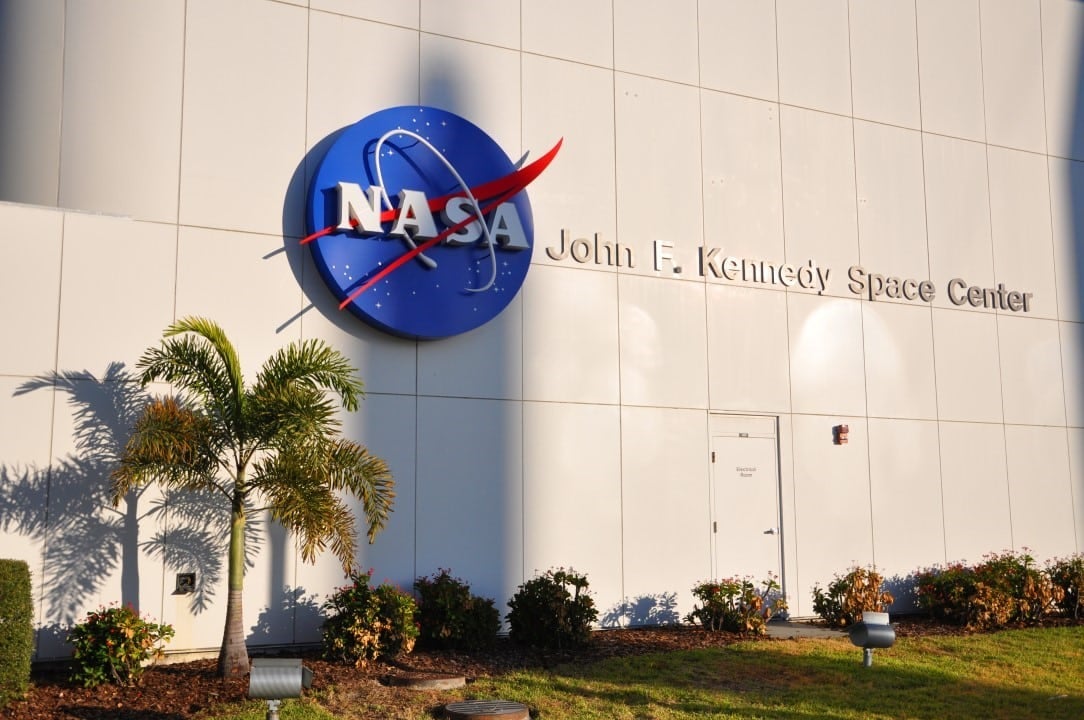
The Nasa space telescope Nancy Grace Roman has completed its technical preparation and is ready for launch. The space agency confirmed the progress of the project this week at Goddard Space Flight Center. The equipment will be sent into space from September 2026 by a SpaceX Falcon Heavy rocket, taking off from Centro Espacial Kennedy, on Flórida. Once in orbit, 1.5 million kilometers from Terra, Roman will operate for a five-year prime mission mapping billions of stars and hundreds of millions of galaxies.
Capacidade observation 100 times greater than Hubble
The Roman has a significantly larger field of view than the Hubble telescope, enabling observations on an unprecedented scale. The Wide-Field Instrument, the mission’s main instrument, operates in visible and infrared light with a resolution of 300 megapixels. Essa technology captures high-definition images of vast regions of the cosmos, generating a data archive estimated at around 20,000 terabytes throughout the mission.
The equipment also includes an advanced coronagraph that blocks intense starlight, allowing direct observation of planets and planet-forming disks. Essa combination of instruments surpasses in scale what previous telescopes have been able to collect in decades of continuous operation.
- Captura details distant planetary systems with unprecedented precision
- Realiza complete statistical census of planets in Via Láctea
- Testa new direct imaging techniques of exoplanets for future missions
- Investiga dark energy and dark matter through gravitational distortions
Identificação of up to 100 thousand exoplanets in five years
Especialistas expects Roman to identify up to 100,000 exoplanets during its operation, using techniques such as gravitational microlensing and direct coronagraph observations. The telescope focuses especially on gravitational microlensing to detect planets that do not transit in front of their stars, expanding the search to more distant regions of the galaxy. Ele also observes protoplanetary disks in formation, contributing to the understanding of the diversity of planetary systems.
The combination of detection methods significantly expands knowledge about rocky worlds, gas giants and possible solitary planets that do not orbit stars. Até August 2024, the total number of confirmed exoplanets reached 5,743, a number that Roman is expected to increase substantially with its innovative observations.
Antecipação from the original release schedule
Nasa confirmed that the telescope has already been completed and is undergoing final integration preparations. The original deadline foresaw operation until May 2027, but now the expectation is for takeoff in September 2026, bringing the calendar forward by several months. Equipes techniques finalize integration tests with the Falcon Heavy rocket, validating all systems before launch. The recent announcement highlighted significant progress on the project timeline.
Complementação from previous planetary search missions
Missões like Kepler and TESS have already identified thousands of confirmed exoplanets over the past few years. Roman expands that count with different, more advanced methods, especially in more distant regions of the galaxy where previous telescopes have encountered limitations. Infrared operation helps penetrate cosmic dust into star-forming regions, revealing planets in previously inaccessible environments.
The project represents the next step in Nasa space observatories after James Webb, keeping focus on fundamental questions about the cosmos and the frequency of planets in other stars. Durante Five years from now, Roman will produce a vast array of images and data that maps large-scale cosmic structures, contributing to investigations into the expansion of the universe and the influence of dark energy.
Especificações technical and scientific capabilities
The telescope has a 2.4-meter main mirror, a size similar to that of the Hubble, but with much more advanced instrumentation. The wide-field instrument records scenes with high resolution, separating the dim light of exoplanets from the intense glow of their host stars. The coronagraph serves as a technological demonstration for future missions that seek direct images of planets similar to Terra, paving the way for even more sophisticated observatories.
Nasa plans to share the first scientific data soon after operations begin, allowing the international astronomical community to access the information to plan additional observations. The project follows the official definition of exoplanet adopted by União Astronômica Internacional, prioritizing rigorous observational data over speculation about the habitability of discovered worlds.




