Zelda creator admits sequel failure and reaffirms A Link to the Past

Shigeru Miyamoto revealed in an interview that he considers Zelda II: Adventure of Link a failure, despite having originated the idea for the project. The franchise creator explained that development got out of his control when the responsible team made decisions that deviated from what he saw as the natural evolution of the series. Superar this break took years and was only possible when the franchise returned to its fundamental principles.
Desenvolvimento out of creative control
The decision to delegate Zelda II to another team marked a turning point in the project’s history. Miyamoto stated that their games often improve significantly during development as innovative ideas emerge and are incorporated. Com Zelda II, however, everything changed. The final result remained static, reflecting planning that did not evolve or adapt to the creative challenges that arose.
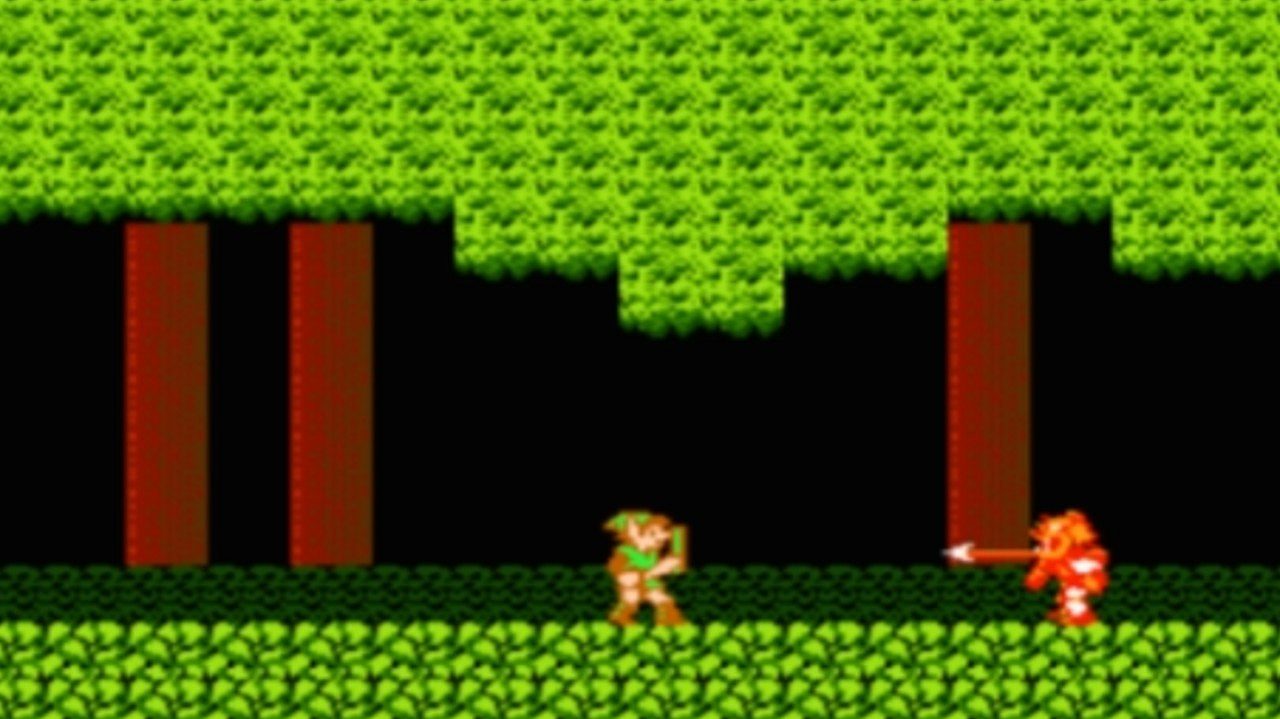
The most radical change was the replacement of the top-down perspective with an RPG-style navigation system, with action in a 2D plane. Essa’s approach brought the game closer to a primitive action RPG than a conventional Zelda. Para fans who expected a direct sequel, the experience was uncomfortable. The second title strayed too far from the formula that defined the series.
Zelda II: a parallel story, not a sequel
Miyamoto has made clear his official stance on Zelda II’s place in the franchise’s chronology and narrative. The game would not represent a legitimate sequel, but rather a parallel story — a narrative diversion that explored secondary events after the events of the original The Legend of Zelda.
Essa reclassification allowed Nintendo to reposition The Link to the Past as the true successor to the first title. Miyamoto confirmed this interpretation directly:
- Zelda II functioned as a lateral and experimental narrative
- The Link to the Past returned to the original perspective and style
- The third game laid the foundation of the modern franchise
- Classic-style Retorno proved to be the right direction

The Link to the Past as a creative reset
The impact of A Link to the Past on the franchise’s history cannot be underestimated. Após the cold reception of Zelda II, the conscious decision to return to fundamentals was more than a course correction it was a rebirth. Not only did the game garner immediate critical acclaim, it also provided the DNA for all subsequent titles.
The choice to restore the top-down perspective and gameplay focused on exploration and puzzle-solving worked as a creative manifesto. Audiences responded positively, validating the team’s intuition about what the series should be. Essa approach became the backbone of Zelda design in the following years.
Legado lasting across console generations
De Ocarina of Time to The Wind Waker, passing through Twilight Princess and reaching Breath of the Wild, each subsequent successful release carried within it the philosophy established by A Link to the Past. The designers learned that respecting the franchise’s core identity, while exploring innovations within that context, was the key to sustained success.
Breath of the Wild consolidated this lesson by revolutionizing the series by maintaining its fundamental principles of free exploration, puzzle solving, challenging combat and connected storytelling. The creative heritage of A Link to the Past permeated every design decision in this genre-redefining title.
Miyamoto publicly acknowledging Zelda II’s failure was not just an admission of past error. Era is a demonstration of how to learn from mistakes, embrace change when necessary, and recognize the value of returning to the principles that made a franchise memorable. The series that began as an experiment on an 8-bit console eventually taught the entire gaming industry about the importance of creative identity.