
Simple equipment reveals Apollo 11 landing site and astronomy landmarks in the night sky

Today’s night sky provides a hands-on opportunity to observe four fundamental milestones of space exploration and classical astronomy. Observadores can identify the exact region where the first humans walked on the surface of Lua. The visual script also includes a distant star, a planet outside the solar system and natural satellites that transformed the understanding of the cosmos. Viewing requires only favorable weather conditions and basic optical instruments.
Identifying these celestial targets does not require expensive professional equipment. Common Binóculos or small telescopes provide the necessary magnification for astronomical monitoring. The Lua presents a phase suitable for viewing dark seas. Júpiter gains prominence in the Gêmeos constellation during the night. The star Vega appears on the northeast horizon, while system 51 Pegasi demands attention in the late hours of the morning.
Região of Mar of Tranquilidade guards the exact point of the lunar mission
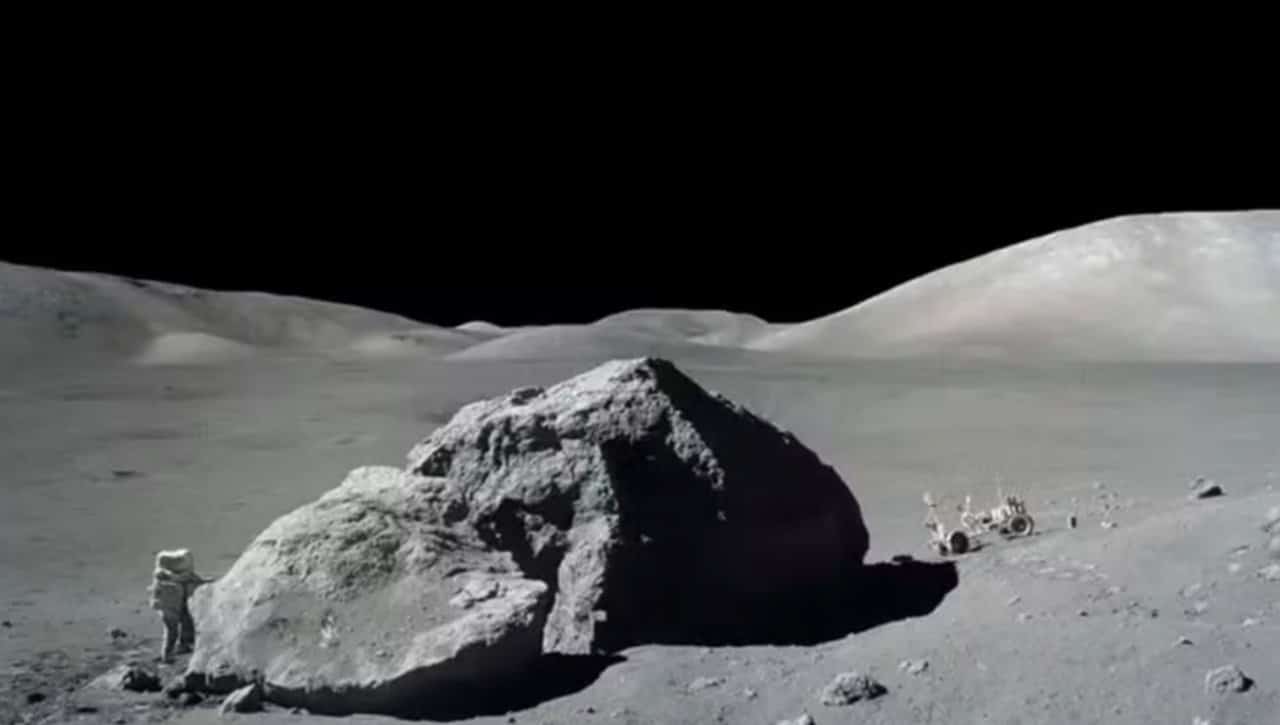
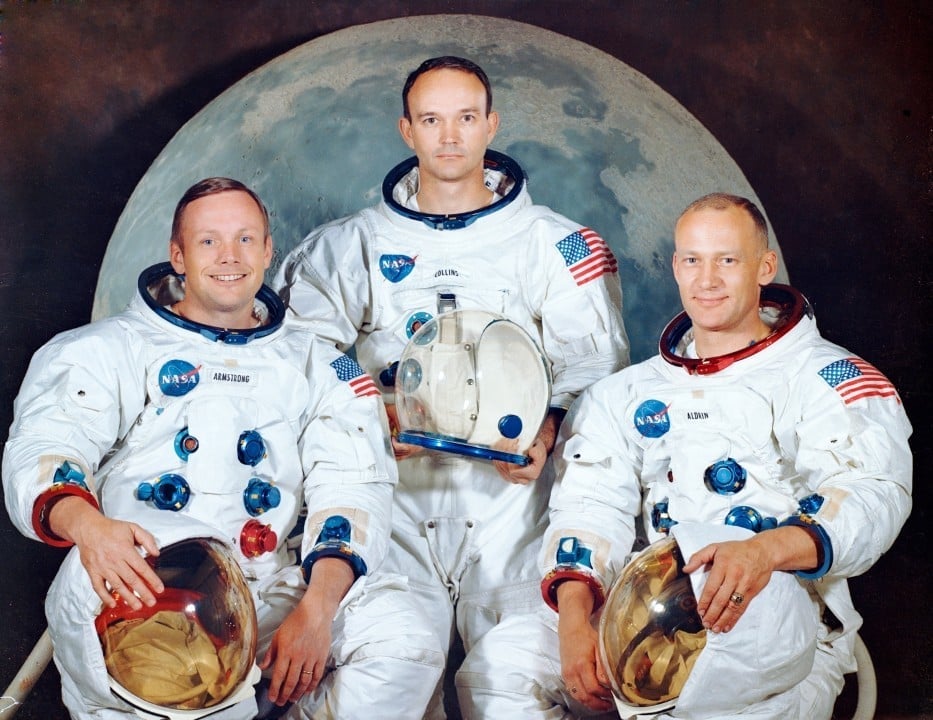
The Apollo 11 mission reached lunar soil on July 20, 1969. Astronauts Neil Armstrong and Buzz Aldrin disembarked from the Eagle module in the area named Base Tranquilidade. The specific point is located within the vast basalt plain known as Mare Tranquillitatis. The distance between the Terra and Lua prevents visual resolution of the module with the naked eye. Equipamentos amateur terrestrials do not have the capacity to show the artifacts left behind by the crew.
Mapping the general area requires a telescope with a 6-inch aperture or high-powered binoculars. Direct solar lighting on Mar from Tranquilidade makes the process easier in the weeks leading up to the full moon. The observer needs to focus on the dark spot positioned above the lunar equator, in the eastern part of the satellite’s visible face. Craters Ritter and Sabine serve as reference points on the southwestern edge of the geological formation.
A simple geometric technique guides the search for the historic site. The amateur astronomer must draw an imaginary line from the base of the Ritter crater to the center of the Sabine crater. The extension of this straight line about two and a half times the width of Sabine points to the approximate landing zone. The lunar rotation changes the contrast of shadows daily. Patience defines the success of observation.
- Foque the lens initially on Mare Tranquillitatis to establish the main reference.
- Busque the craters Ritter and Sabine located on the southwestern edge of the plain.
- Crie a straight visual line connecting the two geological formations.
- Projete the distance calculated to reach the descent sector of the Eagle module.
- Utilize digital lunar maps to confirm pointing accuracy.
Estrela host of the first confirmed exoplanet appears on the horizon
Researchers Michel Mayor and Didier Queloz reported the discovery of exoplanet 51 Pegasi b in October 1995. The celestial body orbits a star similar to Sol, classified as type G, at a distance of 50 light years from our planet. The object is part of the hot Júpiteres category. The complete orbit occurs in an extremely short period of just four Earth days.
The original identification occurred by measuring the flicker in the star’s light. The planet’s gravity pulls on the central star and generates small variations detectable by spectrographs. The radial velocity method inaugurated a new phase in modern astronomy. Milhares from other distant worlds ended up cataloged in the following years using the same technique. União Astronômica Internacional officially named the planet Dimidium.
Locating the host star requires searching for the constellation Pégaso on the eastern horizon. The ideal time is before dawn during early spring. The asterism known as Grande Quadrado of Pégaso serves as the main visual guide. The stars Scheat and Markab mark the brightest corners of the formation. The 51 Pegasi system appears as a lower intensity luminous point positioned between the two giants.
The planet Dimidium remains invisible to any amateur optical equipment. The light captured by the telescope today began its journey through space five decades ago. The main star’s tracking establishes a direct connection to the birth of exoplanetology.
Primeira stellar photography and the moons discovered by Galileu Galilei
Grande Telescópio Refrator of Universidade of Harvard recorded the image of Vega in July 1850. Astronomers William Cranch Bond and J. A. Whipple conducted the pioneering experiment using the daguerreotype process on a silver plate. Vega is located 25 light years from Terra and dominates the northern hemisphere sky. The star makes up the constellation Lira and appears on the northeast horizon shortly after dusk. The blue-white coloring facilitates immediate identification.
Italian Galileu Galilei directed his newly constructed telescope at Júpiter in the year 1609. The scientist noticed four small luminous points orbiting the gas giant. The moons Io, Europa, Ganimedes and Calisto gained the title of Galilean satellites in reference to their discoverer. The observation overturned the belief that all celestial bodies revolved exclusively around Terra. The heliocentric model gained strength after the publication of the data.
A telescope with a 10-centimeter aperture displays the four satellites clearly. Powerful Binóculos also resolve points aligned close to the planetary disk. Júpiter shines brightly in the constellation Gêmeos and dominates the western horizon in the early evening. Moons change their positions quickly due to orbital speed. The total alignment of a single side of the planet repeats the exact vision that Galileu had in the 17th century.
Aplicativos mapping and ideal conditions make viewing easier
Mobile technology upgrades the observational astronomy experience. Aplicativos cell phone with augmented reality features points the exact direction of historical targets. The software superimposes the design of the constellations and the position of the planets directly on the image generated by the device’s camera. Mapas star charts in digital or printed format provide additional support for night sky navigation. The combination of old and modern tools optimizes search time.
The observation environment directly affects the quality of the images captured by the lenses. Locais located away from large urban centers reduces interference from light pollution. The absence of artificial lights increases the contrast of the sky background and highlights stars of smaller magnitude. The new moon or early phases of the lunar cycle prevent glare from fainter objects. Júpiter and Lua itself resist well in the bright skies of metropolises.
Tracking these four astronomical landmarks connects the contemporary observer to scientists of the past. The identification of Mar from Tranquilidade harks back to the height of the space race. The night sky serves as a natural museum accessible to anyone with a basic optical instrument.





