
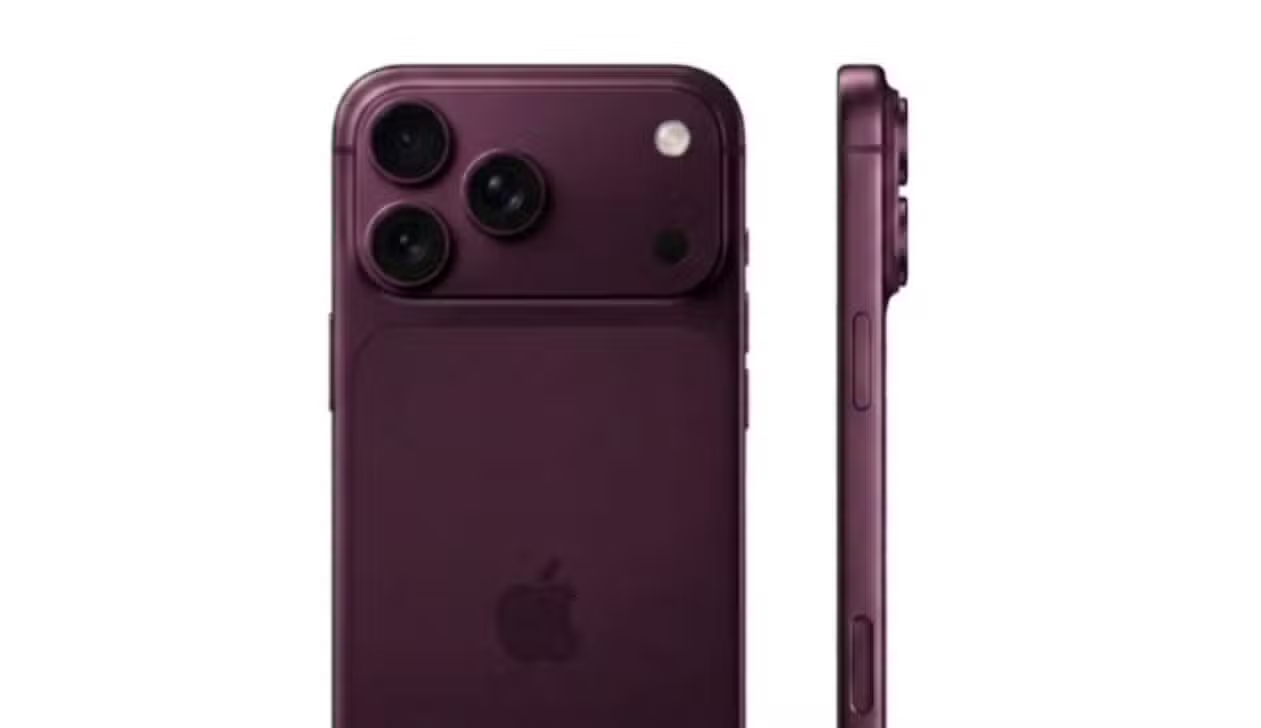
Apple has unveiled two new premium models for the second half of 2026, marking a significant shift in its innovation strategy. The iPhone 18 Pro arrives equipped with a variable aperture camera and three rear sensors, while the iPhone Ultra inaugurates the company’s line of foldable devices with a 7.8-inch internal screen. Ambos uses the 2 nanometer A20 processor, offering 15% higher performance and 30% greater energy efficiency compared to previous models.
Variable aperture Câmera revolutionizes photography on iPhone 18 Pro
The iPhone 18 Pro receives the first camera with variable aperture in the brand’s history. The 48 megapixel main lens allows automatic adjustment of the aperture according to lighting conditions, closing in bright environments for greater depth of field and opening in dark places to capture more light. Essa innovation offers precise optical control over exposure and depth of focus, eliminating sole reliance on computational processing to manage these parameters.

The Pro line maintains the three rear camera configuration, including a telephoto lens with 8x zoom based on a 48 megapixel sensor. The iPhone Ultra, limited by the internal space of the foldable design, does away with the third lens, using two 48-megapixel sensors that provide a solid rationale but compromise performance in zoom and low-light conditions.
- iPhone 18 Pro: variable aperture camera and three specialized rear lenses
- iPhone Ultra: two 48 megapixel sensors without dedicated telephoto lens
- Processador A20: 15% faster and 30% more efficient than previous generations
Foldable iPhone Ultra faces durability challenges
The iPhone Ultra features an innovative center hinge design that accommodates a 7.8-inch internal display. Quando closed, the thickness reaches 11 millimeters, significantly increasing the weight compared to traditional models. The battery, with a capacity between 5,100 and 5,200 mAh combined with LTPO+ technology, reduces energy consumption during standard use, but the larger screen consumes more energy than the 6.9-inch version of the Pro model.
The hinge mechanism represents a critical point of uncertainty. Engenheiros still does not fully resolve issues regarding component resistance to prolonged daily use, hinge durability after multiple opening and closing cycles, software optimization for screen size changes, and drop resistance. Apple has invested significant resources to resolve these issues, but complete guarantees do not exist. Consumidores who seek absolute reliability should consider Pro Max as a safer option.
Bateria Pro Max offers expanded autonomy
The iPhone 18 Pro Max features a 5,100 to 5,200 mAh battery associated with LTPO+ technology, reducing consumption compared to previous generations. Essa information has been documented by reliable industry sources. The Pro Max offers efficiency advantages that outweigh the gain in autonomy provided by the more powerful chip, unlike the Ultra, where the larger screen consumes significantly energy.
The iPhone 18 Pro maintains dimensions practically identical to the previous model, with an increase of just 0.36 millimeters in height and 0.39 millimeters in width. MagSafe works as expected, and iOS has been completely optimized for the standard screen. The Ultra, in turn, abandons MagSafe and offers only limited internal space without support for magnetic accessories, representing a significant reduction in functionality compared to the traditional Pro line.
Recomendações varies depending on user priorities
Fotógrafos who value image quality should opt for the iPhone 18 Pro, whose variable aperture camera represents a genuine advance implemented more than a year ago on other platforms. The telephoto lens with large aperture is exclusive to this version. Usuários who are looking for an expanded battery will find the Pro Max’s 5,100 to 5,200 mAh capacity, LTPO+ technology and more efficient 2 nanometer chip the appropriate answer for extended autonomy.
Consumidores attracted by the foldable concept must recognize that the second generation of Ultra will likely resolve current limitations. The lack of MagSafe, two-camera restriction, unresolved durability issues, and drop resistance issues pose significant hurdles for most users. The iPhone 18 Pro remains the reliable choice with genuine upgrades, while the Ultra remains an evolving experiment.