
BYD presents electric convertible with more than a thousand horsepower and targets the European market

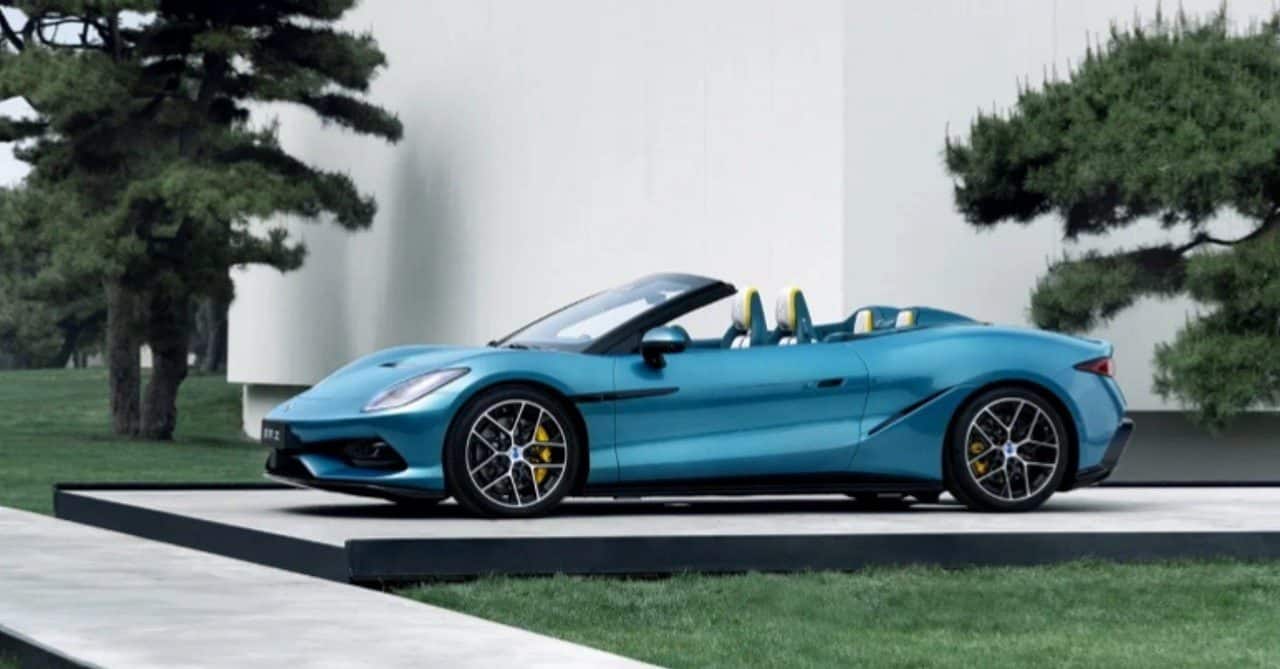
Chinese manufacturer BYD officially revealed the production version of the Denza Z Convertible during the Salão Automóvel of Pequim. The vehicle is part of the brand’s premium line and features a retractable fabric roof, marking the company’s entry into the segment of high-luxury sports cars with electric propulsion. The presentation combines extreme performance with a body designed for free-time use, maintaining the general proportions of the already known coupe variant, but with specific engineering solutions for the absence of a hard roof.
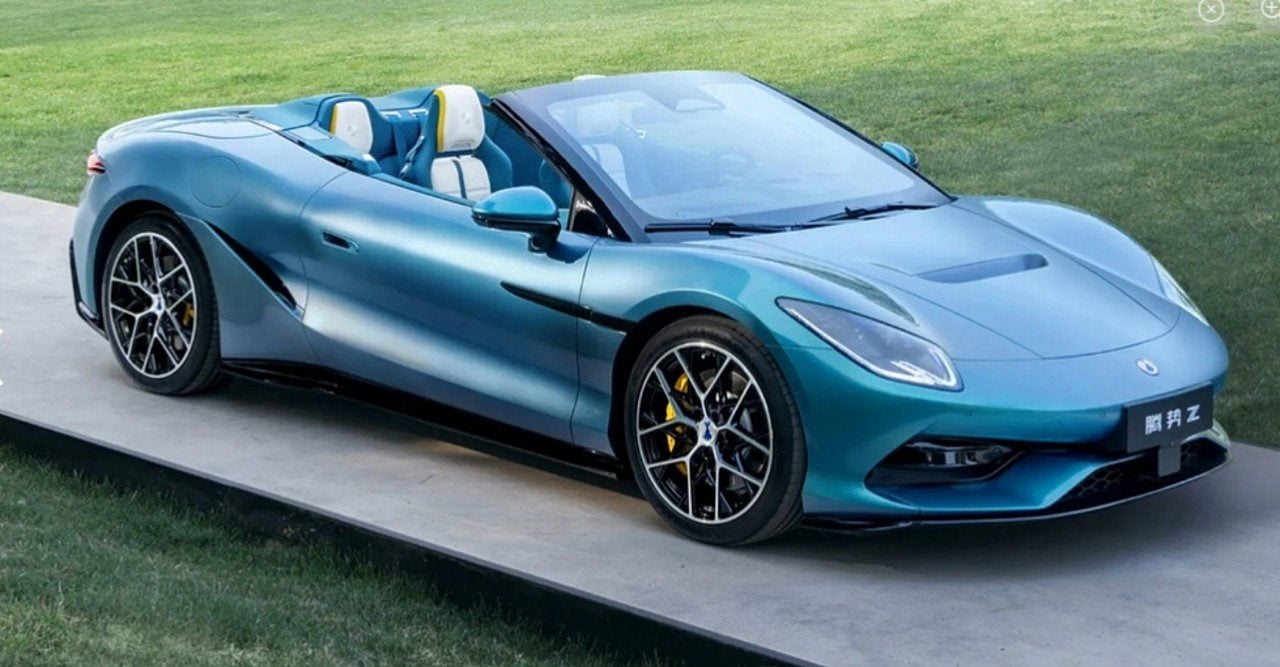
The manufacturer’s strategy establishes an unusual launch path for Asian companies in the automotive sector. The dynamic debut of the vehicle will take place at Festival at Velocidade at Goodwood at Inglaterra in July. The commercial priority focuses on exports to European countries before sales begin in the Chinese domestic market. The example displayed at the event features blue-green paintwork with a matte finish and tricolor interior, demonstrating the level of personalization offered to customers.
Design and aerodynamics under the command of former director of Audi
Wolfgang Egger, BYD’s current global design director, oversees the convertible’s visual development. The executive, who led Audi’s style department for years, coordinates projects for all of the Chinese group’s brands, ensuring a cohesive visual identity. The bodywork adopts classic gran turismo proportions, with a long hood, recessed cabin and short rear end. The bumpers feature fluid lines and abandon the aggressive folds present in the initial phases of the prototype.
The internal structure accommodates four passengers in the traditional arrangement of two front and two rear seats. Engineers applied structural reinforcements to the chassis to compensate for the lack of a fixed roof and maintain torsional rigidity during extreme maneuvers. Weight reduction has become an absolute priority in electric vehicle design, considering the additional mass of the battery pack. The cabin contrasts high-quality materials with technology incorporated into the control panels.
The designers incorporated several solutions focused on aerodynamic efficiency and mass reduction to maximize range and performance. The model’s main structural and visual features include:
- Capota in fabric with retractable electric drive system in the rear compartment.
- Maçanetas integrated into the doors to reduce lateral aerodynamic resistance.
- Rodas forged light alloy with exclusive design for the roofless version.
- Estrutura and high-resistance carbon fiber seats.
- Defletor of air positioned in the hood to optimize flow at high speeds.
Removing the roof exposes the interior without interfering with rear passenger space, a common problem in convertibles derived from coupes. The company seeks to offer an open-air driving experience combined with the acoustic comfort of an executive saloon. The rear design has undergone a complete redesign compared to the closed model, improving visual balance when the roof is resting in the compartment.
Mecânica with over a thousand horsepower
The propulsion is based on an advanced system composed of three independent electric motors. The configuration guarantees full traction on all four wheels and dynamically distributes force according to the needs of the route and tire grip. The combined power exceeds a thousand horsepower, equivalent to around 746 kilowatts available to the driver. Official data indicate acceleration from zero to one hundred kilometers per hour in less than two seconds.
The vehicle uses the E3 platform, developed specifically to host high-performance thrusters from the Chinese manufacturer. The architecture allows for the installation of state-of-the-art batteries, compatible with ultra-high-speed charging networks available in the main global markets. The company chose not to reveal exact numbers on energy storage capacity and total autonomy during the static display on Pequim. Market expectations indicate an offer consistent with the proposal of the gran tourism segment for long trips.
The dynamics are supported by cutting-edge chassis technologies to manage extreme power. The model features DiSus-M electromagnetic suspension, which regulates shock absorber stiffness in real time by reading road conditions. The steering system works via electrical control, eliminating direct mechanical connection between the steering wheel and front wheels for more precise responses. The features operate in combination with multiple driving assistants to ensure stability in high-speed corners and safety during abrupt braking.
Commercial Estratégia prioritizes Europa before Ásia
The decision to start sales on the European continent reflects the brand’s objective of consolidating its global image among high-income consumers. The development test program foresees intense validation sessions at the Nürburgring circuit, in the Alemanha, before the start of large-scale production. The German layout serves as a global reference for adjusting suspensions, aerodynamics and brakes for high-performance vehicles. Validation on European soil meets the strict requirements of local drivers, accustomed to highways without speed limits.
The Z product line comprises, in addition to the recently presented convertible, a traditional coupe variant and configuration intended for exclusive use on tracks. The diversification of the portfolio allows it to reach different buyer profiles within the luxury niche, from purists to track day enthusiasts. The manufacturer’s international expansion is strengthened by offering vehicles that combine cutting-edge electrical technology and sophisticated design signed by renowned professionals.
Financial planning points to an aggressive positioning in relation to the values practiced by traditional competitors. Projections for the Chinese market indicate that in the Asian country the car will cost between 400,000 and 500,000 yuan, depending on the equipment packages chosen. Direct conversion puts the price in the range between 58.6 thousand and 73.2 thousand dollars on the international market. The value represents a fraction of the amount charged for European models equivalent in power and proposed use.
Desafios engineering in the construction of electric convertibles
Creating a high-performance electric convertible presents significant technical hurdles for automotive engineering teams. Removing the fixed roof eliminates a crucial part of the structure that prevents the body from twisting during vehicle movement. Para To compensate for this loss, it is necessary to add beams made of very high strength steel and composite materials in the lower part of the chassis. The extra weight of these reinforcements adds to the already high mass of the lithium-ion battery pack positioned in the floor.
The thermal management of the three electric motors requires constant and directed airflow, directly influencing the design of the front part. The aerodynamics of a roofless vehicle undergo drastic changes depending on the position of the windows and cruising speed. Engineers developed specific virtual wind galleries to ensure that turbulence in the cabin does not affect the comfort of the four passengers. The front deflector and rear diffuser work together keeping the car adhered to the asphalt in all conditions.





