
Smart glasses with camera are used for blackmail in London
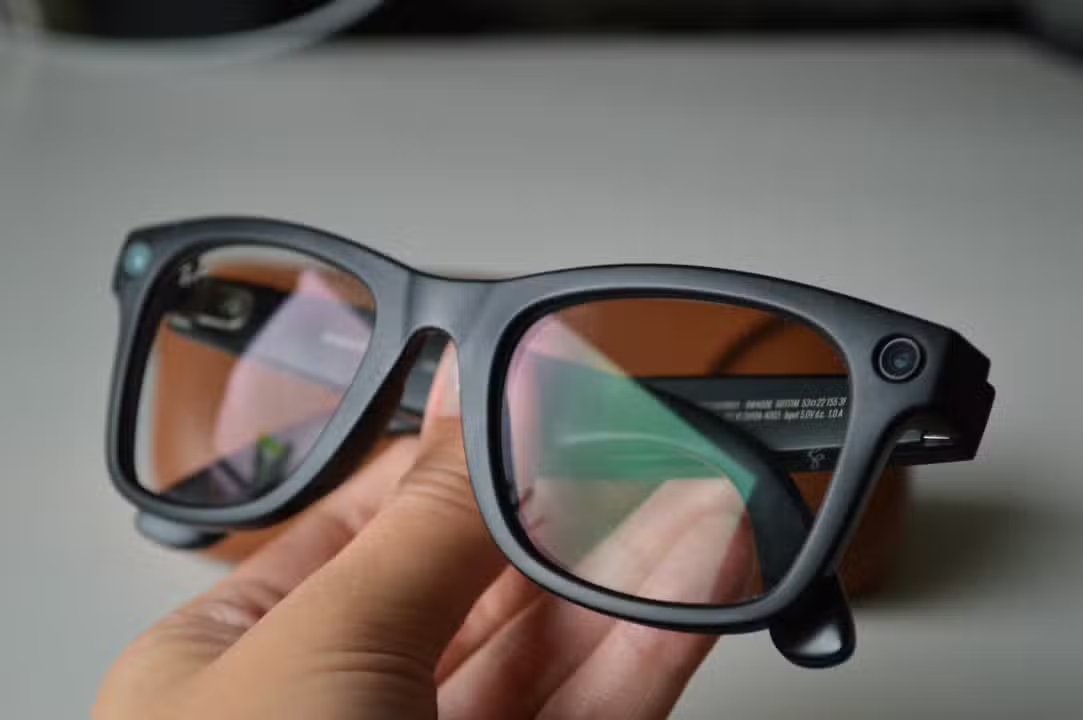
A woman on Londres was the victim of blackmail after being filmed without consent by a man wearing smart glasses with a camera. The video was posted on social media and the person responsible demanded payment to remove it, claiming it was a “paid service”. The BBC publicized the case, expanding the debate about the privacy risks associated with wearable devices with recording capabilities.
The situation illustrates a growing problem: men use smart glasses, particularly the Ray-Ban Meta AI, to discreetly record women in public spaces. Esses videos are frequently shared on social media platforms, generating thousands of views before being removed. The incident at Londres marks an escalation in introducing financial coercion into practice.
Vítima didn’t notice being recorded
The woman had not realized she was being filmed while shopping. Essa’s lack of awareness reveals a critical aspect: the privacy light and recording indicator LED on the glasses were obscured or simply not visible enough to catch your attention. Diferentemente from a cell phone, which is easily identifiable when pointed at someone, smart glasses allow for much more effective covert recording.
The video was initially shared on a specific platform, where it racked up tens of thousands of views before being removed for violating rules against harassment and bullying. The account of the person responsible was banned after a complaint. Posteriormente, the content was reposted on a different social media site, making tracking and complete removal virtually impossible.

Resposta from authorities and legal challenge
The police were contacted, according to reports, but said they did not have enough information to open an investigation. The man who filmed the video denied any attempted extortion when contacted by the BBC. The lack of legal action reflects a regulatory vacuum surrounding crimes committed with wearable devices in public spaces.
Esse’s specific case exposes a gap between available technology and authorities’ ability to respond appropriately. Privacy Leis in many jurisdictions has not yet been updated to handle covert recording through glasses and other wearables.
Padrão increasing abuse
Previous Investigações have documented the systematic use of smart glasses like Ray-Ban Meta to record women without permission. Esses devices, marketed as tools for capturing everyday moments, have turned into instruments of non-consensual surveillance. What sets Londres’s case apart is the introduction of financial extortion as a control mechanism.
Reasons why this problem persists include:



- Dificuldade on identifying an active camera in glasses during everyday interactions
- Ausência of clear legislation in several regions regarding covert recording in public places
- Viral sharing Facilidade on social media platforms
- Capacidade Limited of Platforms in Permanently Removing Content
The Ray-Ban Meta and similar devices have recording indicators, but their effectiveness depends on clear visibility and attention of the potential target. In busy environments like shopping centers, these signs often go unnoticed.
Desafio for manufacturers
Smart glasses Fabricantes faces increasing pressure to implement solutions that prevent unauthorized surveillance. The central question remains unresolved: where there is a camera, there is the potential for misuse. Remover completely losing recording capability would drastically reduce the commercial attractiveness of these products.
Algumas suggestions include more visible recording indicators, mandatory notifications when a camera is active, and software restrictions that prevent continuous recording without interruptions. Contudo, these measures only make abuse more difficult without eliminating it completely.
Contexto regulatory and future
The case of Londres reached the public in May 2026, a time when the adoption of smart glasses continues to grow. Legisladores in several countries are beginning to examine stricter regulations, but the speed of technological innovation often outstrips regulatory capacity.
The BBC managed to get the first post removed, but the repost on another site demonstrates how intimate or compromising content slips out of control once shared publicly. Social Media Plataformas Implement Detection Tools, But Criminals Quickly Find Alternatives.
The incident exemplifies a technological crossroads: Wearable devices offer convenience and legitimately useful creative capabilities, but their inherent architecture allows for abuse. Equilibrar privacy-protecting innovation remains an unsolved challenge in 2026.
Veja Tambem em Latest News (EN)

Developer Dark Jay Studio schedules release of Arms of God game on Nintendo Switch for 2027

Leaks point to a new version of Ocarina of Time and an unreleased Switch 2 console for the year 2026

Mercedes-AMG GT electric super sedan debuts in the United States with axial flow engine

Sony Xperia 1 VIII and Google Pixel 10 Pro XL compete for leadership in advanced camera tests

Qualcomm develops Snapdragon 8 Elite Gen 6 with an unprecedented Pro version and 2 nanometer chip

Asus reveals Zephyrus G16 notebook with Core Ultra 9 processor and RTX 5090 graphics card in Japan

Combination of PlayStation 5 Pro and classic PS3 unifies five generations of games in a single space

ALMA radio telescope observations reveal extreme levels of deuterium in comet 3I/ATLAS

NASA’s Psyche spacecraft uses Martian gravity and tests equipment towards metallic asteroid

Streaming platforms in Japan make all 291 classic episodes of Dragon Ball Z available

Laboratory evaluation defines AirPods Max 2 and Sony WF-1000XM6 as leaders in audio tests
