
ALMA radio telescope observations reveal extreme levels of deuterium in comet 3I/ATLAS


Observações astronomical studies conducted with the ALMA radio telescope, located at Chile, identified that the interstellar comet 3I/ATLAS has a chemical composition originating in a planetary environment completely different from our solar system. The scientific survey, published on April 23 in the specialized journal Nature Astronomy, recorded the first detection of the deuterium isotope in an object from outside our cosmic neighborhood. The discovery offers new parameters for researchers to understand the formation of worlds in distant regions of the galaxy.
The presence of deuterated water in the celestial body caught the attention of the international scientific community due to the atypical volumes found. The data collected points to extreme physical conditions at the comet’s place of origin. The study mobilized experts from several institutions and consolidates the use of radio technologies to map chemical elements at temperatures close to absolute zero.
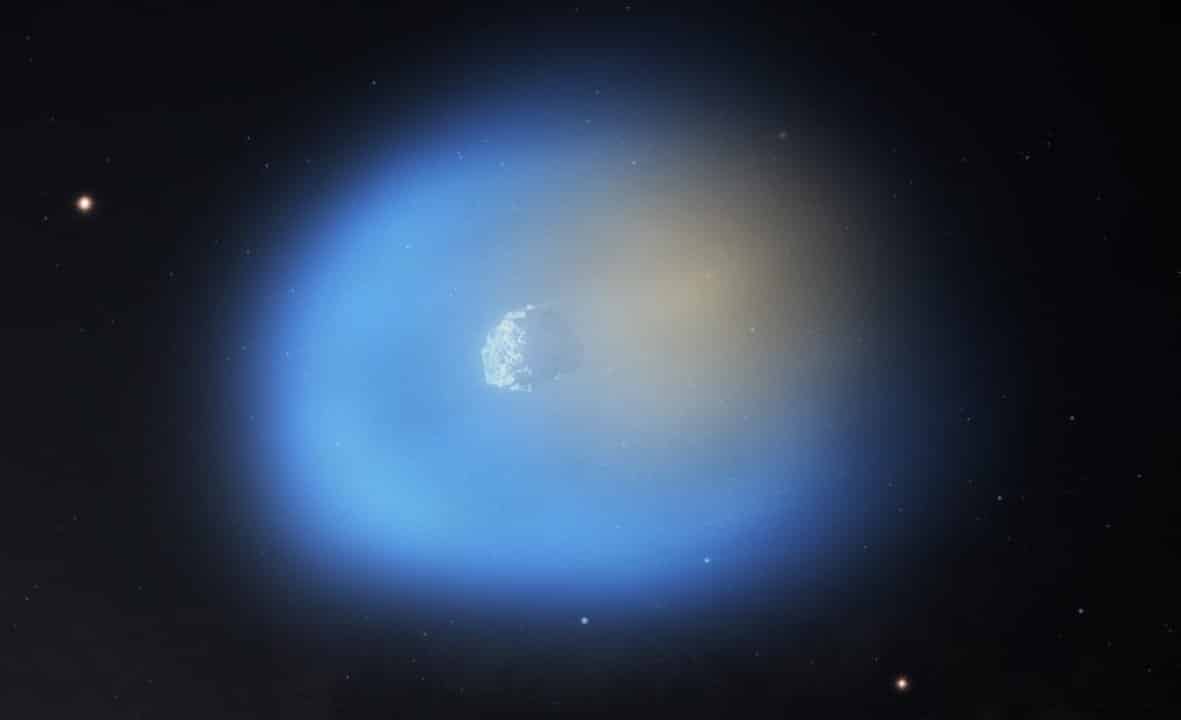
Descoberta of unprecedented isotope in extrasolar celestial body
Detailed analysis of the water present in 3I/ATLAS revealed an abundance of the deuterium isotope that exceeds the levels recorded in the oceans of Terra by more than 40 times. The number is also impressive when compared to comets formed within our solar system. Nesses cases, the interstellar object has a concentration greater than 30 times. Precise measurements indicate that the formation environment of this celestial body had much more extreme chemical and physical characteristics than the region where our planet emerged.
Luis Eduardo Salazar Manzano, main researcher of the study and doctoral candidate at Departamento of Astronomia of Universidade of Michigan, detailed the process of identifying the material. The scientist explains that deuterium generally appears in the water of comets in the form of HDO, also known as deuterated water or semi-heavy water. The high concentration of this specific compound in 3I/ATLAS acts as a direct chemical signature of its birthplace. Radio equipment allowed astronomers to isolate and measure this isotope of hydrogen for the first time in an extrasolar visitor.
Trajetória fast and observation window on the solar system
Comet 3I/ATLAS gained global notoriety when monitoring systems detected it crossing the solar system in July last year. The celestial body was traveling at a very high speed, which significantly reduced the time available for in-depth analysis. Este event marks only the third time in the history of astronomy that a confirmed interstellar object has been observed crossing our region of the universe. Previous passages of similar bodies had already aroused great interest, but did not yield such specific chemical data.
The most critical observations made with ALMA occurred during the month of November. The period coincided with the days immediately following the comet’s closest approach to the sun, a time when stellar radiation heats the nucleus and releases gases trapped in the ice. 3I/ATLAS began its definitive exit route from the solar system in December. The observation window lasted just a few months, but it guaranteed the collection of an unprecedented volume of data on the internal composition of an alien object.
Radiotelescópio ALMA and millimeter observation technology
The Atacama Large Millimeter/submillimeter Array, known by the acronym ALMA, operates in the desert of Atacama, in Chile, and was the central piece for the success of this research. The high altitude and extremely dry climate of the Andean region create ideal conditions for capturing millimeter and submillimeter waves coming from deep space. The antenna complex made it possible to accurately detect deuterium, a feat that would have been impossible with traditional optical telescopes. The instrument represents the state of the art in observing cold chemical compounds in the universe.
ALMA’s sensitivity to measuring isotopes in extremely low-temperature environments ushered in a new phase for comparative astronomy. The readings unquestionably confirmed the extrasolar origin of the comet and validated methods that will be applied in future passages of interstellar objects. Cada new chemical detection carried out by this astronomical complex adds fundamental pieces to the puzzle of the evolution of planetary systems spread by Via Láctea.
Cápsulas of time and the evolution of Via Láctea
Astronomers classify interstellar objects as true repositories of primordial material. Eles carry pristine matter from the environments where other planetary systems formed billions of years ago. Salazar Manzano compares analyzing this data to opening cosmic time capsules. The material preserved in the comet’s ice traveled unfathomable distances to reach the range of terrestrial instruments, bringing with it the record of physical processes that shaped worlds far beyond our capacity for direct observation.
Measurements obtained during the 3I/ATLAS flyby provide researchers with a solid foundation for several fronts of astronomical research:
- Compreender the extreme temperature and pressure conditions of the planetary system where 3I/ATLAS originated.
- Discernir the distribution of chemical elements in Via Láctea long before the formation of our solar system.
- Estabelecer direct connections between distinct planetary environments through the analysis of chemical signatures.
- Avaliar the variations in the abundance of heavy isotopes in different regions and times of the universe.
Processing this information requires months of work on supercomputers. Scientists cross-reference the comet’s data with theoretical models of star formation to try to recreate the exact environment where the deuterated water condensed. The presence of complex molecules on nomadic celestial bodies reinforces the thesis that the building blocks of planetary systems share fundamental characteristics, even in opposite corners of the galaxy.
Implicações for the study of protoplanetary disks
The discoveries surrounding 3I/ATLAS considerably expand human knowledge about chemical variations in the early universe. The abnormal abundance of deuterium strongly suggests that the comet formed in a region subjected to conditions much more severe than those present in the protoplanetary disk that gave rise to Terra, Júpiter and the other local planets. The cloud of gas and dust that formed our solar system had a much milder isotopic distribution.
Mapping galactic chemical composition through time gains a vital boost from these data. The study of materials of extrasolar origin allows researchers to build a broader perspective on the universal processes of planetary formation. Detailed analysis of cosmic visitors like 3I/ATLAS demonstrates that the chemistry of the early universe was diverse and that neighboring solar systems may harbor worlds with elemental compositions radically different from those we know.





