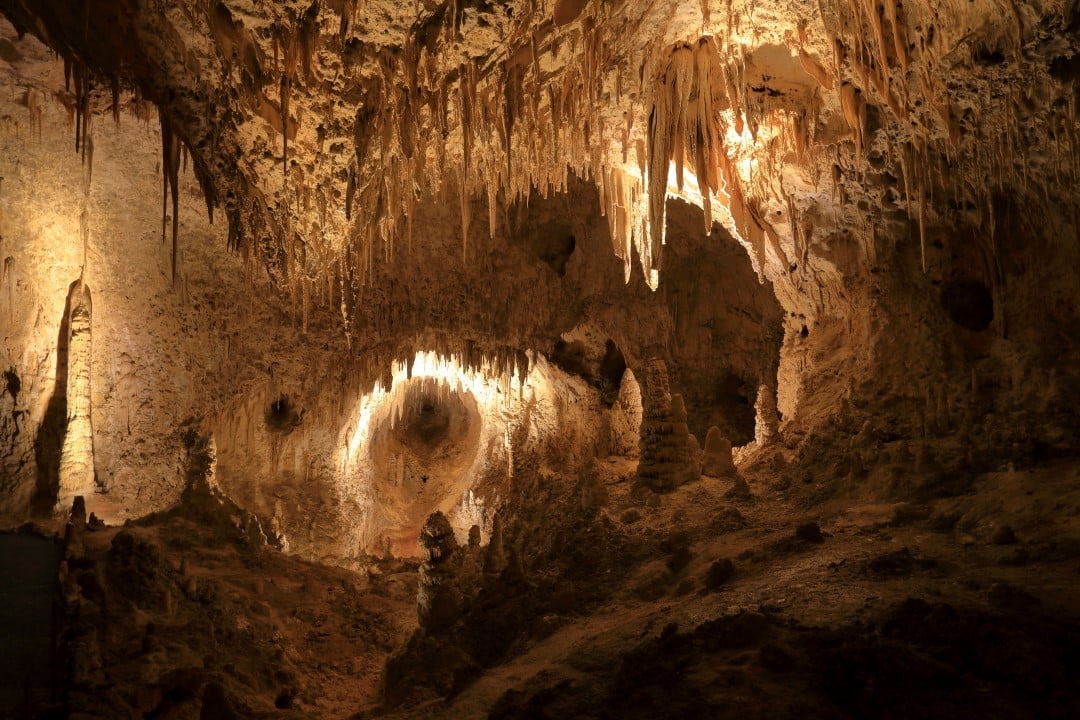
Autoridades of Parque Nacional of Cavernas of Carlsbad, in Novo México, warned about the devastating impact of a simple package of snacks left by a tourist inside the largest underground chamber in the place. The incident occurred in September 2024 and revealed how seemingly insignificant acts can trigger profound transformations in fragile and isolated environments for millions of years.
The discovery took place in the region known as “Big Room”, the park’s vast underground cave system. Guardas foresters identified residues of Cheetos scattered across the rocky surface, outside the authorized trails. What began as an ordinary tourist accident has opened a window into understanding the extreme vulnerability of cave ecosystems.
Processed corn transformed the underground environment
The organic material in the snack underwent significant changes in the humid conditions of the cave. The gradual softening of the food created a perfect substrate for the uncontrolled proliferation of microorganisms and fungi. Espécies originally unidentified in the ecosystem began to flourish, quickly colonizing the rocky surface. The park documented how this accidental contamination generated a cascade of unexpected biological consequences.
Grilos desert mites, spiders and flies found an abundant source of nutrients and migrated to the affected area. A temporary food web was established in a matter of days. Esses organisms spread nutrients throughout the cave and reached surrounding geological layers, permanently modifying the fragile balance that had existed for centuries.
Mofo has expanded and changed indoor air quality
Fungal development did not stop on the visible surface. Esporos advanced to upper levels of the rock structure, generating grains of mold that proliferated and eventually died, releasing foul odors that contaminated the underground environment. The decomposition cycle brought new anaerobic bacteria, changing the chemical composition of the air inside the cave. Guardas cleaning foresters spent 20 minutes meticulously removing food debris and biofilm from the surface.
Durante cleaning process, professionals discovered an alarming fact: many of the microorganisms and fungi that grew from the food debris were not native to the Carlsbad ecosystem. Representavam biological invasions that can compromise site-specific biodiversity. Manually removing contaminants does not guarantee the complete elimination of established non-native species.
Regulamentações strict efforts to prevent new incidents
The park maintains a strict prohibition against eating food inside the caves. The rule authorizes only drinking water, with the aim of preserving environments that have remained isolated from direct human influence. The official website warns that drinking or eating anything other than water could attract wild animals to the caves, altering migratory patterns and reproductive behaviors of endemic species.
Apesar of clear signs, tourists continue to disregard the guidelines. Autoridades recognize that “leaving a mark” on the environment, even unintentionally, generates lasting impacts. The park’s post on Facebook emphasized that “from a human perspective, dropping a bag of snacks may seem trivial, but for cave life, it could change the world.”
Educação ambient intensifies after episode
Gestores of the park intensified educational campaigns aimed at visitors. The strategy seeks to change perceptions about the real meaning of “leaving only footprints” in natural environments. Cada tourist receives specific information about the cave system prior to access, including videos about underground ecosystems and their fragility. The approach recognizes that individual impacts, when multiplied by thousands of annual visitors, create irreversible cumulative degradation.
The park reinforces that “the traces left by individual tourists are difficult to erase”. Autoridades call on the public to consider their environmental legacy and ask: what world do we want to leave for future generations? The declared commitment is to transform Carlsbad into a model of cavernous preservation, where tourism and conservation coexist within rigorous sustainable standards.