
Study reveals that Uranus and Neptune may contain much more rock than previously thought


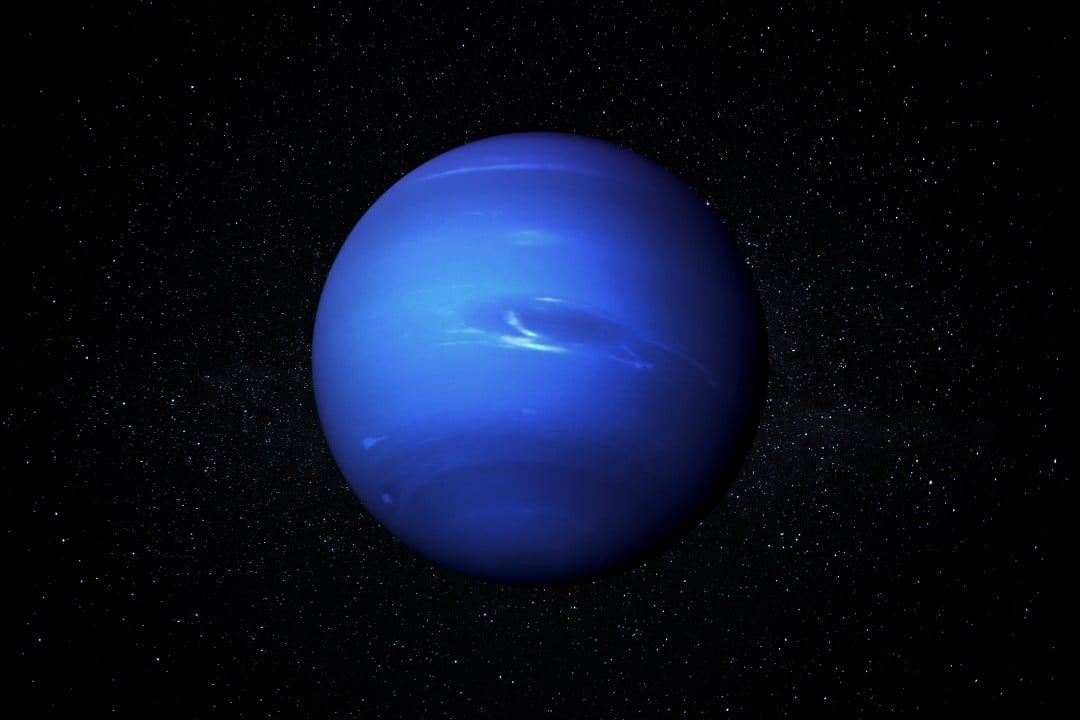
Pesquisadores claim that Urano and Netuno have significantly rockier outer layers than traditional theories indicate. A new study published in the journal Astronomy & Astrophysics challenges decades of understanding about the solar system’s so-called ice giants, suggesting that rocky material may dominate substantial portions of these planets rather than being mostly composed of frozen ice. The research was led by Instituto Holandês of Pesquisa Espacial and could rewrite knowledge about the formation of the most distant worlds in our cosmic neighborhood.
Desafiando the traditional classification
Durante generations, astronomers framed Urano and Netuno as ice giants. Essa categorization assumed that the two outermost planets contained large amounts of water ice, ammonia and methane beneath their dense atmospheres. The bluish color of these worlds, caused mainly by atmospheric methane, reinforced this consolidated perception in the scientific community. Tal classification has shaped research and expectations for over fifty years, making it virtually unquestionable in planetology courses.
The new work, however, presents a more complex and balanced picture. Scientists modeled the internal structures and atmospheric layers of both planets using advanced simulations. Analysis indicated that silicate material can condense into rocky matter in the atmospheric layers themselves, under extreme conditions of temperature and pressure. Isso would mean that considerable portions of these planetary envelopes would be filled with rock formation, not just frozen compounds.
Yamila Miguel, lead author of the study, told Space.com: “We discovered that both Urano and Netuno have their outer layers composed mainly of rocks, as well as hydrogen and helium gas. Isso contradicts the common belief that they are ice giant planets.” The discovery raises fundamental questions about the terminology used in planetary science. If the composition is not dominated by ice, the label “ice giant” may no longer be accurate.
Inspiração in the outer solar system
The research did not emerge in isolation. Ela was fueled by increasing observations of the trans-Neptunian region, the vast area beyond Netuno inhabited by dwarf planets, comets, and Cinturão objects from Kuiper. Cientistas who study bodies like Plutão have found increasing evidence that these distant worlds are not purely frozen. Muitos appear to have dense rock interiors or significant rock fractions mixed into their structures.
Essa trend led researchers to question whether the same pattern could apply on a much larger scale. If smaller objects in the outer solar system are rockier than previously believed, perhaps Urano and Netuno formed from similarly rock-rich material. Usando advanced simulations, the team recreated the planets’ envelopes, mantles, and cores while examining how temperature and pressure interact deep within their atmospheres. Models suggested that silicate clouds could condense into rocky matter under these extreme conditions.
Implicações for planetary understanding
The consequences of this finding go beyond the simple change of nomenclature. Planetary composition is directly connected to theories about the formation of worlds around stars. Se Urano and Netuno contain substantially more rocky material, scientists may need to revise models describing the early solar system. Current theories assume that planets formed by the accumulation of icy, gaseous material in cold outer regions. A rock-rich composition could imply that the basic components available in those regions were very different from assumptions held for decades.
The discoveries could also influence the search for planets beyond the solar system. Milhares of exoplanets discovered around distant stars resemble worlds the size of Netuno. Cientistas often classify these planets using assumptions based on the solar system’s ice giants. If the basic understanding of Netuno and Urano changes, interpretations of many exoplanets may also be revised. Além Furthermore, these discoveries will affect theories that explain:
- Planetary Migração in the early stages of the solar system
- Atmospheric Evolução through geological time
- Formação of these giants’ unusual magnetic fields
- Padrões of material distribution in primordial protoplanetary disks
Preservando the complexity of knowledge
Miguel emphasized that the planets are not completely devoid of ice. “They may have a lot of ice inside them,” said the researcher, “but they are definitely not completely covered in ice as we used to believe.” Essa distinction is crucial because the study does not completely invalidate existing planetary science. Instead, it proposes a more balanced and intricate internal structure than previous models have suggested. The giants can contain significant amounts of ice inside, in addition to having rocky atmospheric regions and outer layers endowed with rock-forming material.
The research also highlights how much remains to be learned about the outer solar system. Apesar From decades of observation, Urano and Netuno remain among the least explored major planets. Apenas probe Voyager 2 visited them directly, flying over Urano in 1986 and Netuno in 1989. Desde then, astronomers relied mainly on telescopic observations and theoretical models to understand their hidden interiors.
Essa lack of direct exploration leaves huge gaps in knowledge. Pesquisadores still does not fully understand why Urano rotates sideways, how Netuno generates its extreme winds, or what processes shape its unique magnetic fields. Futuras missions may provide necessary answers. Cientistas have repeatedly proposed sending dedicated orbiters or atmospheric probes to the ice giants, considering them priorities for planetary exploration in the coming decades. Novas measurements of gravity, atmospheric chemistry and internal structure could confirm whether the rock envelope hypothesis is correct. The study was published May 5 in the journal Astronomy & Astrophysics, adding yet another layer to an ongoing scientific debate about the true nature of the solar system’s most distant worlds.





