

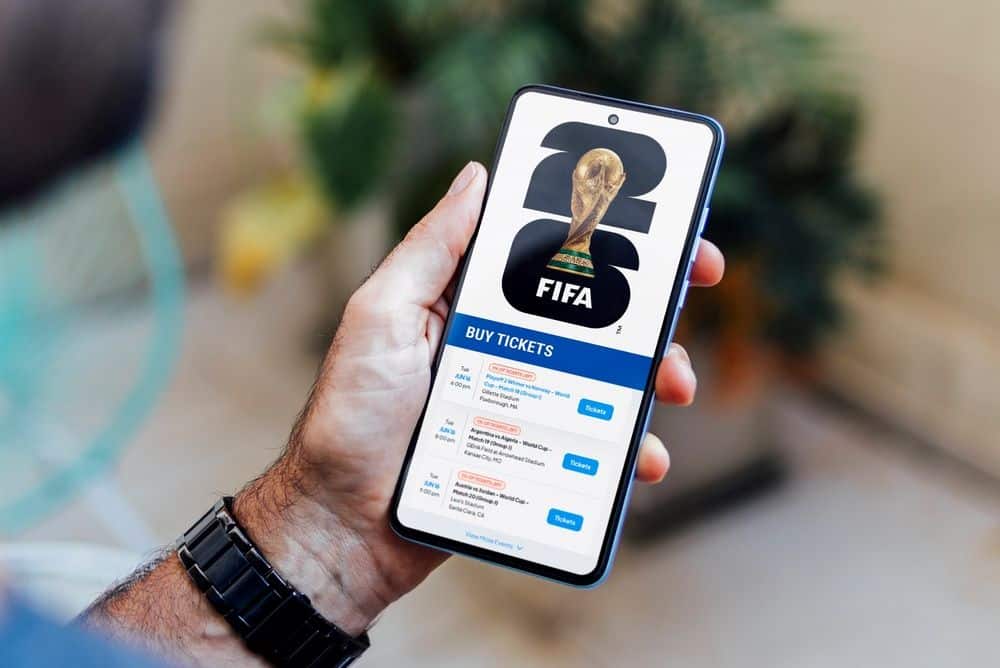
Ingressos for the Copa final of Mundo reach astronomical values on the American parallel market. A ticket for the decisive match at MetLife, in Nova Jersey, is sold for US$80,820, equivalent to R$397,045 at the current price. The disparity between the official and clandestine markets reveals a scenario of concern for Fifa regarding ticket sales and hotel occupancy during the tournament.
Enquanto clandestine reseller operates with prohibitive prices, the final phase of official sales of Fifa shows the opposite trajectory. Tickets for the group stage have suffered a significant reduction since the confederation opened its last sales window. The decline reached 23% in just one month, signaling demand saturation and difficulty in distributing income through legitimate channels.
Disparidade between official and underground markets
The contrast between the two markets illustrates price volatility during major sporting events. Entradas for early stage matches, officially sold by Fifa, show continuous reduction in value. The price drop of a quarter in 30 days suggests that fans are having difficulty covering travel and accommodation costs in addition to the ticket itself.
Clandestine Revenda explores exactly this scenario. Intermediários capitalize on the perceived scarcity of tickets in premium sectors, particularly for the final. MetLife, the main stadium in the Nova York metropolitan region, has the highest prices in the parallel market. Localização geography, audience capacity and historical prestige justify part of the difference, but the values observed exceed any relationship with operational costs.
Fifa did not release an official response to the phenomenon. Internamente, football confederations recognize that resale is a structural part of major events and that fully combating the phenomenon requires disproportionate resources. Tecnologias ticket tracking has advanced, but criminals quickly adapt to new protocols.
Impacto in hotel occupancy and infrastructure
Hospedagem follows a pattern parallel to the tickets. Hotéis near MetLife and in the Nova Jersey region increased daily by up to 300% for the final periods. The combination of high ticket prices and expensive accommodation reduces the financial capacity of middle-income fans to travel to the event.
Operadores Tourists report that international bookings for host cities are down compared to previous Copa editions of Mundo. Torcedores from South American countries, historically the biggest travelers to destinations, face unfavorable exchange rates that amplify costs. High Dólar makes traveling to the US more expensive than traveling to Catar in 2022 or Rússia in 2018.
Dados hotel occupancy rates show that smaller cities in the US — located two hours away from the main stadiums — have maintained occupancy rates above 85%. Torcedores redistribute themselves geographically in search of affordable accommodation, impacting economic flow in main urban centers.
Redução pricing in early knockout stages
Mundo’s Copa group stage represents a critical official selling point. Initial Rodadas involve clashes that are less commercially attractive than round of 16 or semi-finals. Moderate Público in American stadiums during early rounds reflects both the quality of the duel and the combined cost of ticket and accommodation.
Queda of 23% in one month represents a significant number in a market with low elasticity. Torcedores do not postpone Mundo’s Copa viewing experience indefinitely. Redução price therefore works as a stock clearing instrument before critical periods. Conforme dates of decisive matches approach, tickets tend to recover value — a phenomenon that supports resale operators.
Economic Análise suggests that Fifa and official operators face a dilemma: maintain high prices and accept low occupancy in sectors, or reduce prices and sacrifice capitalization revenue per entry. Escolha due to the reduction indicates greater concern with image and full stadiums than with optimization of revenue per ticket.
Estratégias to combat illegal resale
Confederação has implemented QR code and biometric verification systems in some stadiums to reduce illegal ticket transfers. Tecnologia links original purchaser identity to physical event access. Fiscalização at the entrances checks whether the document presented matches the name on the electronic ticket.
Limitações of the system are revealed when intermediaries falsify documentation or when fans formally authorize third parties to access their ticket. Brecha legally supports the circulation of entries through declared family members or friends, making it difficult to differentiate between legitimate donation and resale.
Official resale digital Plataformas — such as Ticketmaster — establish earning limits per resale. Markup Teto, however, only works for operators using legitimate channels. Marketplaces, clandestine on social networks and messaging applications, escapes any supervision.
Poder American public has signaled interest in investigation into clandestine resale, but priority remains low given other economic concerns. Federal Trade Commission received complaints, but opening a formal investigation would require a much higher volume of complaints.
Contextualização from Copa from Mundo 2026
Torneio marks the first edition with 48 teams — increasing from 32 to 48 teams. Expansão increased the total number of matches and offered more tickets on the market, in theory reducing perceived scarcity. Paradoxalmente, tickets for decisive matches have become even more valued.
Estados Unidos, Canadá and México share headquarters responsibility. Distribuição geographical location between three nations expanded the supply of stadiums and redefined demand patterns by region. Torcedores need to calculate not only travel costs within the US, but the potential need to cross international borders to watch specific teams.
Expectativa is for 5 million tickets to be sold throughout the competition. Cifra represents growth compared to the 2018 and 2022 editions, but irregular distribution — with high demand concentrated in finals and low in first rounds — maintains pressure on prices in parallel markets.




