

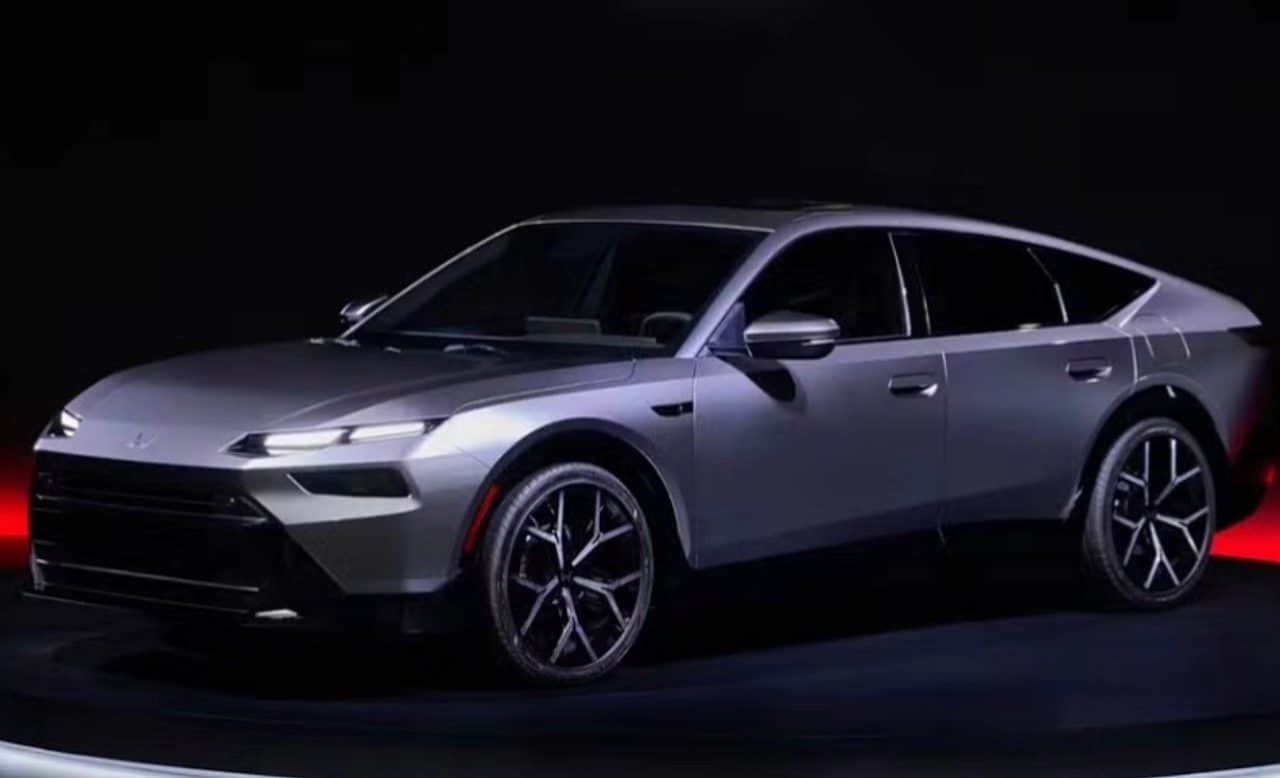
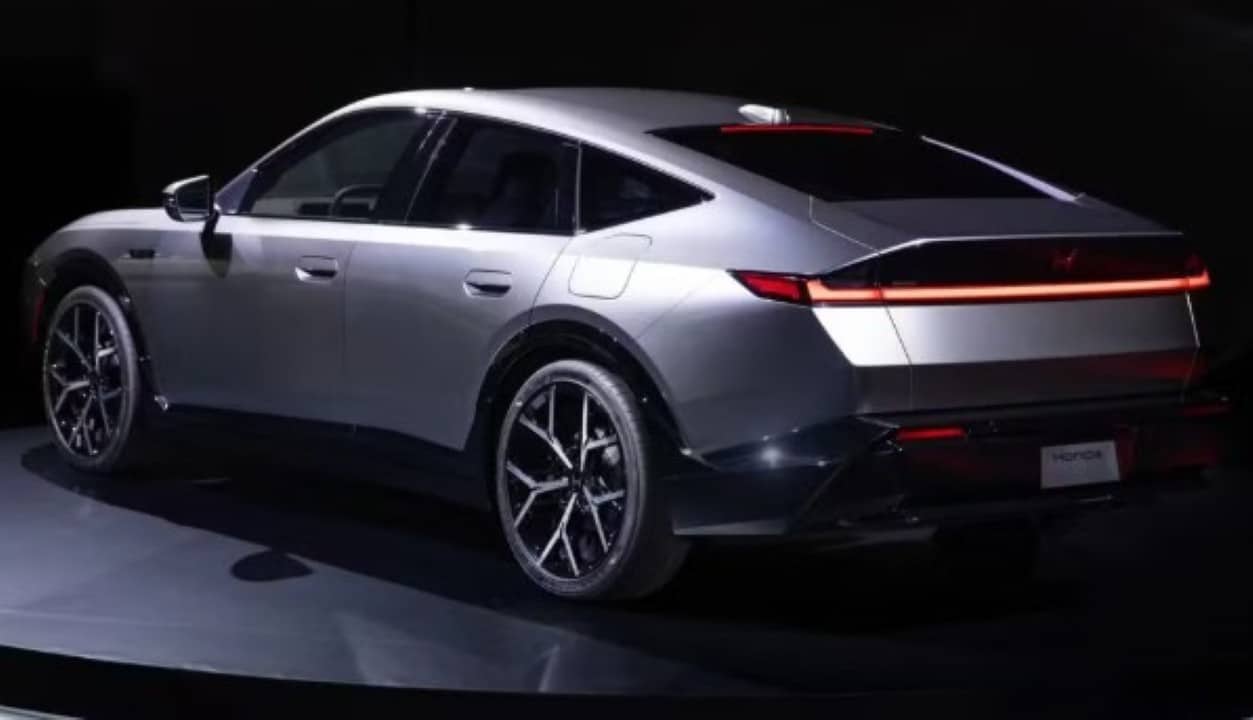
Honda has revealed the first images of the Hybrid Sedan Prototype, a concept that previews the design and technology of the new Civic. The prototype shows a fastback-style body, angular surfaces and a square front end reminiscent of the brand’s previous projects. The rear impresses with full-shaped taillights that span the entire width of the vehicle. The sedan will reach the international market by the end of 2027, with the Brasil expected to arrive later.
The new generation of Civic is one of Honda’s most critical projects today. Marca Six years in the same lineage — the 11th in its history — Honda plans a complete transformation in the visual language of the midsize sedan. The prototype now presented serves as an official preview of this aesthetic revolution, revealing details that were unknown until then.
Modular Plataforma and consumption reduction
The new Civic will be built on a completely new platform, designed specifically to house next-generation hybrid systems. Essa base will also support the next generations of HR-V, CR-V, Accord and several other models of the brand. Parts sharing will reach 60%, allowing for simplified development and manufacturing processes thanks to the modular nature of the project.
The technical objectives are ambitious. The Honda promises a 10% reduction in fuel consumption and a 90 kilogram reduction in weight compared to current equivalent models. Simultaneamente, the brand seeks to simplify development and production, reducing the time to launch new models by half and increasing production efficiency by 20%.
Sistema hybrid and engine innovations
Sob under the hood, the new Civic will have an updated version of the e:HEV hybrid system. Carros equipped with this set will be up to 10% more economical and significantly less polluting. The engine features direct injection managed by a new electronic interface that controls the air and fuel mixture with greater precision than previous generations.
The technology represents an advance in energy efficiency for the segment. Honda invested in components that reduce losses and optimize the use of each fuel burned. Esse’s approach reflects the brand’s global strategy of responsible electrification, focused on hybrids rather than fully electric vehicles.
Características new generation techniques:
- Redução fuel consumption by 10%
- 90 kg weight Diminuição
- 60% of parts shared between models on the platform
- Injeção direct with electronic air-fuel mixture control
- Motion Management Sistema for Stability
- Enhanced Agile Steering Assistência with Tilt Control
Dirigibilidade reinforced as differentials
Honda positions the new Civic as an “engaging” and “fun to drive” sedan. Para developed the motion management system, designed to optimize stability and steering response in different conditions. Haverá also enhances the agile steering assistance feature, now combined with a tilt control system that provides more stable behavior on varied surfaces.
Essas choices reflect the midsize sedan’s positioning in the market. Enquanto competitors emphasize comfort and technology, the Honda reaffirms the DNA of the Civic as a dynamic vehicle. The engineering developed around the project seeks to balance performance with hybrid efficiency.
Financial Recovery Contexto
Honda is going through a challenging financial period. In 2025, the brand recorded its first annual net loss since 1957. The new development plan is strategic to reverse this situation. The program to reduce launch time and increase production efficiency directly responds to this financial pressure, creating economies of scale through modularity.
The investment in the Civic reflects a focus on the midsize sedan segment, which is still relevant in developed and developing markets. The modular platform allows Honda to distribute costs between multiple products, making the project viable even in a context of financial constraints.
Chegada to Brasil and local market
No Brasil, the new Civic will continue to be offered only as an import, just like the current generation. It is expected to reach the Brazilian market after its international launch, estimated for the end of 2027. The sedan will maintain its positioning as a premium import in the Brazilian midsize segment.
Simultaneamente, the brand plans to bring the new e:HEV flex hybrid system to the HR-V, its first local product with the technology. The compact SUV will adopt the 1.5 e:HEV flex engine in 2028, before the Civic reaches the local market. Essa launch sequence structures Honda’s hybrid portfolio renewal plan for the next 18 months.





