
Development of the latest Final Fantasy VII advances to polishing after director completes 40 tests

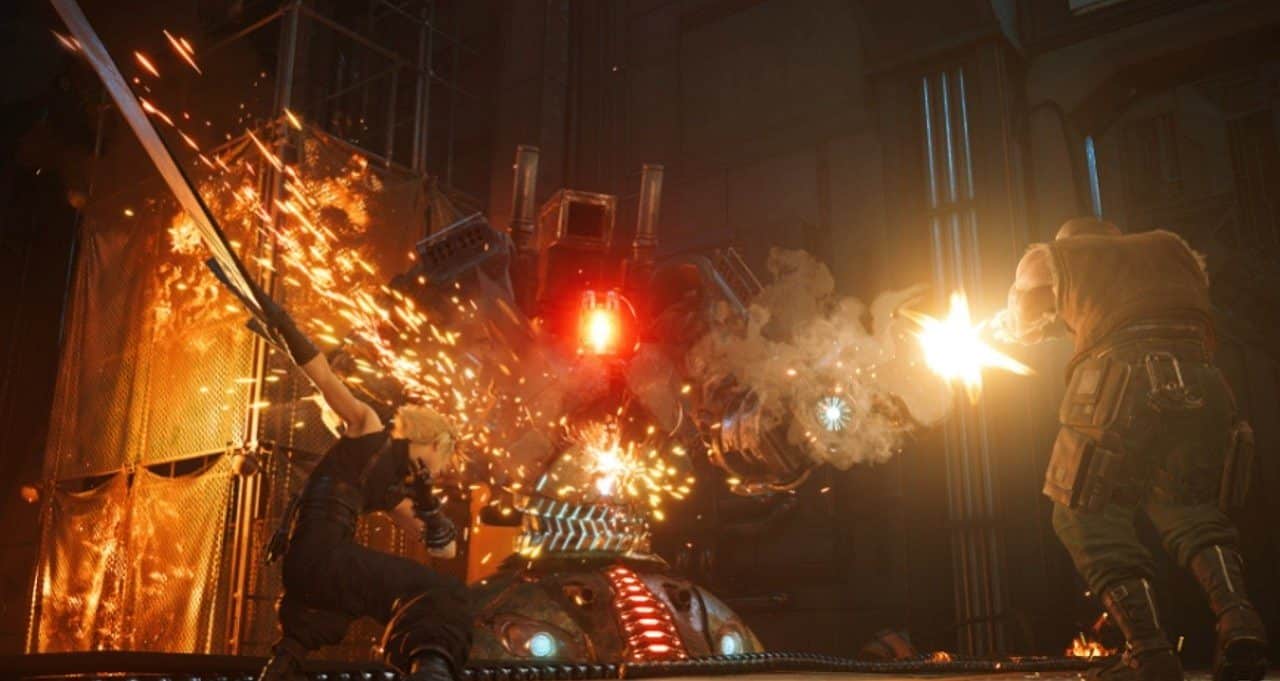
Creative director Naoki Hamaguchi has already gone through the complete campaign of what should be the conclusion of the Final Fantasy VII Remake trilogy more than 40 times. The information came in a recent interview and signals that the project has reached an advanced stage of internal testing.
Square Enix keeps development on schedule. The focus is now on polishing mechanics, fixing bugs and fine-tuning the experience before any official reveal.
Diretor accumulates extensive testing in the main campaign
Hamaguchi has been leading the project since the trilogy began in 2020. Ele has reported completing over 40 full play sessions. Esse volume of testing allows us to identify problems with progression, combat balance and general fluidity.
The team works with the same core of professionals who developed the previous chapters. Essa continuity helps maintain narrative and visual consistency across the three titles. The game still uses Unreal Engine 4, a choice that avoids technical disruptions in the middle of production.
The director highlighted his enthusiasm with the current state. Ele mentioned that the main experience is now playable and that the team is progressing day by day in refining it. Preparativos for an announcement continues at a normal pace, with no signs of major delays.
- The main campaign allows multiple complete passes
- Ajustes focus on combat and exploration
- Equipe keeps the same size since Rebirth
- Current Foco includes technical fixes and visual polish
Transição for technical refinement phase
With the central structure in place, programmers direct efforts towards optimization. Isso includes difficulty balancing, bug fixes and performance improvements in different scenarios. The volume of tests has already overcome initial progression blocks.
Hamaguchi actively participates in the sessions. Ele evaluates the game as a whole, which helps ensure that the conclusion of the trilogy meets the expectations created by the previous chapters. Square Enix has not announced a launch date, but internal progress suggests stable progress.
The third title should close narrative arcs started in Remake and expanded in Rebirth. The team prioritizes emotional fidelity to the characters and the original 1997 world, with updates to current gameplay standards.
Equipe keeps pace with no changes to the graphics engine
Choosing Unreal Engine 4 makes the job easier. The team has almost ten years of familiarity with the tool, which reduces adaptation time. Isso allows for greater concentration on content and player experience.
Desenvolvedores adjusts elements such as collisions and repetitive tests with the support of technical tools. The use of artificial intelligence is limited to quality control tasks, without interference in creative design.
Hamaguchi reinforced that the project follows the initial planning. Ele avoided giving details about the plot or new mechanics, but confirmed that the team is working to deliver an ending worthy of the saga.
Detalhes of the internal testing process
Playthroughs serve to validate the complete journey. Cada session helps refine pacing, encounters, and transitions between areas. Repetition also allows for adjustments to difficulty scales and rewards.
Production advances in parallel with ports of Rebirth to new platforms. Essa strategy keeps the team together and speeds up the overall project cycle.
What changes in the current production phase
Developers prioritize visual and gameplay polish. Isso includes adjustments to lighting, animations and control responses. The goal is to create a fluid experience from start to finish.
Hamaguchi mentioned that the game improves noticeably with each iteration. The celestial team





