Dream of owning a home turns into debt with construction company fraud in Caixa financing

Sonhos families in several Brasil regions have turned into financial and emotional nightmares, as a fraud scheme involving construction companies and Caixa Econômica Federal real estate financing comes to light. Casais who dedicated years of their lives to the economy to build the ideal home saw their work come to a standstill, with the financing money simply disappearing. The allegations expose a pattern of irregularities where large sums are released by the bank, but construction remains incomplete or does not even begin.
Essa series of scams, detailed in a television report, reveals a modus operandi that is repeated: construction companies simulate the progress of works through false technical reports, receive payments from Caixa and then abandon the projects. Victims find themselves trapped in mounting debt, paying for properties that never materialize, while trying to untangle the complex tangle of responsibilities and bureaucracy that has ensnared them. The impact is profound, affecting the financial security and stability of homes that were planning a new life.
Esquema fraud paralyzes home construction and harms buyers
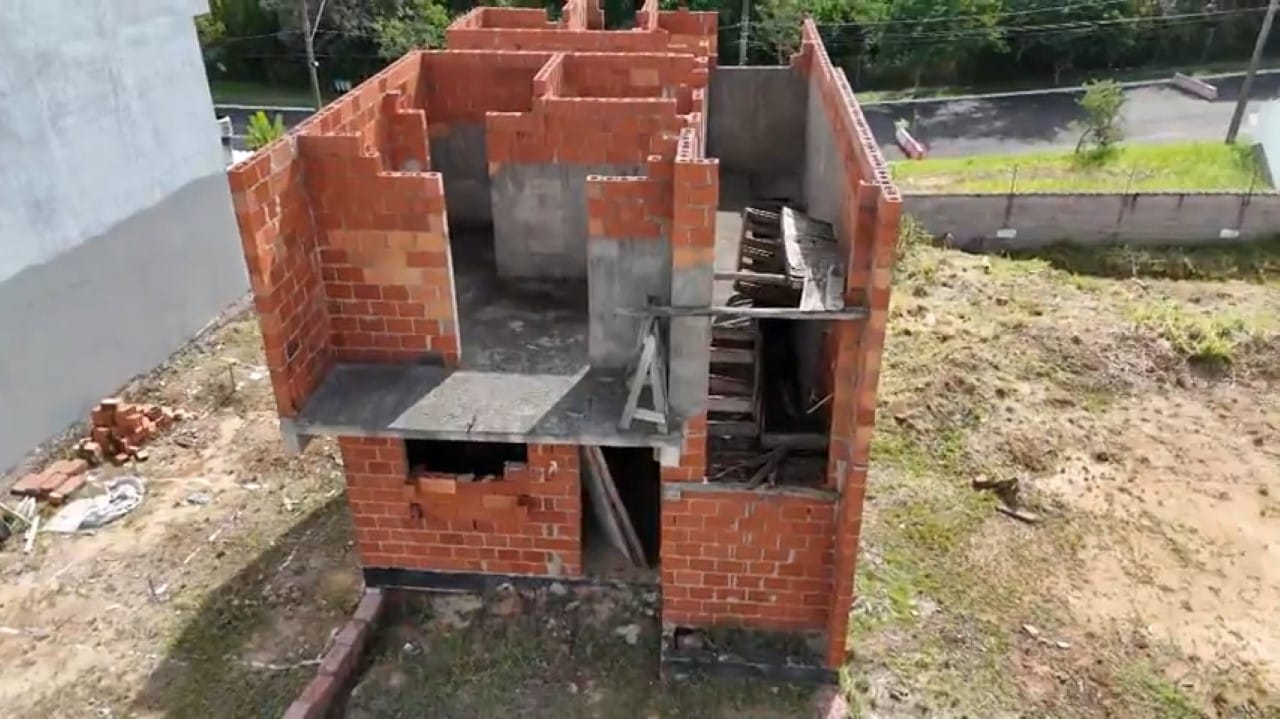
One of the emblematic cases involves Izael Mendes and Marcela Teles, a couple who financed between R$400,000 and R$500,000 to build their residence. Três Years after the formal start of works, the land where the dream was supposed to rise remains in a state of abandonment. The desolate scenario contrasts drastically with the expectation of building a space for their daughter to grow up, as the family had meticulously planned. Atualmente, they are forced to live on rent, an extra expense that eats into the already compromised budget.
The construction company Âmbar Prumo, responsible for the couple’s project, presented reports to Caixa that attested to the completion of more than 80% of the house. However, a subsequent technical examination exposed the hoax, revealing the forgery of Marcela’s signatures and finding that less than half of the construction had actually been carried out. Essa disparity between what was declared and reality at the construction site highlights the sophistication and audacity of the fraud scheme implemented by the companies involved. The family’s desperation was such that Marcela reports having spent two years unable to even approach the site, due to the trauma.
Financiamentos from Caixa: how report fraud deceived families
Caixa Econômica Federal’s financing model provides for the release of resources in progressive installments, linked to the physical progress of the work, which must be proven by inspection reports. Neste context, construction companies took advantage of flaws in the control system to present adulterated documentation, guaranteeing the release of values without the proper execution of services. Families, often unfamiliar with complex construction processes, trusted the information provided by companies and the apparent security of bank financing.
Falsified reports became the centerpiece for the perpetration of scams. Eles described stages of the work as completed, when in fact they had barely begun. In cases such as Guilherme Both and Bruna Both, which financed R$290 thousand in 2022 for a house in Alvorada, Rio Grande from Sul, the construction company Vitro Viana received more than R$200 thousand. Contudo, the work was abandoned within a few months.
- Cobertura
- Instalações electrical
- Instalações hydraulic
- Outros essential finishes
The reality on the ground, however, was one of total paralysis, without any of these steps having even been initiated, as revealed after the victims’ complaints.
Vítimas accumulate debt and lose life savings
The impact of fraud goes far beyond the frustrated dream of owning a home, resulting in severe financial losses and a deep emotional shock for the affected families. Guilherme Both, for example, found himself with a debt of more than R$200 thousand with the bank, in addition to having disbursed R$62 thousand directly to the construction company. Essa double penalty left him in an extremely delicate financial situation, while the property that was supposed to be his home remains unfinished.
Em Pernambuco, the construction company Multicons was denounced for a similar practice, charging significantly higher amounts than what was actually carried out for the works and misappropriating the difference. The company owner ended up convicted of embezzlement, leaving a trail of losses that, in this case alone, exceeded R$126 thousand. The stories intertwine in a pattern of exploitation, where customers’ trust has been betrayed by unscrupulous companies. Anxiety and a feeling of helplessness are common feelings among victims, who find themselves without their property and with huge debts to pay.
Falta inspection facilitates scams in the real estate sector
The contractual dynamics of these financings, in many cases, place the client as the main responsible for managing payments for the work. Caixa Econômica Federal, in turn, tends to treat fraud as a direct issue between the client and the construction company, minimizing its responsibility for supervision. The institution, however, reported that it is investigating any irregularities that may have been committed by its own employees, recognizing the seriousness of the situation.
Especialistas from the area point out that obvious inconsistencies in the reports, such as the presence of forged signatures or unrealistic work progress percentages, could have been identified with more rigorous inspection. The absence of effective auditing mechanisms and the excessive dependence on reports provided by construction companies themselves have created an environment conducive to the proliferation of these scams. The trust placed in the system has been shaken, and the need to review financing control and approval procedures is urgent.
Persistent Casais seek solutions and attempt to complete projects
Apesar of the blow suffered, the resilience of some families stands out, with couples looking for alternatives and investing their own efforts to finish their homes. This is the case of Renata and Michel, who, after investing more than R$386 thousand and realizing the irregularities, did not give up on their dream. The construction of their home was completed only after obtaining new loans and fundamental support from the family, who mobilized to help them overcome the adversity.
Essas stories of overcoming prove the determination of those involved in reversing the situation. Eles face considerable financial difficulties, but the desire to have their own home speaks louder. Esses cases serve as a warning about the importance of vigilance and the search for detailed information at each stage of the financed construction process. The fight to realize the dream of owning a home continues, even in the face of obstacles imposed by fraud.
Construtoras and former employee deny irregularities in notes
The companies and individuals involved in the fraud allegations presented their versions of the facts. In an official statement, the construction company Âmbar Prumo declared that all its works were carried out in strict accordance with the rules and regulations established by Caixa Econômica Federal. The company stated that any accusations of irregularity will be duly responded to and challenged before the competent judicial authorities.
Pedro André Marchesi Cecegolo, former employee of Caixa and associated with the construction company Vitro Viana, is appealing to Justiça from Trabalho against his dismissal for just cause. Ele vehemently denies causing any type of financial loss to Caixa or its customers, claiming innocence regarding the accusations. The owner of Multicons, although already convicted of embezzlement in one of the cases, defends himself by stating that the amounts received were fully applied to the execution of the works and is also appealing the court decision.
Essas statements from those involved highlight the legal complexity and challenges that victims face in the search for justice and reparation. The judicial process tends to be long and exhausting, requiring persistence and resources so that families can reverse the losses and finally see their rights recognized. The situation exposes the need for a closer look on the part of regulatory bodies and the population itself when contracting services and financing.