Forza Horizon 6 community turns cars into anime itashas in a week
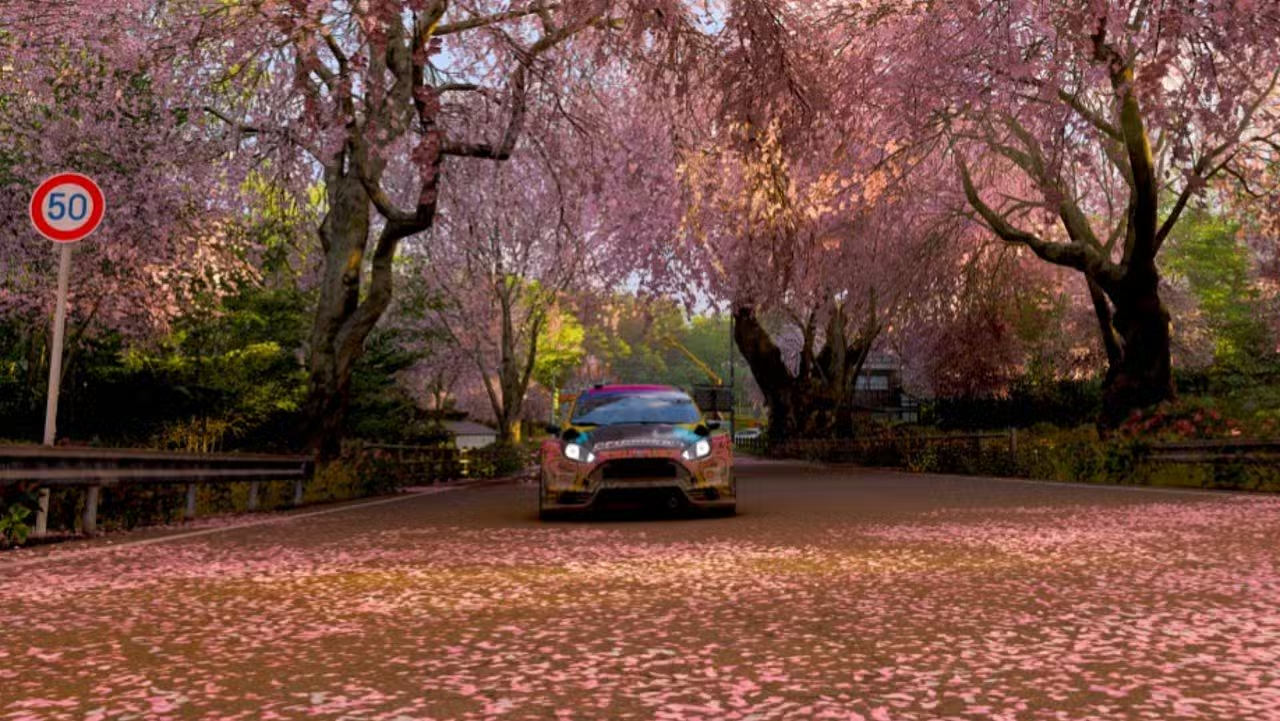
Menos One week after its release, Forza Horizon 6 became the stage for a creative invasion of anime fans. Jogadores transformed their virtual machines into digital itashas, those cars characterized by characters from series, films and games, especially Hatsune Miku and the horse girls from Umamusume: Pretty Derby. The trend reflects the freedom offered by the game’s painting customization system, which does not impose creative limits on users.
The Forza saga maintains a consolidated tradition: allowing players to completely customize the appearance of vehicles. Essa’s opening, combined with the title’s recent arrival, created a perfect setting for anime communities to find a new space for expression. The result was predictable, but no less impressive in the scale and diversity of creations that have exploded the servers in recent days.
Umamusume invades the tracks with iconic characters
The first wave of creations that captured the community’s attention was dedicated to the universe of Umamusume: Pretty Derby, a strategy game by Cygames that combines horse racing with anime. The paintings feature iconic characters from the title, transforming bodywork into galleries of female characters competing in races in their original franchises.
Jogadores applied designs from Kitasan Black, Goldship, Satono Diamond and Oguri Cap to Forza Horizon 6’s cars. The choice of characters is not random. Cada one of them is a central figure in Umamusume, with dedicated fans across the global community. The paintings maintain the unique visual identity of each character, respecting colors, traits and characteristics that make them instantly recognizable. The quality of the creations ranges from simple designs to elaborate compositions that occupy the entire surface of the vehicle, transforming the car into a visual statement.
共有第④段
— 紙かぜ(Kamikaze SSSSSS) (@KamikazeS2K) May 16, 2026
ウマ娘シリーズ共有です!
●キタサンブラック BRZ
Z32 シェアコード 137 436 132
●サトノダイヤモンド 86
シェアコード 787 168 282
●ゴールドシップ通常 EK9
シェアコード 732 039 969
●ゴールドシップ水着 EK9
シェアコード 690 053 775#ForzaHorizon6 #ウマ娘 pic.twitter.com/JKBR82DTZn
Racing Miku dominates virtual competitions
The most famous virtual idol in the world gained her own space on the tracks of Forza Horizon 6. Racing Miku, the racing driver version of Hatsune Miku, already appears in at least one creation entirely dedicated to the blue-braided Vocaloid. One fan devoted his entire body to the character, creating a tribute that combines obsession and technical mastery.
The choice of Racing Miku does not surprise anyone who follows real motorsport. The character has a long history on the international circuit, having been a guaranteed presence in the Japanese Super GT for years. The racing version of the original Miku established a bridge between pop culture and motorsports that few characters can maintain. Sua’s inclusion in Forza Horizon 6 represents the continuity of this narrative in a virtual environment, expanding the character’s universe beyond musical games and appearances in real races.



Zenless Zone Zero arrives with urban graffiti
The universe of Zenless Zone Zero, miHoYo’s action game, also gained space in the virtual garages of Forza Horizon 6. Fãs applied paintings with Jane Doe and Ellen Joe to the doors of their vehicles, bringing the title’s characteristic urban aesthetic to the racing universe. The designs embrace Zenless Zone Zero’s visual identity:
- Grafites and urban tags on side panels
- Cores vibrant colors that contrast with the cars’ base paintwork
- Composições that reflect the atmosphere of Akihabara, a district that is part of the game map
- Proporções that take advantage of the entire structure of virtual bodywork
- Integração with mechanical elements of the vehicle, creating visual depth
Zenless Zone Zero’s urban aesthetic works particularly well in Forza Horizon 6 because the game offers settings that allow for these customizations. Akihabara’s fictional neighborhood, present on the map, visually complements the creations, creating a coherence between customization and environment.
Fenômeno goes beyond digital fiction
The obsession with anime itashas is not exclusive to the world of video games. In 2026, real racing circuits have already witnessed a similar phenomenon. Uma Mercedes GT3 ran in Marin Kitagawa livery, My Dress-Up Darling character, while a BMW competed in the Super GT with Umamusume theme. Richard Hammond, former presenter of Top Gear and Grand Tour, went viral behind the wheel of an Porsche with an anime girl livery.
Essas appearances in professional races legitimize a subculture that has grown exponentially over the last decade. What began as a hobby for niche anime fans turned into a visual phenomenon capable of attracting the attention of international television presenters and journalists specializing in motorsport. Transposing this trend into Forza Horizon 6 represents a natural step in the evolution of the intersection between anime, fandom and motorsport.
Continuidade from tradition Forza
Forza Horizon is not new in this regard. Previous Edições franchises have also seen similar bursts of creative customization. The difference now is in speed and volume. Menos has been on the market for a week and the community has already cataloged dozens of significant creations, with new designs appearing daily on dedicated forums and specialized social networks. The game’s sharing system works as an accelerator of this collective creativity, allowing designs to go viral and inspire new interpretations.
Players don’t just customize cars, they build visual narratives. Cada itasha represents the confluence of three universes: that of the anime character, that of the Forza video game and the individual expression of the creator. Essa overlaying layers of cultural meaning is what makes these creations more than simple customizations. São digital artifacts documenting fandom culture of the moment.
The Forza Horizon 6 community has made it clear in less than seven days that virtual cars are legitimate canvases for creative expression. The game’s release opened a window that the gaming industry had kept ajar for years. Anime Fãs found the perfect space, powerful tools and an audience willing to validate their creativity. The result is an organic phenomenon that will likely sustain itself for months to come, inspiring new designs and attracting more attendees to this unique intersection of technology, motorsport and pop culture.
Veja Tambem em Latest News (EN)

Italian Supreme Court confirms legality of hotel that offered only mineral water to customer

National Geographic Traveler Announces Travel Photography Contest Winners
Ferrari presents Luce, the first electric car, and receives harsh criticism from fans and the market
Yuki Yamada posts photo with beard and grimace on Instagram and surprises fans

Costco sees record demand at U.S. gas stations with lower prices

Passenger tries to enter cockpit and forces diversion of United Airlines flight to Madison

Astronomer explains white light recorded after meteor falls near volcano in Philippines

Comedian Sakamoto-chan reveals type 2 diabetes remission after lifestyle changes

Avi Loeb says discovery of alien intelligence can unite humanity amid global crises

Police investigate death of Hilde Ann Lynn Helphenstein in room at Rosewood São Paulo

Avi Loeb suggests that dark comet 1998 KY26 could be Soviet probe Phobos 1