

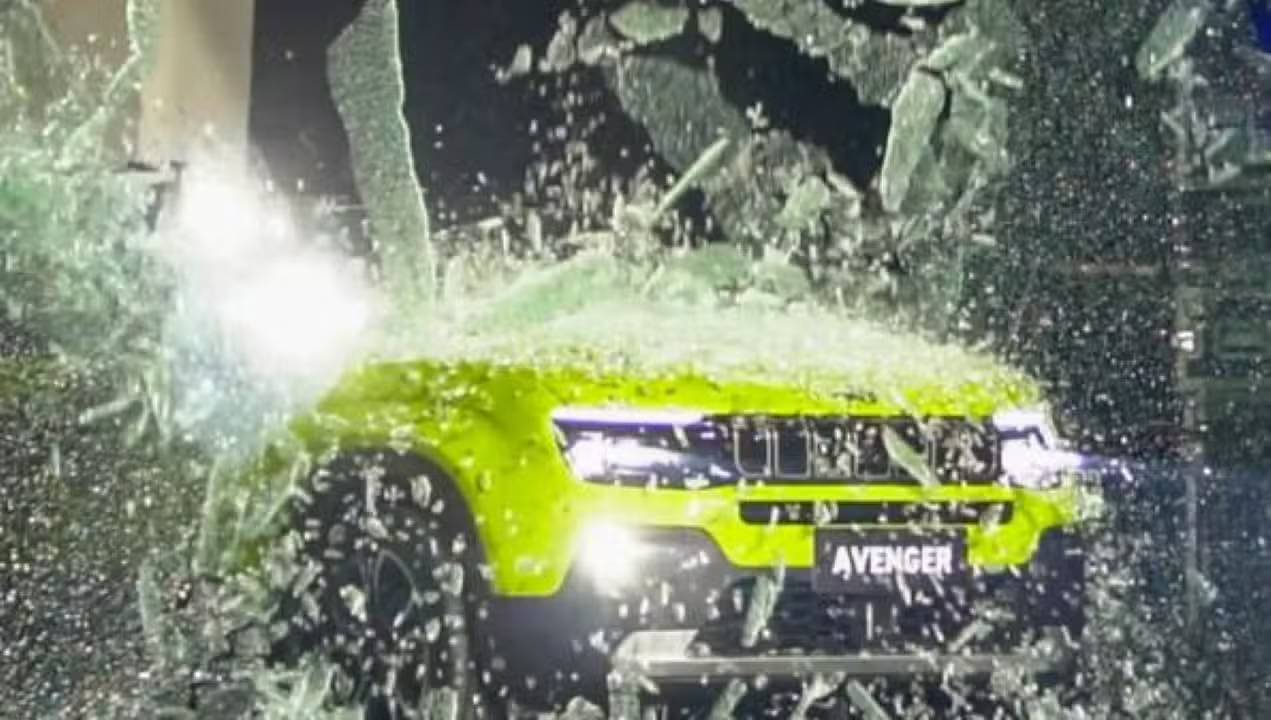
The North American manufacturer confirmed mechanical and visual updates for the 2026 line of its compact sports utility vehicle. The vehicle now has a 1.2-liter gasoline engine associated with a six-speed mechanical gearbox. The automaker seeks to expand its participation in the segment by offering configurations aimed at drivers who prioritize direct control over driving. The model preserves the brand’s established visual identity while incorporating technical improvements to the cabin and bodywork.
The modifications include aesthetic adjustments to the front and improvements to the interior finish. The company’s strategic move occurs at a time of intense transition in the global automotive market. The manufacturer chose to keep the combustion options up to date while developing its electrified variants in parallel. The strategy aims to meet different consumption demands in regions that have different rates of adoption of electric mobility.

Desempenho of the new mechanical assembly and energy efficiency
The newly introduced block has a three-cylinder architecture and uses supercharging to deliver 100 horsepower at 5,500 revolutions per minute. Maximum torque reaches 205 Nm when the engine operates in the 1,750 rpm range. Integration with the six-speed manual transmission allows scaling focused on making use of power at low speeds. The brand’s Engenheiros calibrated the system to guarantee agile responses in urban traffic. The gear lever received short engagements to facilitate gear changes during daily commuting.
Factory tests indicate that the car needs 10.6 seconds to accelerate from standstill to 100 kilometers per hour. Fuel consumption in the combined cycle varies between 5.7 and 5.9 liters for every 100 kilometers driven. Esses indices reflect the search for a balance between delivering power and containing operational expenses. The electronic injection calibration was adjusted to optimize fuel burn at different altitudes and temperatures.
The suspension system also underwent specific revisions to deal with the new weight distribution of the powertrain. The shock absorbers received a different load that prioritizes comfort on bumpy roads without compromising stability on highways. The electric power steering has been recalibrated to provide greater weight at high speeds. The mechanical assembly meets the strictest emissions standards that will come into force in the coming years.
Alterações in external design and structural dimensions
The automaker’s styling team applied a redesign to the front section of the car. The front bumper received pronounced creases that give the utility vehicle a more robust visual appearance. The main grille retains the seven vertical slits that have characterized the manufacturer’s corporate identity for decades. The front optical assemblies maintain the classic circular shape, but adopt new internal arrangements with high-intensity LED lighting technology.
At the rear, the interventions were more discreet and focused on the design of the headlights. The pieces have a new “X”-shaped light signature that makes it easier to identify the model during night driving. The air deflector mounted on the trunk lid has been subtly lengthened to improve the body’s aerodynamics. The monoblock structure has not undergone any changes to its fundamental measurements.
- Comprimento total bodywork established at 4.08 meters.
- Largura vehicle exterior fixed at 1.77 meters without mirrors.
- Altura in relation to the ground maintained at the 1.53 meter mark.
- Rodas light alloy with new designs depending on the version chosen.
Maintaining these dimensions ensures that the interior space for occupants and the cargo capacity of the luggage compartment remain unchanged. The compact architecture continues to be one of the product’s main selling points in urban centers with heavy traffic and limited parking spaces. The approach angle and departure angle were preserved to allow the crossing of ditches and speed bumps with ease.
Modernização cabin and driver assistance systems
The cabin underwent a careful review in the choice of covering materials. The instrument panel features surfaces with improved textures and more precise fits between plastic parts. The center of the console houses a new 10.3-inch diameter multimedia touchscreen. The equipment processes information faster and offers wireless mirroring for cutting-edge mobile devices.
The instrument panel behind the steering wheel is now fully digital in the more expensive versions. The configurable display allows the driver to choose which information they want to prioritize during the journey, such as data from the on-board computer or instructions from the navigation system. The automatic air conditioning controls remain accessible via physical buttons just below the central screen. Essa ergonomic decision prevents the driver from looking away from the road to adjust the cabin temperature.
The active safety package has been expanded in mid-range and top-of-the-line configurations. Sensores and cameras monitor the perimeter of the car to feed the driving assistance systems in real time. The driver has frontal collision alerts, autonomous emergency braking with pedestrian detection and lane keeping assistant. Esses features significantly reduce the likelihood of accidents caused by inattention in heavy traffic.
Alternativas of electrification and market positioning
The vehicle portfolio includes options with different levels of electrical assistance to comply with different environmental laws. The variant equipped with a 48-volt mild hybrid system combines the combustion engine with a compact electric generator. Essa configuration alleviates the effort of the main propellant when starting off and reduces pollutant emissions in traffic jams. The conventional hybrid version delivers combined power ranging between 110 and 145 horsepower, depending on the target market.
Para consumers looking for zero local emissions, the manufacturer offers a fully electric configuration. The model uses a battery with a capacity of 54 kWh that supplies energy to a motor installed on the rear axle. The system guarantees all-wheel drive on demand and allows the car to travel up to 400 kilometers on a single charge, according to the European WLTP test cycle. Recharge time has been optimized to support ultra-fast charging stations.
The new versions will arrive at dealerships gradually throughout 2026. The company’s Brazilian division is still working on defining the equipment catalog and the price list for the national market. The commercial strategy will involve positioning the utility against direct competitors who are also preparing major updates for the same period. The automaker’s focus will be to highlight the versatility of the engine catalog as a competitive differentiator in the compact SUV segment.