
Itapajé City Hall opens public showers for 29 families and generates heated debate on social media

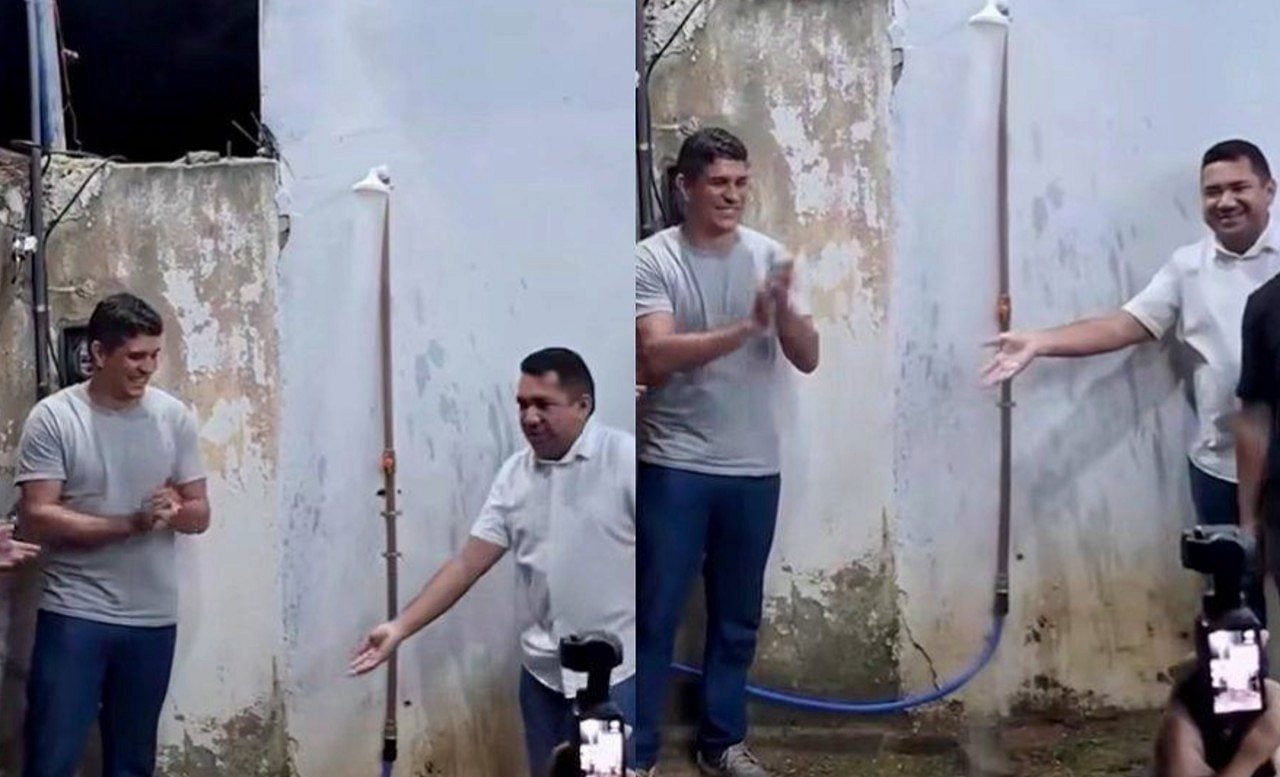
The city hall of Itapajé, in Ceará, delivered a public shower to the Saco community of Vento. The event, which moved the city this week, generated intense debate on social media. The initiative was celebrated as a “mega achievement” by the municipal management, seeking to improve access to water for 29 rural families who had been waiting for a solution for years.
The work is part of the expansion of the region’s supply network, as declared by the local administration. Representa a significant advance for residents, according to mayor Nonatinho (Republicanos). The installation, however, provoked questions about the proportion of the celebration in relation to the improvement. Muitos Internet users recalled that the ideal, in 2026, would be running water directly into homes.
Detalhes of the delivery and justification of the city hall
The opening of the small shower in the rural area of Itapajé was highlighted by the city hall as a milestone. The central objective is to provide an access point to water for a group of families who faced shortages in water supply. The Saco community of Vento, in particular, has been awaiting this intervention for many years, according to officially released information.
Mayor Nonatinho (Republicanos) emphasized that the work responds to a direct request from the population. The action is part of a larger plan to expand the water network in the region. Ele highlighted his management’s commitment to families who depended on improvements in this essential sector. The infrastructure delivered aims to meet the basic need for hygiene and easy access to water.
The municipal administration justified the celebration by emphasizing the symbolic and practical importance of the project. Para residents, the arrival of any type of supply represents a significant relief. Historical difficulties in accessing drinking water are a reality in many rural areas of the Brazilian Nordeste, justifying, in the city hall’s view, the relevance of the investment.
Reações on social media and questions about the work
The city hall’s social media post celebrating the public shower quickly went viral. Most comments expressed criticism and outrage. Internautas questioned the relevance of opening a collective shower in the 21st century, considering the current stage of development. Muitos highlighted the need for more modern and dignified solutions for residential supply.
Usuários from the internet argued that investment and advertising should be focused on works with greater impact, such as installing piped water networks directly into homes. The general perception was that the celebration of the small work bordered on the unreal. Expressões such as “shame” and “backlash” were frequently used in the comments, reflecting discontent.
The online debate also extended to the issue of government priorities. Comentadores noted that while large cities debate technological advancements, a community still relies on a public shower for its basic needs. Essa geographic and social disparity was a central point in the virtual discussions. The negative repercussion highlighted the difference between the expectations of the urban population and the reality in some rural areas.
Impacto in the local community and expectations of residents
Para the 29 families of the Saco community of Vento, the opening of the public shower is a concrete fact. Apesar from criticism on social media, the work represents a tangible improvement in your daily life. Facilitated access to water can have direct positive impacts on the health and quality of life of residents. Muitos of them relied on less efficient or more distant methods to obtain water.
- Immediate benefits for residents include:
- Redução of the distance traveled to access water.
- Melhoria of personal and domestic hygiene conditions.
- Disponibilidade from a reliable water point for basic activities.
- Atendimento to an old and persistent demand from the community.
- Sinalização that the area is receiving some form of attention from municipal management.
The expectation of the local population is that this will be the first of many interventions. The community longs for more complete and definitive solutions, such as running water directly into their homes. The current work, therefore, is seen as an initial step, but not the final resolution to water infrastructure challenges.
Debate on priorities and basic infrastructure in 2026
The controversy in Itapajé reignites the discussion about access to basic infrastructure in Brasil. Mesmo in 2026, millions of Brazilians still do not have adequate sanitation or running water at home. The case illustrates the persistence of fundamental challenges that should have been overcome decades ago, especially in less developed regions or rural areas.
The disparity between social expectations and the reality of public services is evident. Enquanto part of the population discusses high-speed internet and renewable energy, another part fights for the basic right to water. The situation at Ceará serves as a reminder of the vast regional and social differences that still mark the country. Municipal and state Governos face pressure to deliver essential services.
Especialistas in urban development and basic sanitation often point to the need for continuous and planned investments. Solving structural problems requires more than specific actions. It is necessary to think about long-term projects that guarantee the dignity and health of all citizens, regardless of where they live. The Itapajé episode is a symptom of a deeper national problem.





