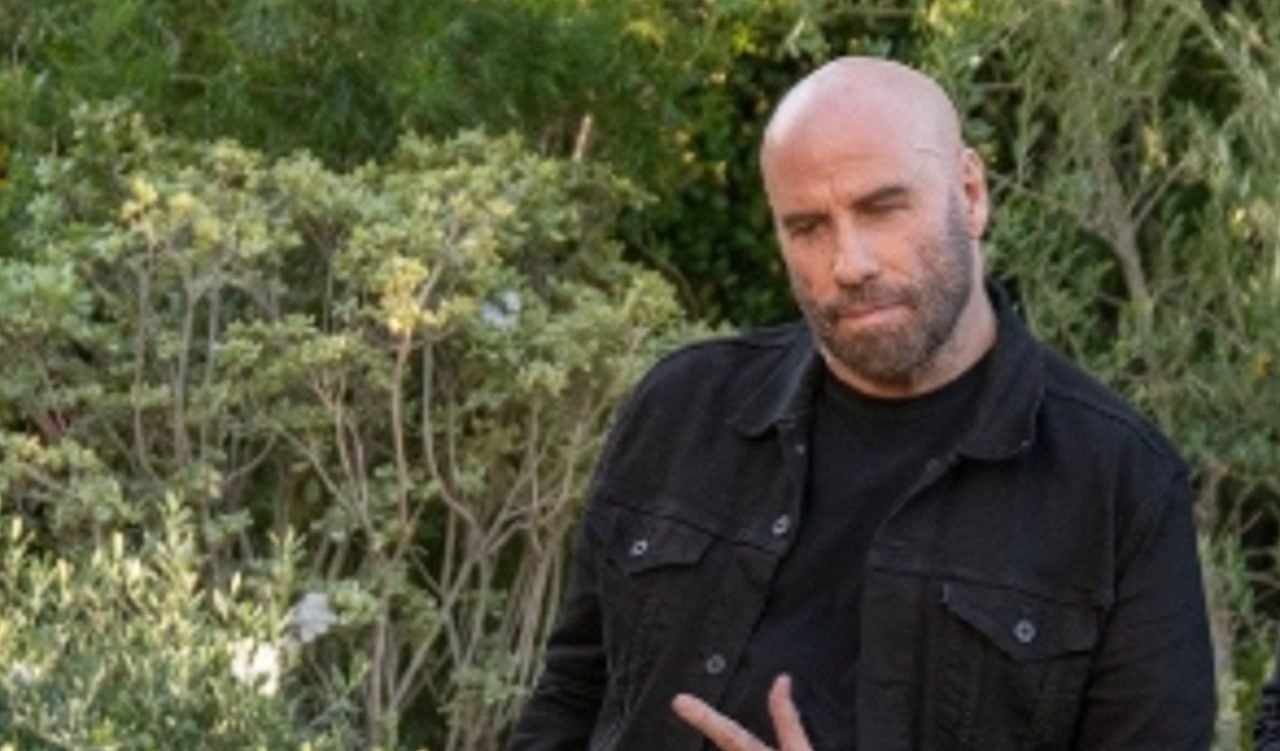
The 72-year-old actor John Travolta drew attention to Festival’s Cannes this week when he arrived with a new look that became a topic on social media. Rotating black, brown and cream Boina, thin-rimmed glasses and a meticulously styled beard made up the ensemble that drew comparisons to bartenders, spy movie characters and even figures from online guessing games. The actor’s images quickly circulated among internet users, creating a wave of excited comments about the Hollywood star’s aesthetic change.
Travolta attended the festival to launch a new film and, as he revealed in an interview with CNN, the transformation was not accidental. The actor decided to adopt the aesthetics of classic 20th century filmmakers as part of his preparation for directing. By flipping through images of Ingmar Bergman and Roberto Rossellini both photographed with similar berets Travolta determined that he would dress for the role he wanted to play. The strategy worked: once its artistic intention was revealed, online criticism cooled significantly and the look gained a new frame of creative legitimacy.
The psychology of dressing for your desired future
Usar clothing as a tool of personal influence is a more common practice than one might imagine. Profissionais resort to visual changes to signal career transitions, while others adopt new styles after relationship breakdowns. The choice of specific pieces works beyond superficial appearance: it directly affects how the individual feels about themselves and, simultaneously, shapes the perception of others. Pesquisadores call this phenomenon embodied cognition, the notion that the way we dress influences both our self-image and the reactions of others.
Travolta’s admission of his methodical intent underscored a fundamental principle: clothes can serve as a way to manifest a future version of yourself. By assuming the silhouette of an established filmmaker — beret, beard, glasses — the actor not only adopted an aesthetic, but symbolically inserted himself into a lineage of cinema authors that he wanted to integrate. Para many observers, particularly those who recognize the intentional effort behind the transformation, the gesture took on a dimension of authenticity that the first impression had not revealed.
Contexto of Hollywood and the pressure for reinvention
The film industry, admittedly cruel to the passage of time and resistant to reinventions by its actors, especially older men, creates an environment where visual changes gain additional weight. Tapetes reds function as stages where public attention becomes currency between celebrities and the media. Para Travolta, at age 72, acquiring new hats and a new aesthetic represented a deliberate attempt to reposition his public relevance at a time when Hollywood constantly questions the viability of his middle-aged actors.
Comparações and other recent cases of repositioning through fashion reveal a similar pattern. Taylor Swift incorporated jewelry from Elizabeth Taylor during this week’s event to evoke some of the icon’s star power. Pep Guardiola uses plaid shirts as a form of visual communication about his professional position. Kim Kardashian donned Marilyn Monroe’s iconic “naked” dress in 2022, not to honor the original wearer, but to provoke comparisons that would elevate her cultural capital. In each case, clothing functioned as an instrument of a deliberately constructed personal narrative.
Fashion as a political and professional discourse
Onde This type of communication through clothing reaches its peak in politics, where clothes serve as a theater of simulated leadership. Políticos adopt uniforms — literal or figurative — that signal the type of authority they wish to exercise. A red tie, a specific haircut, a strategically chosen designer jacket: each piece functions as a coded message about identity, values and positioning.
Ninguém has never worn clothes by complete chance. Mesmo When the choice seems random, it communicates something about who we are or who we hope to be. Para Travolta, in Cannes, the beret wasn’t simply a hat — it was a statement of professional intent disguised as an accessory. The lesson that emerges from his visual transformation is simultaneously simple and profound:
- Roupas works as a cognitive tool that affects our self-perception
- Escolhas visuals communicate future aspirations to audiences
- Reinvenção aesthetic signals professional and personal transitions
- Context — knowing the intent behind the choice — completely redefines how a transformation is interpreted
- Investimento in new image can reposition relevance in contexts where age is a limiting factor
The risk of visual overinterpretation
Nem everything goes perfectly when a celebrity chooses to reinvent themselves visually. The risk is always overinterpretation or exaggeration that turns the declaration of intent into a caricature. Travolta, in sporting his honorary Palma from Ouro alongside his multicolored berets and angular beard, came perilously close to the zone of aesthetic cowardice — the point at which the character threatens to consume the actor. Seu’s success in softening the criticism depended, fundamentally, on its ability to reveal the conscious intention behind the look.
Movie Festas like Cannes create a singular space where celebrities can more easily let loose, particularly when their primary attention remains focused on movies rather than clothes. But for directors — the category in which Travolta now positions itself — the dynamics are more delicate. Eles oscillate between the need for publicity that keeps their careers alive and the desire to be considered legitimate authors. A beret can be both a symbol of artistic seriousness and a trap of ridicule, depending on how it is communicated.
Moda as a manifestation of professional future
The transformation from Travolta to Cannes reflects a universal truth about how we function as dressing beings: the clothes we choose today can serve as a visualization of the professional or artist we hope to be tomorrow. Essa practice is not superficial cosplay. It is a concrete psychological and social tool for self-definition. Quando Travolta dressed as Bergman and Rossellini, he wasn’t just paying homage to his predecessors — he was symbolically inscribing himself into a cinematic tradition that he wanted to integrate as a director.
The question that persists is whether this type of manifestation through fashion really works or whether it is just an exercise in hope dressed in fabric. The answer probably lies somewhere between cognitive psychology and social construction. Nossa appearance affects how we feel. Nossa appearance also affects how others treat us. If both factors are true — and evidence suggests they are — then Travolta was right to pick new hats to try to reposition its relevance in an industry that has historically shed professionals as they age.