

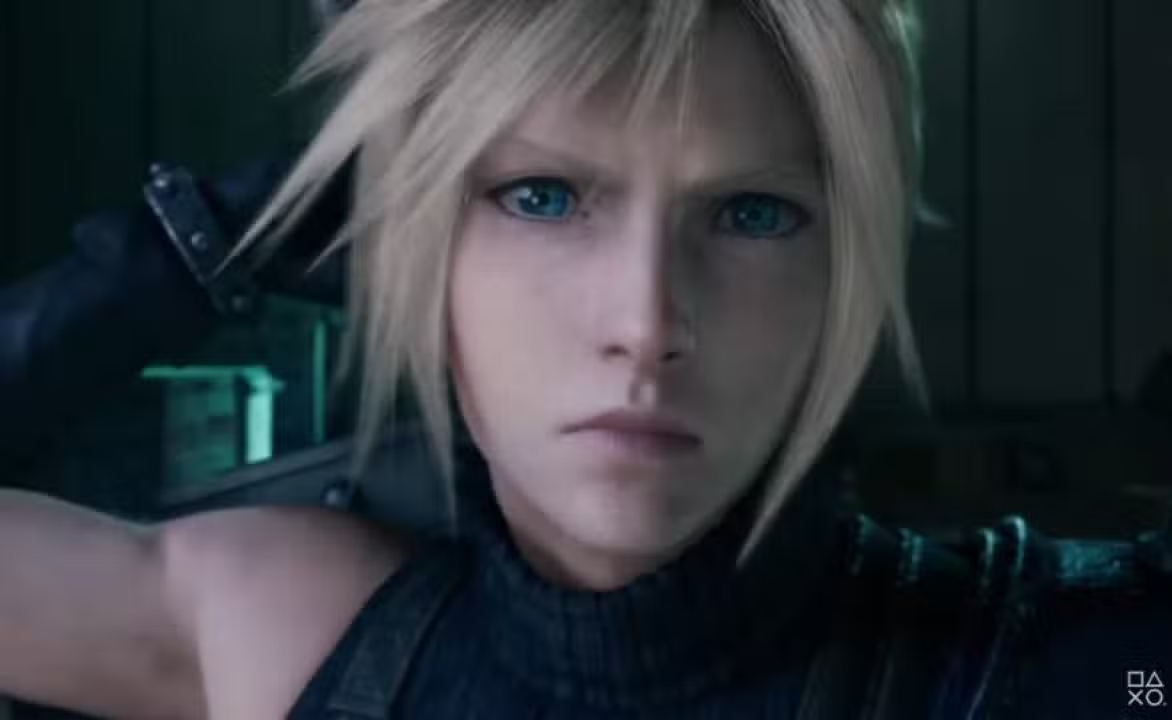
Square Enix has defined a radical change in its business approach for the coming years. The Japanese developer confirmed that the third and final part of the Final Fantasy VII recreation project will be released simultaneously for PlayStation 5, Xbox Series X|S and PC. The decision ends a long period of temporary exclusivity that marked the first two chapters of the trilogy on Sony consoles. The move reflects an internal restructuring of the production company to maximize the reach of its major franchises.
The change in the distribution route occurs after analyzing the financial results of the second game in the series. The company is now seeking to dilute the massive development costs of high-budget titles by reaching the largest possible installed base on the first day of sales. The new corporate policy abandons the platform restriction model, a practice that dominated the electronic games industry in recent decades, but which lost strength in the face of escalating production budgets.

Nova trading strategy after financial results
The business model initially adopted by Square Enix limited access to the franchise’s games. The first chapter, released years ago, and its direct sequel operated under temporary exclusivity contracts with the PlayStation maker. The strategy guaranteed an injection of initial capital from the hardware partner. The scenario changed with the launch of the second title. The work received acclaim from specialized critics and high marks on evaluation platforms. Total sales, however, did not reach the company’s internal projections.
The below-expected commercial performance forced the board to recalculate the steps to end the saga. Producing AAA games requires gigantic teams and years of exclusive dedication. Limiting yourself to a single console during the first few months of the product’s life drastically reduces revenue potential during the period of greatest public interest. The transition to the multiplatform format aims to correct this gap and guarantee the studio’s financial sustainability.
The change in stance directly affects the Asian publisher’s long-term planning. The company’s recent Relatórios indicates significant write-downs related to projects that did not achieve planned financial returns. The current directive requires that the main brands in the catalog reach the largest number of players without hardware barriers. The conclusion of the trilogy will serve as the main test for this new phase of simultaneous global distribution.
Aproximação with the Microsoft ecosystem
The arrival of the franchise on Microsoft consoles represents a milestone in relations between the two companies. The Xbox division has historically faced difficulties ensuring the regular presence of major Japanese RPGs in its game library. Tech giant Executivos, including the head of the gaming division Phil Spencer, have made several trips to Japão in recent years. The central objective of these visits was to strengthen ties with Eastern studios and reverse the absence of major titles on the American platform.
Microsoft’s diplomatic and commercial efforts began to bear visible fruit in the market. The integration of Asian games into the company’s subscription service and the acquisition of major conglomerates in the sector have strengthened Xbox’s position as a viable destination for oriental productions. Square Enix recognized the growth of this user base and the need to not ignore millions of potential buyers using the Sony competitor’s ecosystem.
Adapting the game for the Xbox Series X and Series S systems requires specific technical work on the part of the programmers. The development team needs to optimize the code to extract maximum performance from different architectures. The guarantee of a simultaneous launch indicates that the quality tests and adequacy of the graphics engine already include the specifications of the Microsoft consoles since the initial planning phases of the third chapter.
Estágio development and applied technology
The production schedule for the trilogy’s conclusion is progressing within the company’s studios at Tóquio. The directors responsible for the project confirmed that the main structure of the narrative is completely defined. The creative team has completed the script that will guide the characters to the conclusion of the story that began in the 1997 classic. The process of recording voices with the original actors has already begun, marking the transition from the pre-production phase to the active development of cinematic scenes.
- The game’s main script has been finalized and approved by the creative direction.
- Dubbing sessions with the cast of actors have already started in the studios.
- The team evaluates the transition to the Unreal Engine 5 graphics engine.
- Flight mechanics with the Highwind aircraft will require real-time map rendering.
The technology behind the game undergoes rigorous evaluation to support the design team’s ambitions. Developers are studying the implementation of Unreal Engine 5 to speed up environment creation and improve visual fidelity. The change in graphics engine in relation to previous games in the same trilogy seeks to solve specific technical challenges in the last act of the story. Open world exploration will reach a new scale of complexity.
The biggest technical hurdle reported by the team involves recreating the Highwind aircraft. The vehicle allows players to fly freely over the world map in real time. The mechanics require the system to load textures and three-dimensional models at very high speed, without loading screens that break the immersion. The use of the latest generation SSD storage units present in the three target systems will be essential to enable this classic functionality with modern graphics.
The impact on the global exclusives market
Square Enix’s decision reflects a structural transformation in the digital entertainment industry. The concept of third-party exclusivity loses ground in an economic scenario where production costs exceed hundreds of millions of dollars. Console manufacturers increasingly understand that retaining a game of colossal proportions on a single platform harms the financial health of partner studios. The computer market assumed a central role in this profit equation.
The inclusion of PC in the simultaneous launch meets a historic demand from the gaming community. The computer versions of previous chapters suffered from months or years of delays compared to consoles, generating frustration and fragmentation among the public. The new strategy unifies the fan base, allowing the narrative experience to be shared globally on the same day. The measure combats the dissemination of advance information about the story and strengthens engagement on social media during the launch period.