
History of the ALH-77005 meteorite reignites debate about life on Mars


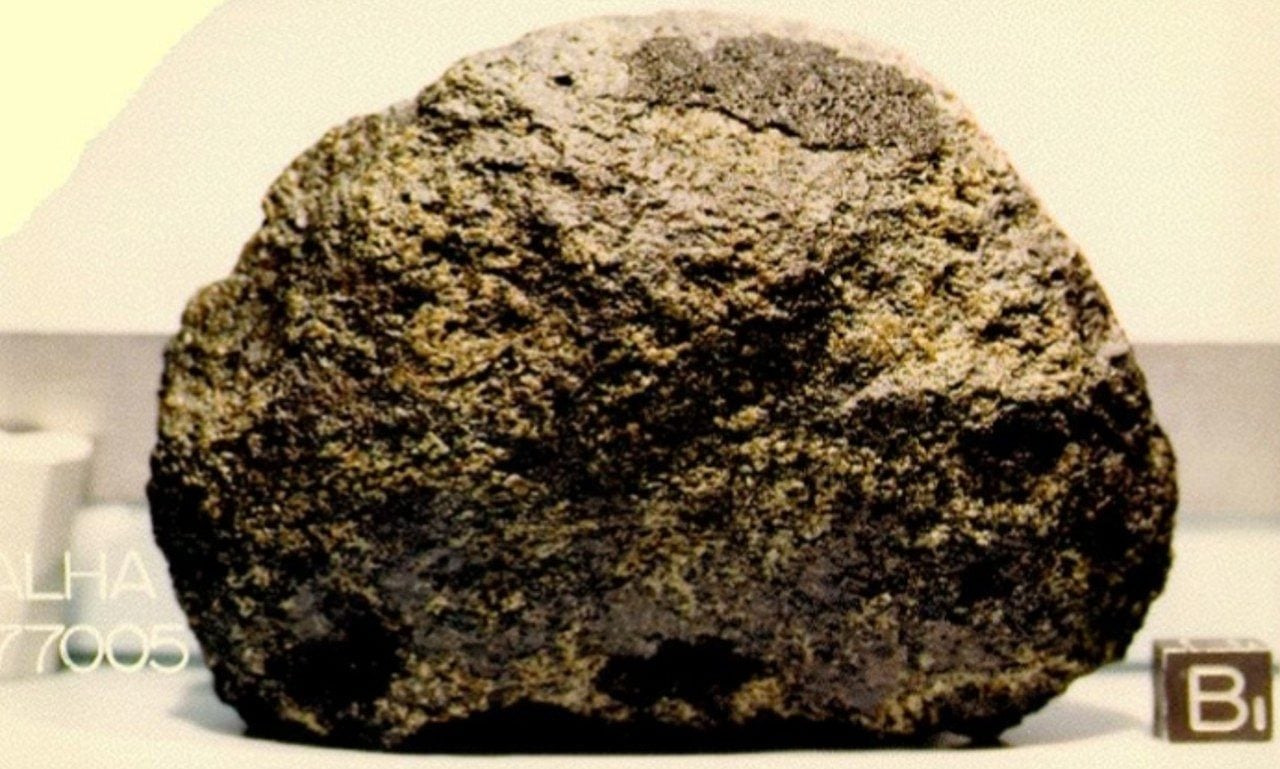
Pesquisadores of Hungria published a study that identifies a Martian meteorite with possible evidence of early bacterial life. The material, called ALH-77005, was discovered in the late 1970s in the Antártida region and revives a discussion that has not only permeated research laboratories, but also political and public spheres for more than two decades.
The analysis points to morphological characteristics that resemble structures left by iron-oxidizing bacteria, a potential indicator of the signature of mineralized microbes. The findings resurrect fundamental questions about the existence of living organisms on other planets and place Marte at the center of a debate that involves scientific methodology, interpretation of evidence and the limits of current knowledge.
Meteorite Descoberta and preliminary analysis
ALH-77005 is not a recent find. The rock was collected at Antártida decades ago, but has only now gained international notoriety through Hungarian research. The team used high-precision optical microscopy and carbon isotope dating to closely examine the mineral structure of the material. The results indicate complex geochemical patterns that, according to the authors, fit into five distinct hierarchical levels: isotope, element, molecule, mineral and texture.
The characteristics observed in the rock show similarities with well-documented terrestrial biological processes. Bactérias that live by oxidizing iron leave specific chemical and structural marks on the rocks they colonize. If ALH-77005 indeed harbors these signatures, it would suggest that Marte, at some point in its geological past, possessed conditions suitable for supporting microbial life. The researchers’ conclusion is that Martian bacteria may have lived in this meteorite.
Histórico from the life debate on Marte
Este is not the first episode of controversy over potential evidence of extraterrestrial life. Há more than 20 years ago, the then president of Estados Unidos, Bill Clinton, gave an epoch-making speech. Clinton suggested that NASA had discovered a meteorite containing possible organic fossils. Naquele moment, the presidential statement ignited a great controversy in the scientific universe. Cientistas were divided: some saw the analysis as a genuine opportunity to prove the existence of life beyond Terra. Outros argued that the evidence was insufficient and that alternative interpretations were equally plausible.
Aquele meteorite, called ALH84001, had also been found at Antártida. Ele generated initial enthusiasm, but the debate evolved into gradual skepticism as new studies presented nonbiological explanations for the observed structures. ALH-77005 now arrives with similar potential to reignite dormant discussions. The international scientific community recognizes the importance of the question, but remains cautious about jumping to conclusions.
Desafios methodologies and interpretation of evidence
The main difficulty in establishing the biological origin of structures in meteorites lies in interpretative ambiguity. A rock can exhibit patterns that resemble biological signatures without originating from living processes. Purely chemical and mineralogical Processos can produce visual and compositional results similar to those left by living organisms.
Hungarian researchers recognize this issue. In their publications, they state that “the characteristics of the rock fit well into five hierarchical levels (isotope, element, molecule, mineral and texture) with complex characteristics of terrestrial biogenicity, and also with results seen in other meteorites”. Essa statement, however, does not end the debate. Encaixa itself does not amount to definitive proof. Science operates under rigorous standards of falsifiability and repeatability. Para Before a hypothesis about life in Marte is widely accepted, it must withstand severe testing and offer predictions that can be independently verified.
NASA, the agency that has led research on Marte for decades, continues to study the issue methodically. The agency maintains robotic operations on the planet, collects samples and examines Martian geological history with increasingly sophisticated tools. Porém, NASA has not ventured to delve deeply into definitive conclusions about fossils in meteorites. Essa caution reflects the real state of science: there are intriguing clues, but no incontrovertible proof to date.
Divisão from the scientific community
The scientific community’s reaction to the Hungarian study was not univocal. Alguns researchers see the ALH-77005 as a legitimate opportunity for advancement. Argumentam that the convergence of evidence at multiple levels of analysis strengthens the biological hypothesis. Outros maintains systematic skepticism, calling for independent replication and additional analysis before making any claims about extraterrestrial life.
Essa division is healthy in the scientific process. Ela ensures that extraordinary claims face extraordinary scrutiny. Carl Sagan, an astronomer and influential science communicator, coined the principle that sums up this stance: “extraordinary claims require extraordinary evidence.” A finding about life in Marte certainly qualifies as extraordinary.
Debates occur at scientific conferences, in peer review of articles and in direct communications between laboratories. Pesquisadores of Universidade of Princeton, Instituto Politécnico Federal Suíço, Universidade of Melbourne and other institutions have already published comments and related studies. Cada contribution adds layers of complexity or offers alternative explanations.
Current Estado of Martian astrobiology
Marte has characteristics that make it a priority target in the search for extraterrestrial life. The planet has an atmosphere (albeit tenuous), water in the form of ice, evidence of liquid water in the past and a geological history that suggests potentially habitable environments billions of years ago. The period between 3.8 and 3 billion years ago is considered especially promising by scientists studying Marte.
Naquela At the time, Marte appeared to possess lakes, rivers, and perhaps even a hemispherical ocean. Temperaturas were higher due to a denser atmosphere. Campos global magnets protected the surface from solar radiation. Essas conditions, comparable in some respects to the early periods of Terra, could have allowed the emergence and proliferation of microbial life. If life arose on Terra in similar environments, why not on Marte?
The question remains open. The Curiosity and Perseverance rovers, currently operational on Marte, perform continuous geochemical analyses. Perseverance, in particular, collects samples that could be brought to Terra by future missions. Essas Martian samples, analyzed in terrestrial laboratories with cutting-edge technology, could provide definitive evidence or rule out current hypotheses.
Implicações philosophical and scientific
The question of life in Marte transcends technical considerations. Ela touches on the foundation of astrobiology: are we unique in the universe or is life a common phenomenon? If life arose independently on two different planets in the same solar system, this would suggest that life is robust, adaptable and probably abundant in the cosmos. Inversamente, if life remains exclusively terrestrial despite the opportunities offered by Marte, this could indicate its surprising rarity.
The discovery of extraterrestrial life, albeit microbial, would philosophically transform our understanding of humanity’s place in the universe. Religiões, philosophies and worldviews would face the need for revision. For these reasons, scientific caution is not only methodologically appropriate but also ethically necessary.
Próximos steps in research
Hungarian researchers continue their investigation. Novas analytical techniques are being developed. Microscopia transmission electronics, secondary ion mass spectroscopy and other increasingly refined methodologies will be applied to ALH-77005 and other Martian meteorites. International Colaborações expand the scope of investigations.
NASA, Agência Espacial Europeia and other institutions have already signaled interest in participating in future analyses. Conferências scientific research dedicated to the topic attracts researchers from multiple disciplines: geology, biology, chemistry, physics and astrobiology. Cada perspective enriches the debate.
Martian meteorites represent windows into another world’s past. Cada analysis provides opportunity to learn more about geological and potentially biological processes in extraterrestrial environments. Mesmo Although ALH-77005 does not contain fossils of Martian life, the data generated contributes to a more complete mapping of possibilities. Science advances through questions, hypotheses, testing, and continuous review of conclusions.
Desafios in proof of biological origin
Estabelecer confirming that a structure in a rock had a biological origin is an extremely difficult task, perhaps impossible with current technologies. The rock offers no living witnesses. Não no recoverable DNA. Não there are fossil records clearly and unambiguously identifiable as extinct Martian organisms. Apenas chemical, structural and isotopic patterns remain.
Esses patterns can be interpreted in multiple ways. A competent geologist can offer a nonbiological explanation for the same structures that an astrobiologist interprets as evidence of life. Ambos would be working within their respective domains of expertise. The choice between interpretations depends on scientific criteria, but also involves degrees of uncertainty that cannot be completely eliminated with present data.
For these reasons, the scientific community remains divided. Nenhuma conclusive statement about life in Marte will be accepted until evidence reaches a vastly higher standard of certainty than is available today. Esse is the legitimate and healthy state of frontier science.





