
Nereid orbits Neptune in a bizarre path but was born with the planet, says study


Cientistas discovered that Nereid, one of Netuno’s most distant and intriguing moons, may have formed along with the planet itself billions of years ago. The study changes the long-held perception about the evolution of the icy planetary system. The satellite’s extremely elongated orbit suggested late gravitational capture, but high-precision computer simulations revealed a different native scenario. The academic work was led by researchers who analyzed the internal composition and dynamic effects of Tritão on the smaller celestial body.
Nereid’s orbital dynamics have always intrigued astronomers due to its eccentric and distant behavior. The satellite takes about 360 Earth days to make a complete revolution around the gas giant. Esse’s movement differs drastically from the regular moons of the solar system, which tend to have circular and predictable trajectories. For decades, astronomy textbooks classified Nereid as an asteroid captured from Cinturão of Kuiper, the icy region beyond the known planets.
Simulacoes reveals survival of Nereid during expulsion from native moons
Novos computational models showed that Nereid managed to withstand the chaos generated by the arrival of Tritão to Netuno’s system. Quando Tritão was captured by the planet’s gravity, it destroyed the original satellite system through massive collisions. Current research points out that Nereid did not come from outside, but was instead pushed into an extreme orbit by the force of Tritão. Esse’s violent jostling shaped the bizarre trajectory found by space telescopes today.
- Nereid maintains an average distance of 5.5 million kilometers from Netuno
- The eccentricity of its orbit reaches 0.75, the highest in the solar system for moons
- The estimated diameter of the celestial body is approximately 340 kilometers
- The study used supercomputers to simulate 4 billion years of gravitational evolution
- Dados indicates that the mass of Nereid reflects the primordial materials from the formation of the ice giant
Astronomers explain that the size and density of Nereid corroborate the thesis of local and simultaneous formation. If the satellite were a captured invading body, its thermal signature and surface chemicals would be identical to distant comets. Recent spectroscopic measurements show traces of ice and rock consistent with the dust envelope that surrounded Netuno in the solar system’s infancy. The discovery changes mathematical models of planetary formation and migration of celestial bodies.
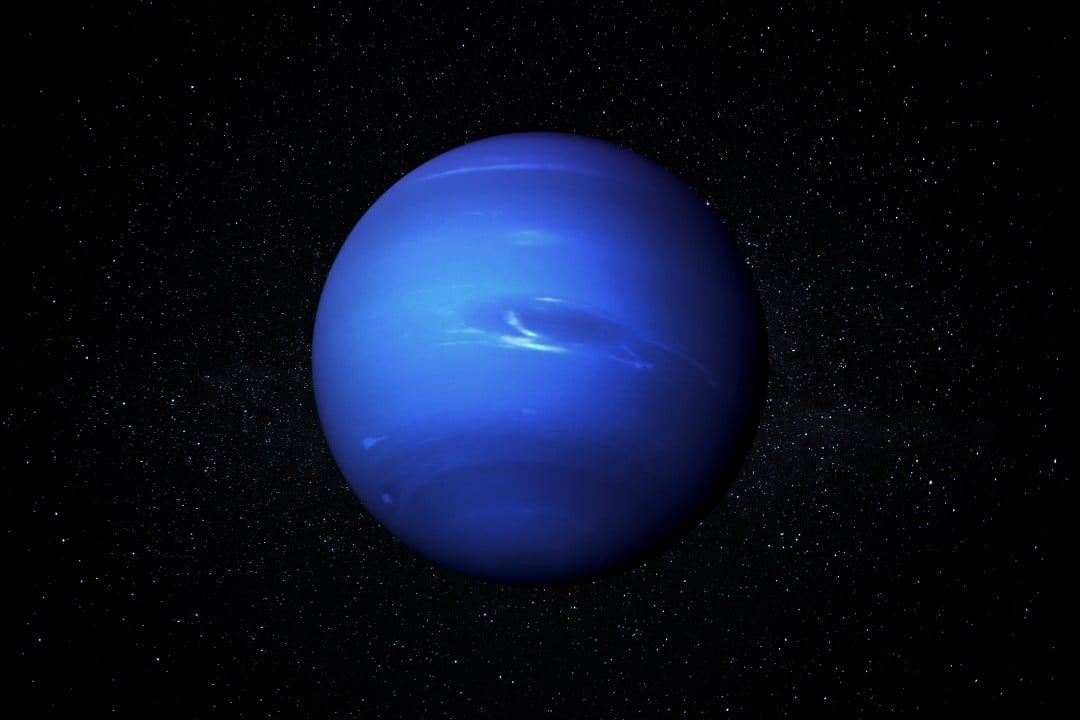
Extreme Trajetoria challenges classical view of satellite evolution
Scientists focused on simulating the first hundred million years after the consolidation of Netuno’s core. The chaotic behavior of the protoplanetary disk generated dozens of small bodies that ended up pulverized or thrown into deep space. Nereid has found a very specific dynamic equilibrium point, located on the edge of the direct influence of planetary gravity. Numerical tests indicate that any slight variation in primordial density would have disintegrated the moon against Tritão.
Nereid’s orbit more closely resembles the trajectory of a periodic comet than that of a conventional moon. At its closest point to Netuno, the satellite is 1.4 million kilometers away, but it moves away up to 9.6 million kilometers at its furthest point. Esse extreme stretching generates internal tidal forces that researchers intend to measure in future dedicated observation projects. The international scientific community received the data enthusiastically, predicting revisions to accretion theories.
Proximas investigations aim to map the icy surface of the distant satellite
Researchers are now seeking observation time on Telescópio Espacial James Webb to validate the mineral characteristics of Nereid. The space observatory’s infrared mirror can identify volatile compounds frozen on the surface that confirm the native formation signature of the Neptunian system. Distance precludes direct robotic missions in the short term, making photometric analysis the most viable tool.
Espera It is expected that the refinement of orbital data will make it possible to accurately predict the stability of Nereid for the next billion years. Initial calculations suggest that the current configuration is perfectly stable, with no risk of collision with the inner moons or definitive ejection from the system. Understanding this satellite acts as a window into the turbulent past of our galaxy’s gas and icy giants.





