
Observations from the James Webb Telescope detail the origin of massive body in the 29 Cygni system

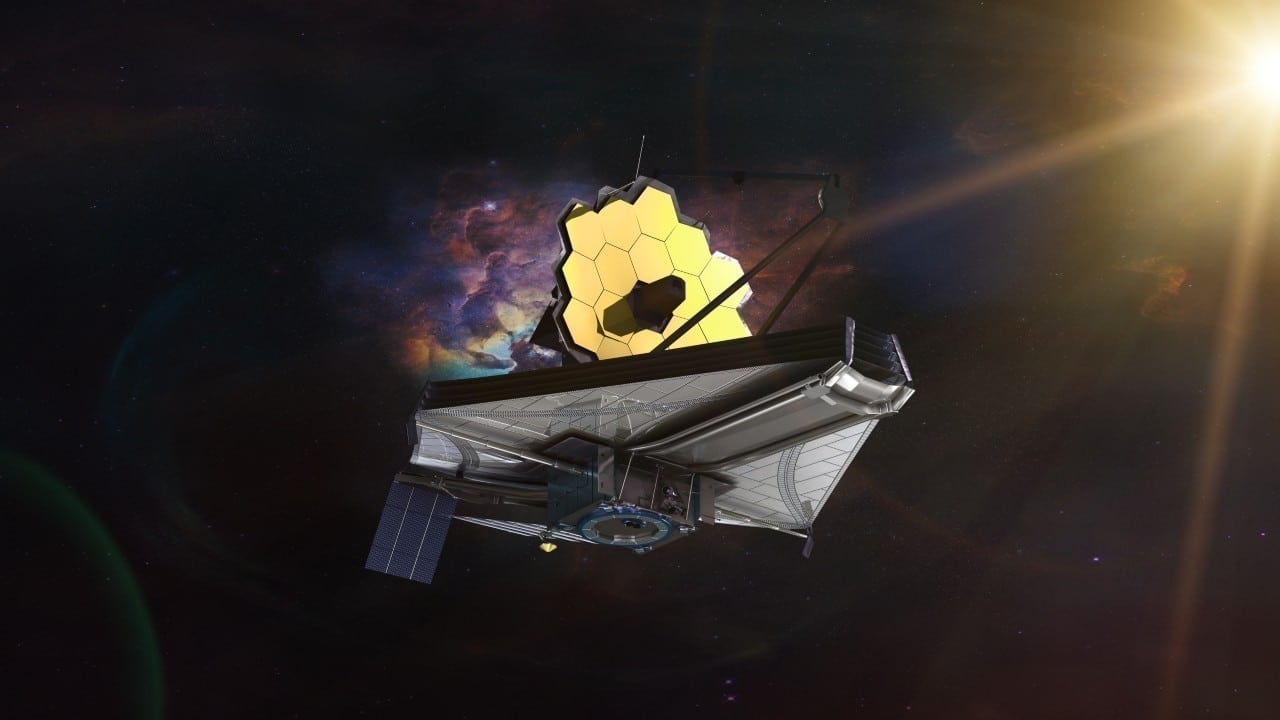
The James Webb space telescope recorded unprecedented data on the composition and origin of the astronomical object 29 Cygni b. The celestial body has approximately 15 times the mass of Júpiter and orbits a star with characteristics similar to Sol, located at a distance of 133 light years from Terra. The information captured by the high-precision instruments points to a structural formation process different from that expected for objects of this magnitude, providing clues about the dynamics of distant stellar systems.
Detailed analysis of the atmosphere revealed the marked presence of carbon dioxide and carbon monoxide. Essa’s chemical signature suggests that the body formed through gradual accretion within a protoplanetary disk, accumulating material slowly over time. The discovery challenges previous models that indicated the direct collapse of gas clouds as the only route to the creation of such massive bodies, helping to redefine the boundary between giant planets and brown dwarfs.
Análise atmospheric and heavy element detection
Astronomers focused on the proportion of gases present in the outer layer of 29 Cygni b. The strong absorption of carbon molecules indicates a significant enrichment of heavy elements, classified in astrophysics generically as metals. Calculations estimate that the object houses the equivalent of around 150 times the mass of Terra in these denser materials alone. Esse volume of heavy elements greatly exceeds rates observed in rapid star formation processes.
The chemical composition provides a fossil record of the system’s history. Quando a body forms by the rapid collapse of a cloud of pure gas, its composition tends to exactly mirror that of the host star. However, the high concentration of carbon compounds in 29 Cygni b demonstrates an accumulation of metal-rich solid materials prior to capture of the gaseous envelope. The solid core grew steadily until it reached enough gravity to attract the surrounding gas.
The central star of the system, called 29 Cygni, has a chemical composition very similar to that of our Sol and has a debris disk already documented by previous observations. Esse’s environment rich in dust and rock fragments provided the material necessary for the continued growth of the giant companion. The object’s orbital distance from the star is approximately 2.4 billion kilometers, a measurement that resembles the position of Urano in Sistema Solar.
The role of technology in space observation
Capturing direct images of exoplanets requires extremely sensitive equipment. The research team used the James Webb’s NIRCam camera operating in coronagraphic mode. Essa technique employs a physical shield internal to the instrument to block the main star’s blinding glare. Blocking the central light allows sensors to record the extremely weak luminosity of the orbiting body, enabling spectroscopic analysis of its atmosphere with a level of detail impossible for telescopes of previous generations.
The use of specific filters in the infrared range ensured accurate measurement of carbon and oxygen absorption rates. Surface temperatures of these objects range between 530 and 1,000 degrees Celsius. Essa thermal strip maintains atmospheric chemistry in a state that makes it easier for the telescope’s sensors to identify molecules. James Webb consolidates direct observation as an essential tool, complementing traditional transit and radial velocity methods used in exoplanet hunting.
Diferenças in cosmic formation processes
The universe presents two main pathways for the creation of massive celestial bodies. Rocky Planetas and gas giants like Júpiter grow from the bottom up. Grãos microscopic pieces of dust collide and stick together, forming increasingly larger blocks that eventually accumulate gas. On the other hand, stars and brown dwarfs appear from top to bottom. A vast molecular cloud undergoes gravitational instability and quickly collapses in on itself, concentrating the mass in a single central point.
The object 29 Cygni b has a mass that places it exactly in the transition zone between these two categories. Durante decades, the scientific community debated whether bodies with more than 10 to 13 masses of Júpiter could form through the planetary accretion model. Recent data prove that protoplanetary disks have the capacity to generate super-Jupiters that are much more massive than classical theories stipulated.
- Identificação clear of carbon dioxide and carbon monoxide in the atmosphere.
- Concentração of heavy elements equivalent to 150 Earth masses.
- Alinhamento accurate between the object’s orbit and the star’s rotation axis.
- Distância average orbital established in the range of 2.4 billion kilometers.
- Idade young system reflected in the high temperature of the celestial body.
The features listed above form a robust body of evidence in favor of the accretion model. The combination of high mass with a metal-rich chemical signature forces a revision in the parameters used in computer simulations of the evolution of young stellar systems.
Confirmação orbital and next research steps
Additional Observações performed from the ground reinforced discoveries made in space. The CHARA Array interferometer measured the rotation of the main star and confirmed the orbital alignment of 29 Cygni b. Esse geometry type is a hallmark of bodies that are born and grow in the same plane as the original protoplanetary disk. Objetos formed by chaotic fragmentation of gas clouds or captured gravitationally tend to exhibit highly inclined or eccentric orbits relative to the star’s equator.
The study of 29 Cygni b represents the first phase of a broader observation program. The scientific team selected four specific targets for analysis. Todos, the chosen bodies, have masses varying between one and 15 times that of Júpiter and orbit their respective stars at distances of up to 15 billion kilometers. Judicious selection allows direct comparison of chemical compositions in different mass ranges within similar stellar environments.
The researchers scheduled new rounds of spectral analyzes for the other three objects in the catalog. The central objective of the project is to precisely map where the regime of planetary formation through accretion ends and where the process of stellar collapse begins. Initial results already demonstrate that the previously accepted hard mass limit needs adjustment. Future Medições will continue to refine composition estimates, providing a clearer picture of the diversity of giant worlds in the cosmos.





