
China-Europe SMILE mission successfully launched in French Guiana

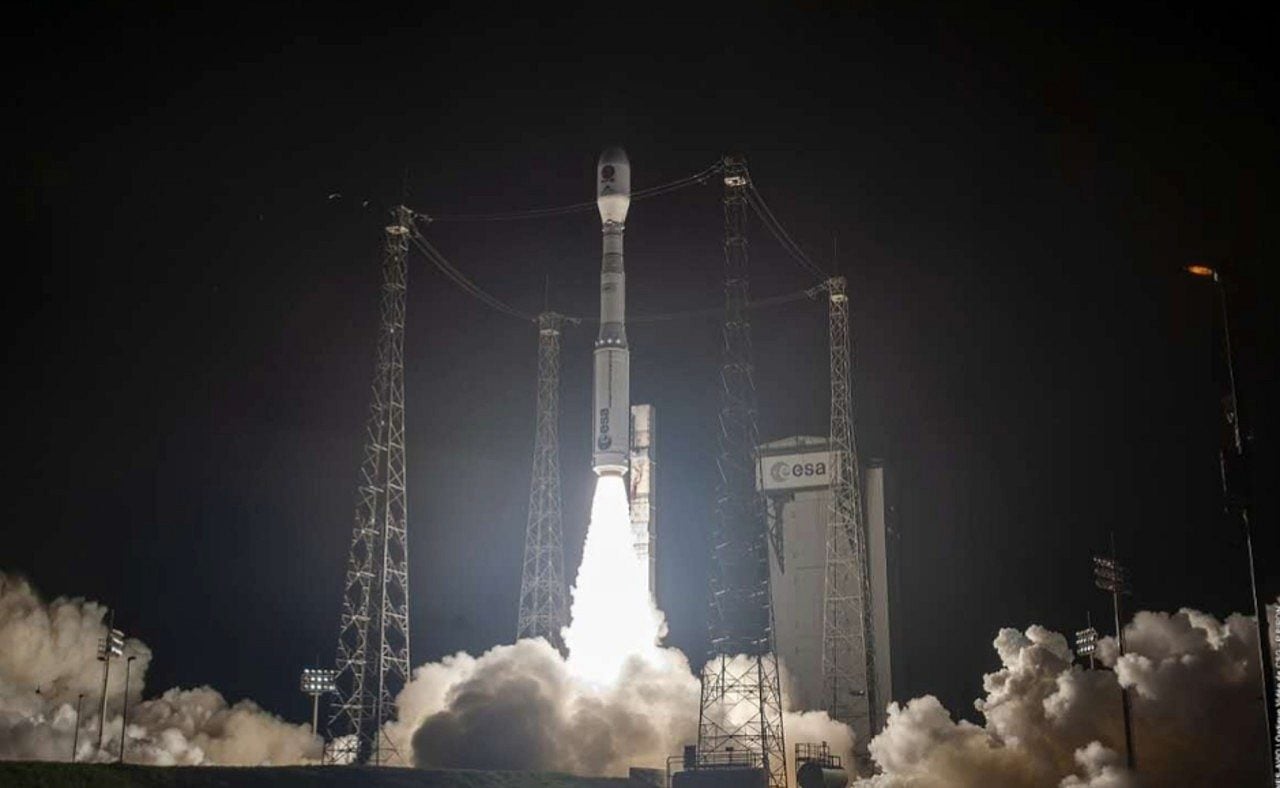
The SMILE satellite was successfully launched on Tuesday aboard an Vega-C rocket from Centro Espacial Europeu on Guiana Francesa. The joint Academia Chinesa mission of Ciências and Agência Espacial Europeia marks a new chapter in international scientific cooperation between the two continents. The project brings together more than 250 European and Chinese scientists in an endeavor dedicated to improving understanding of solar storms, geomagnetic storms and space weather science.
The Explorador of Ligação Magnetosfera-Ionosphere-Magnetosphere Solar, known by the acronym SMILE in English, represents years of collaborative work between cutting-edge scientific institutions. Segundo the director general of Agência Espacial Europeia, Josef Aschbacher, the mission demonstrates that well-managed international scientific cooperation can generate real benefits for the global scientific community. The statement reinforces the strategic importance of the project in the context of contemporary scientific relations.
Histórico collaboration and mission development
The partnership between Europa and China in the space field is not new. The first data sharing agreements date back to the 1990s, establishing solid foundations for future joint endeavors. Desde then collaboration evolved significantly, focusing primarily on Terra science and space science. The SMILE project represents the consolidation of this trajectory of lasting cooperation.
In the division of responsibilities, Europa actively participated in the development of the payload module and Imageador of Raios-X Suaves, among other essential engineering and instrumentation work. Academia Chinesa of Ciências was responsible for Imageador Ultravioleta and the satellite platform. Esta balanced distribution of tasks reflects the commitment of both institutions to the success of the endeavor.
Aschbacher publicly acknowledged that the mission faced complex challenges during its various phases of development. The scientific complexity involved in detecting high-energy phenomena and observing magnetospheric interactions required innovative solutions. Apesar overcome technical and logistical obstacles, the teams’ dedication allowed the project to move towards successful completion.
Objetivos Scientific and Capabilities Satellite
SMILE was designed to provide revolutionary data on the dynamics of space near Terra. The satellite will collect detailed information about solar storms, phenomena that directly affect space and terrestrial technology. Geomagnetic storms, caused by the interaction of the solar wind with the Earth’s magnetic field, will be monitored with unprecedented precision.
Space weather science is an emerging discipline that connects solar phenomena with terrestrial atmospheric and climate processes. SMILE will significantly contribute to understanding these complex connections. The data collected will allow scientists to deepen their knowledge of how solar variations influence the global climate.
The Imageador of Raios-X Suaves was developed to capture specific energy emissions that reveal the structure of the magnetosphere. Este instrument represents an important technological advancement in the remote observation of high-energy phenomena. Imageador Ultravioleta, in turn, will provide complementary data on the ionosphere and its interaction with ultraviolet solar radiation.
Benefícios for Global Climate Research
Josef Aschbacher highlighted that the open and responsible model of cooperation between Europa and China could serve as an example to address issues of global public interest, particularly climate change. Scientific collaboration transcends political boundaries when objectives are clear and benefits are shared equitably.
Observing the planet from space has revolutionized the way we understand climate change. Satélites like SMILE provide unique perspectives on atmospheric processes that cannot be obtained from ground-based observatories. The data collected directly influences policies for mitigating greenhouse gas emissions and limiting global warming.
Aschbacher emphasized that it is in everyone’s interest for scientific teams to work together using data from Chinese and European satellites. The synergy between different data sources significantly improves the quality of scientific analyses. Esta collaborative approach strengthens the collective capacity to monitor and understand climate change on a planetary scale.
Perspectivas future Sino-European cooperation
The general director of Agência Espacial Europeia signaled optimism about future collaboration opportunities between China and Europa. Terra and space sciences were identified as particularly promising fields for expanding partnerships. Ambas regions have complementary technological capabilities that, when combined, generate results superior to those that would be achieved alone.
The increasing complexity of global scientific challenges demands robust international cooperation. Questões as climate change, environmental monitoring and prediction of extreme space events require continuous collaboration between institutions on different continents. The precedent set by the SMILE mission paves the way for even more ambitious future projects.
The continuity of scientific dialogue between Europa and China reinforces the idea that research thrives when it transcends political divisions. The international scientific community recognizes that global problems require global solutions, developed through partnerships based on scientific merit and mutual benefit.
Especificações technical and project timeline
The Vega-C rocket used in the launch represents cutting-edge European technology in space transportation. Este launch vehicle was developed specifically for missions requiring exceptional precision and reliability. The choice of Centro Espacial Europeu over Guiana Francesa as the launch site reflects the strategic importance of the mission to Agência Espacial Europeia.
The SMILE project involved multiple phases of development, including conception, design, manufacturing, integration, testing and preparation for launch. Cada stage presented distinct technical challenges that required solution through innovation and scientific rigor. Collaboration between geographically distributed teams required careful coordination and the establishment of clear communication protocols.
The more than 250 European and Chinese scientists who worked on the SMILE project represent diverse disciplines, from aerospace engineering to plasma physics. Esta diversity of specialties was fundamental for solving complex problems. The effective integration of different scientific perspectives contributed significantly to the success of the mission.
Impacto in the scientific community and next steps
The successful launch of SMILE marks an important moment for the global scientific community. The mission will validate decades of theoretical research on the magnetosphere and its interactions with the solar wind. The expected scientific results will generate new questions that will direct future research for years.
Agência Espacial Europeia and Academia Chinesa of Ciências are committed to the broad dissemination of collected data. Opening scientific data to the international community accelerates the progress of knowledge. Universidades and research institutes around the world will be able to use SMILE information for their studies.
The SMILE mission exemplifies how international scientific cooperation, when well structured, transcends political interests and contributes to the common benefit of humanity. The success of Sino-European collaboration in space provides a valuable model for other international partnerships in science and technology.





