Eight-seater hybrid models combine efficiency of 23 km/l and maximum safety in the Indian market By Carolina Costa
5 min read
 |
Índia’s automotive industry records a structural transformation with the introduction of large family vehicles equipped with high-efficiency hybrid engines. Modelos with capacity for up to eight passengers begins to record consumption averages above 23 km/l. Technological advancement breaks the local historical paradigm that spacious utility vehicles must necessarily be large consumers of fossil fuel.
Duas Asian automakers are leading this energy transition movement in the country. The introduction of systems that combine combustion and electrical propulsion allows heavy cars to achieve economy rates previously restricted to compact urban hatchbacks. The change directly responds to a growing demand from large families who seek to reduce running costs without giving up comfort and safety during daily commutes and long trips on the country’s highways.
Mudança in Indian Automotive Consumption Profile
The sports utility vehicle and multi-purpose vehicle market has undergone severe adaptations in recent years. Historicamente, consumers had to choose between abundant interior space and savings at the fuel pump. A classic example of this dynamic is Toyota Fortuner. The robust utility vehicle, with a strong presence on Indian streets, has an average consumption range of 11 to 13 km/l. At the other end of the spectrum, compact cars like the Maruti Alto deliver between 20 and 22 km/l, but severely limit cargo capacity and the number of occupants.
Modern automotive engineering has found a practical solution to this bottleneck through hybridization. The integration of autonomously recharging electric batteries with gasoline engines optimized the use of kinetic energy generated by braking. The system relieves the effort of the combustion engine at critical moments, such as sprints and heavy traffic. The practical result is a drastic reduction in pollutant emissions and a substantial increase in the mileage traveled per liter of fuel, changing the purchasing logic of the Asian consumer.
The transition to cleaner engines comes at a time of restructuring of India’s road infrastructure. The local government encourages the adoption of technologies that reduce dependence on petroleum derivatives. Hybrid vehicles serve as an ideal bridge at this stage, as they eliminate the need for an extensive network of public electric chargers, operating independently and generating their own energy while driving.
Desempenho hybrid of Toyota Innova Hycross and Maruti Suzuki Invicto
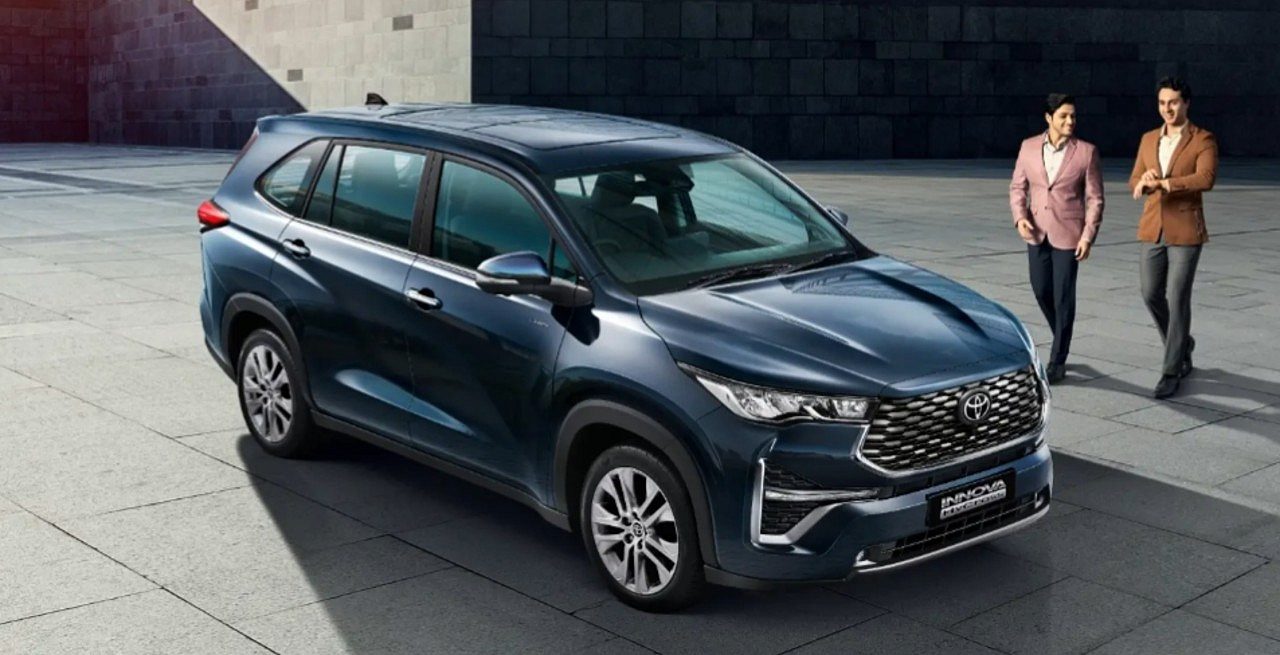
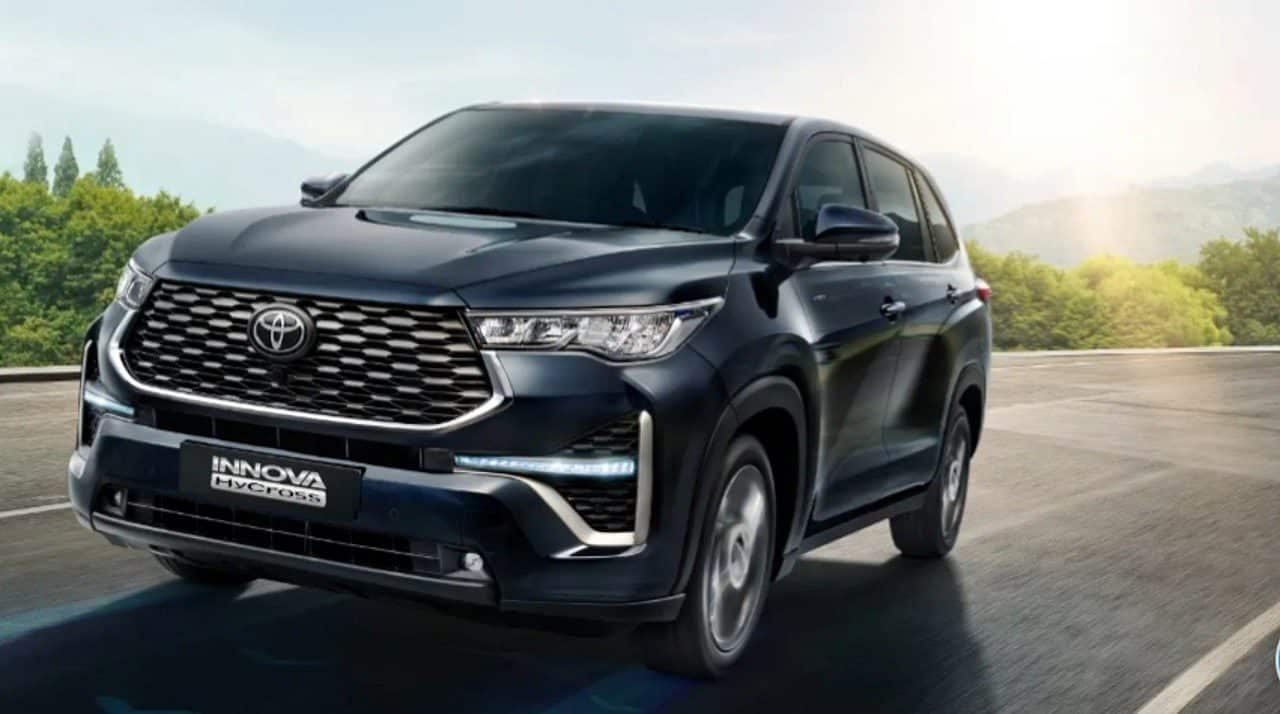
The Toyota Innova Hycross stands out as the main representative of this new generation of family utilities. The Japanese manufacturer offers the model in more than 20 different configurations for the local market. The table values start from ₹ 19.53 lakh and reach a ceiling of ₹ 32.38 lakh. The specific version with a hybrid engine and seating for eight occupants has a starting price set at ₹26.81 lakh. The mechanical package uses a 2-liter gasoline engine associated with an e-CVT transmission. Esta mechanical architecture guarantees a range of 23.24 km/l.
Maruti Suzuki Invicto operates in the same segment and shares the technological base of its direct competitor. The brand offers the vehicle in three trim variants, with prices ranging between ₹24.97 lakh and ₹28.61 lakh. The model also reaches the exact average consumption mark of 23.24 km/l, confirming the standardization of efficiency in the premium large segment. The dispute between the two manufacturers stimulates competitiveness and forces the introduction of increasingly sophisticated equipment packages to attract the end buyer.
The commercial strategy of both brands involves offering purely combustion versions for fleet owners and traditional consumers, but the focus of the advertising campaigns lies on electrified variants. Acceptance by the Indian public exceeded the automakers’ initial projections. The waiting lines for the hybrid versions demonstrate that the consumer understands the long-term financial advantage, even with the higher initial purchase price compared to conventional models.
Lista of embedded equipment and technologies
The level of demand from buyers of family vehicles has increased in proportion to the technological leap in engines. Cabins are no longer just transportation spaces but have become connected living environments. Automakers needed to raise the standard of finishing and include standard items that, until recently, only appeared in catalogs of imported luxury sedans.
- Central 10.1-inch multimedia with full mirroring for Android Auto and Apple CarPlay systems without the need for cables.
- Fully digital instrument Painel with configurable 7-inch screen for displaying consumption and energy flow data.
- Teto panoramic solar panel with electric drive to increase natural lighting and a feeling of space in the cabin.
- Bancos front with internal ventilation system for thermal control in regions with severe climates.
- Conjunto cameras with 360-degree vision to assist with parking maneuvers in narrow spaces.
- Advanced driver assistance Pacote with autonomous emergency braking and adaptive cruise control.
The presence of this equipment transforms the driving dynamics of a large car. The driver receives constant assistance from perimeter sensors, reducing stress in dense urban traffic in large Indian metropolises. Passengers in the rear rows also benefit from independent air conditioning vents and USB charging ports, ensuring comfort on journeys lasting several hours.
Maximum Avaliação in Bharat NCAP ensures family protection
The evolution of energy efficiency has gone hand in hand with the improvement of occupant protection structures. The Toyota Innova Hycross and Maruti Suzuki Invicto have undergone crash tests by Bharat NCAP, the official road safety agency for Índia. Ambos models have earned the maximum five-star rating. The agency assesses the integrity of the cabin in frontal and side collisions, in addition to measuring the effectiveness of child restraint systems.
Obtaining the maximum score changes the perception of the product’s value. Many Famílias place physical integrity as the main tie-breaking criterion at the time of purchase. The chassis’ programmed deformation structure absorbs impact energy before it reaches the passenger compartment. The presence of multiple airbags, including side curtains that cover the three rows of seats, creates a cocoon of protection around all passengers, regardless of the position in which they are seated.
The rigor of Bharat NCAP forced the entire industry to abandon old structural designs. The combination of an extremely rigid bodywork and electronic driving assistants acts preventively and reactively. The vehicle tries to avoid an accident through audible alerts and automatic braking, but has proven structural resistance if a collision is unavoidable. Este complete package of technical attributes sets a new level of demand for any utility that intends to compete for leadership in the Asian market.