
Green Bank telescope tracks Orion capsule with millimeter precision as it travels around the Moon

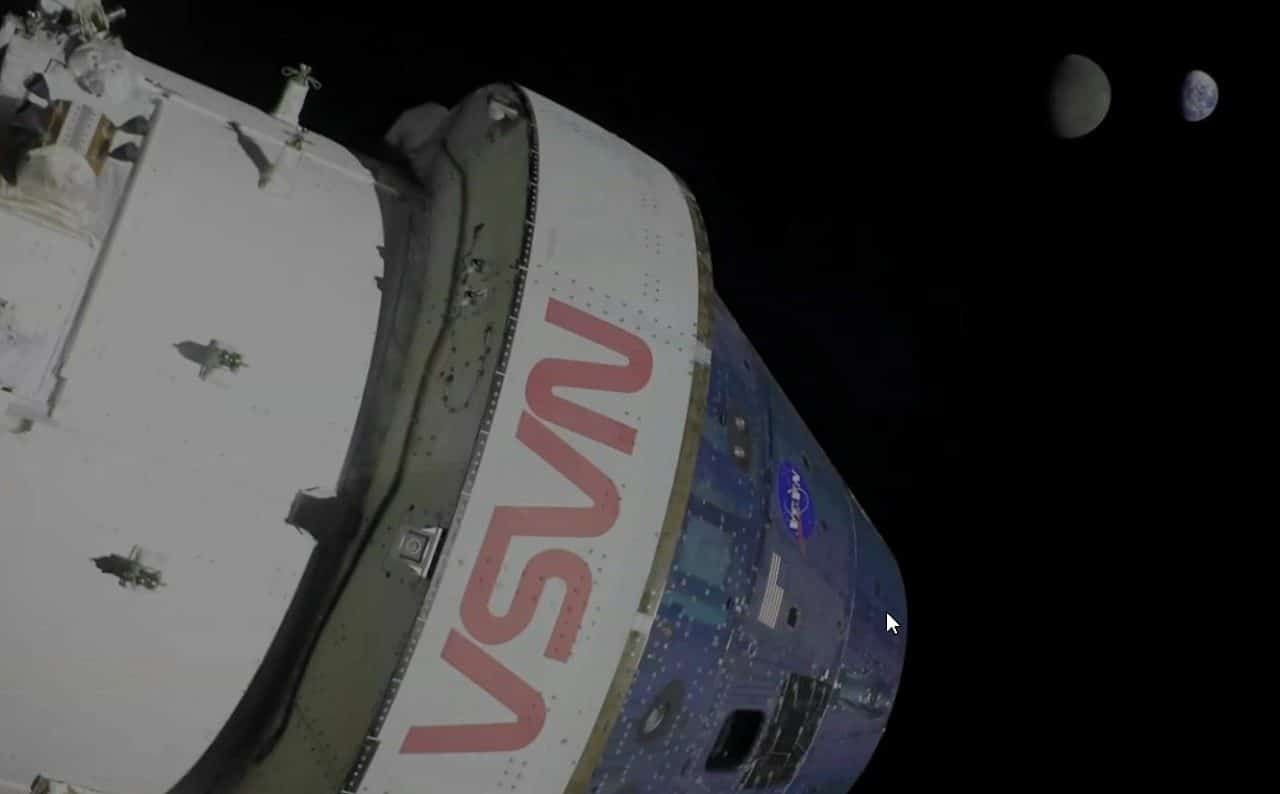
The Green Bank Telescope observatory monitored the trajectory of the Orion capsule around Lua with a precision unprecedented in the history of space exploration. The gigantic structure recorded the vehicle’s movement with an error of just 0.2 millimeters per second for five uninterrupted days. The equipment accompanied the spacecraft carrying four astronauts at a distance of more than 343 thousand kilometers from Terra. The operation required perfect alignment between ground systems and onboard transmitters.
The level of detail achieved surpassed the American space agency’s initial predictions. The data collected served as a fundamental external verification for the route calculations of the Artemis 2 mission. The applied technology demonstrated the ability of terrestrial infrastructure to support manned flights in deep space. Constant monitoring guarantees crew safety and allows immediate adjustments to the navigation route. Especialistas consider this advance a milestone for future interplanetary travel.
Amazing to see pictures of the Artemis II Orion spacecraft taken by the @GreenBankObserv radio telescope.
Green Bank has been a pioneer in radio astronomy since the 1950’s thanks to its 140-foot telescope, which remains the largest equatorially mounted telescope in the world.…
— Shelley Moore Capito (@SenCapito) May 18, 2026
Telescope’s Arquitetura eliminates signal blockages
The satellite dish responsible for tracking has imposing dimensions and weighs 7.7 million kilos. The equipment reaches 148 meters in height and occupies an area of approximately 0.9 hectares. Essas measurements make the observatory the largest land-based mobile structure in the world. The base can orient itself accurately to any visible point in the sky. The mechanical movement occurs smoothly so as not to compromise the calibration of the radio sensors.
The architectural design of the telescope represents a significant technical difference for data collection. The design does not use a central blocking tower. The absence of this physical obstacle expands the reception area for radio signals emitted from space. The installation is located in an electromagnetic silence zone in the state of Virgínia Ocidental. Geographic isolation reduces ground wave interference during scientific work. Protection against external noise is vital for picking up weak frequencies.
The sensitivity of the instruments impressed the researchers involved in the monitoring project. The facility manager, Anthony Remijan, compared the equipment’s capabilities to a car’s speedometer. The margin of error is equivalent to measuring the speed of a car with an accuracy of 0.0004 decimal places per hour. Exceptional accuracy makes it easier to identify complex molecules and track interplanetary vehicles. The calibration level achieved sets a new standard for modern radio astronomy.
Identificação visual reinforces crew safety
From the captured radio waves, the researchers were able to generate a visual representation of the Orion capsule. The end result shows a small white dot on a dark, grainy background. The vertical axis of the graph indicates the progressive distance of the vehicle in relation to the ground. The image has low optical resolution. The scientific value of the record lies in confirming telemetry. Converting invisible data into images makes it easier to analyze the ship’s behavior.
Scientist Will Armentrout presented the material to colleagues at the observatory and highlighted the relevance of the record. The white dot in pixels represented the capsule named by the crew as Integrity. The vehicle carried four specialists scheduled for the journey around Lua. The detection of such a small structure at great distances establishes a new safety parameter. Independent visual tracking creates an extra layer of redundancy for the mission.
Visual identification combined with numerical data proves the feasibility of tracking human lives in space. The method ensures that ground control teams know the exact location of the vehicle every fraction of a second. The agility to detect anomalies depends on fluid communication between the ship and the receiving antennas. Millimeter precision avoids deviations that could compromise the safe return of astronauts to the Earth’s atmosphere. Continuous monitoring eliminates blind spots during critical orbital maneuvers.
Institutional Cooperação Drives Aerospace Advancements
The success of tracking reinforces the importance of collaboration between different scientific institutions. Fundação Nacional of Ciência of Estados Unidos made their resources available to assist the mission of Nasa. Interinstitutional support optimizes the use of expensive equipment and maximizes research results. The private sector also observes technological advances with great interest. Joining forces accelerates the development of solutions to the challenges of space exploration.
Commercial companies planning space travel need robust communications systems. The observatory emerges as a strategic partner for future tourism and mining initiatives outside of Terra. Terrestrial infrastructure needs to keep up with the accelerated evolution of rockets and spacecraft. The development of new antennas ensures that the data flow supports increasingly distant missions. The ability to process information in real time is the foundation of the new space economy.
The observatory’s history of contributions includes other highly complex operations. The facility provided radar data during a planetary defense mission in 2022. The equipment monitored the impact of a probe against the asteroid Dimorphos. The success of that operation depended directly on the accurate reading of the change in the space rock’s trajectory. The versatility of the telescope allows its application on different fronts of contemporary astronomy.
The technical parameters of the current lunar observation involved specific deep tracking metrics:
- The exact distance of the spacecraft reached 343 thousand kilometers.
- The target of continuous monitoring was the manned vehicle Integrity.
- Data reading occurred uninterruptedly over five days.
- The system integrated motion telemetry with radio reception.
The consolidation of this information forms an essential database for aerospace engineers. The crossing of variables allows us to improve the design of future generations of communication antennas. Investments in ground technology are proving to be as vital as the development of the rockets themselves. Seamless communication is the link that keeps astronauts connected to the command center. The continuous improvement of terrestrial networks makes it possible to expand the human presence in the solar system.
Testes practices pave the way for human return to lunar soil
The Orion spacecraft’s journey is part of a larger program of exploration of the Terra natural satellite. The current expedition served as a practical test of life support systems under real conditions. The astronauts evaluated the capsule’s behavior in an environment of intense radiation and altered gravity. The crew directly observed the hidden face of Lua during the approach maneuver. The biometric data collected helps understand the physical impacts of prolonged travel in deep space.
The information captured by the telescope validates the performance of the thrusters and the autonomous navigation system. Fuel consumption and material wear are calculated from this precise telemetry. Planning the next stages of the program depends on the detailed analysis of every second of flight. The safety of future explorers begins at the testing drawing board. Aerospace engineering uses these metrics to correct failures before launching new missions.
The next phase of the project involves the physical return of humans to the lunar surface. The official schedule foresees the arrival of the first woman and the first black person on the satellite’s soil. The construction of a sustainable base on Lua will serve as a laboratory during extended missions. The final objective of this chain of technological development points to the exploration of the planet Marte. Humanity takes concrete steps to definitively establish itself beyond Earth’s orbit.





