Possible entry model of the PlayStation 6 faces hardware limitations to run in 4K
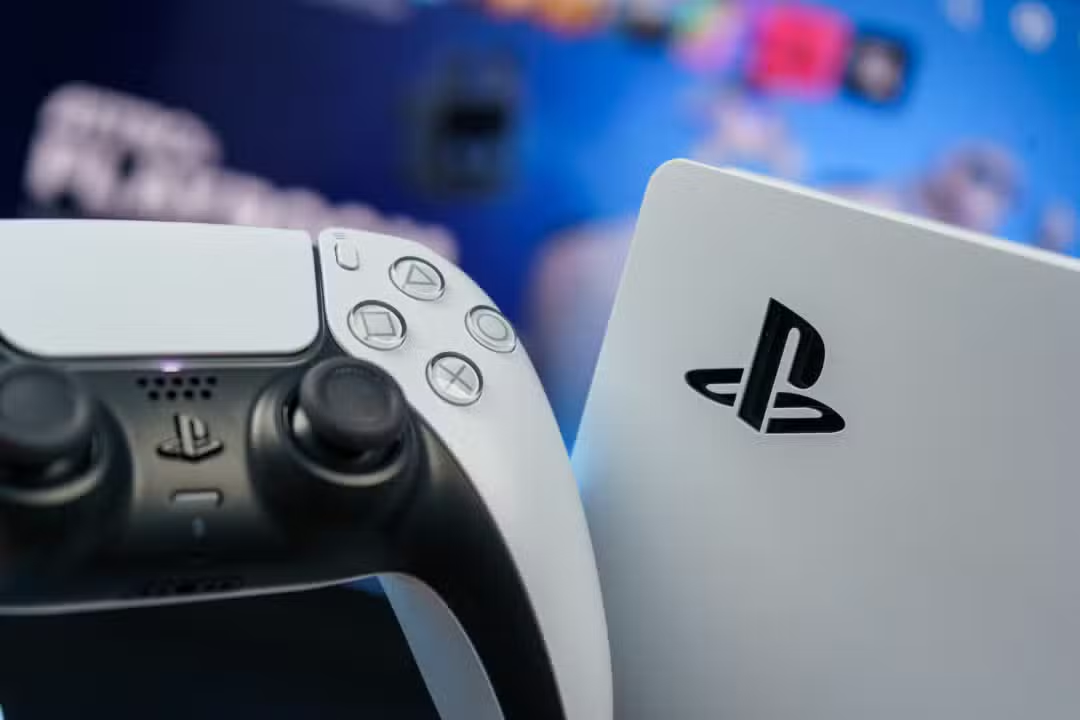
Especulações’s recent reports on the development of a cheaper version of the PlayStation 6 point to significant hurdles in the console’s engineering. Informações behind-the-scenes footage indicates that Sony evaluates the production costs of the new generation, but finds it difficult to adapt low-power components into desktop equipment. A fabricante busca opções para não afastar o público devido ao encarecimento global dos semicondutores.
The central debate involves the use of the Canis APU, a processor initially designed for a future portable device from the brand. Especialistas in hardware claim that moving this chip into a home environment would require a disproportionate effort from creative studios. The requirement to deliver high definition graphics on modern televisions contrasts sharply with the architecture focused on battery saving and smaller screens.

Portable Processor Limitações in Image Rendering
Informant KeplerL2, recognized for anticipating details about AMD architectures, detailed the scenario in technology communities. Ele explained that the mobile chip has very restricted power libraries. Essa feature prevents the component from reaching the frequencies necessary to sustain fluid frame rates on large screens. The hardware simply cannot operate at the thermal limit required by a traditional desktop console.
Transitioning from an image generated at 1080p to the 4K standard requires a massive leap in raw processing. Developers would need to multiply the number of pixels by up to 16 times to fill current displays. Esse process demands advanced image reconstruction tools such as PSSR3. The intensive use of these techniques consumes a considerable portion of the machine’s memory and computational power.
Applying these upscaling technologies to input hardware generates visual artifacts and compromises the overall sharpness of the game. Studios already face tight timelines to optimize titles on each generation’s flagship hardware. Introducing a hybrid platform with obvious bottlenecks would force teams to rewrite fundamental parts of the code. Isso would increase game development time and production costs.
The current market demands absolute consistency in visual delivery. A device with the PlayStation 6 seal that presents sudden drops in performance can quickly fragment the user base. The Japanese manufacturer seeks to avoid scenarios where the same game presents extreme disparities in quality within the same ecosystem. The standardization of experience has been a commercial pillar of the brand since previous generations.
Alternativa with modified version of the main chip
Diante of the technical unfeasibility of the Canis APU for the living room, engineers are evaluating alternative routes to make access to the new generation cheaper. The most likely solution involves modifying the Orion APU, the brain specifically designed for the beefier PlayStation 6 model. Essa maneuver is common in the technology industry and goes by the name “binning” on assembly lines.
Essa strategy consists of deactivating parts of the main processor to reduce the final manufacturing cost. The cut component would keep the base architecture intact, but would operate at more modest specifications. Projections indicate a configuration with six central processing cores and 16 graphics computing units. Performance would be lower than the premium model, but the programming language would remain identical.
Operating speed would suffer a reduction of close to 10% compared to the more expensive model. The system would have 24 GB of RAM operating on a 128-bit bus to guarantee data fluidity. The internal SSD storage capacity would also undergo severe cuts, dropping to 512 GB. The removal of the physical disc reader is another expected measure for this version.
- The decrease in the amount of RAM memory represents a relief of approximately 60 dollars in the production cost per unit.
- Using a simplified cooling system and a smaller motherboard shaves another 20 to 30 dollars off the assembly.
- The halving of SSD space helps position the product in a highly competitive retail price range.
Esses Surgical hardware cuts preserve full compatibility with Sony development tools. The internal structure remains the same as the main console, only the maximum performance ceiling changes. Programmers can scale graphics down much more easily than trying to extract unrealistic power from a mobile chip. Adaptation only requires adjustments to textures and shadows.



Dispositivo mobile as official gateway
The difficulty in making a cheap desktop console viable strengthens the role of Sony’s future portable in the market. The mobile device is expected to take its place as the definitive entry-level product for the PlayStation 6 generation. Ele will utilize the Canis APU in its native, controlled environment, where power efficiency shines and the built-in screen resolution masks graphical limitations.
The device will deliver high-quality graphics on its own screen, with the option of external connection to televisions. Preliminary Relatórios suggests that the laptop has superior rasterization and ray tracing capabilities to the Xbox Series S in specific scenarios. The simultaneous launch with the high-performance desktop console remains on analysts’ radar for the end of 2027.
The integration between the two formats simplifies direct communication with the end consumer. The player chooses between the maximum experience on the living room television or the flexibility to play anywhere with the laptop. The manufacturer eliminates the confusion of having two black boxes on the shelf with very different capacities. The strategy focuses on the clarity of the product catalog.
Focusing on just two distinct hardware profiles alleviates pressure on the global software industry. Developers create a high-performance profile for the Orion APU and an optimized mobility profile for the Canis APU. Essa clear division prevents constant rework and ensures releases arrive polished on both fronts. Targeted optimization drives superior visual results.
Impactos on the market and planning for the new generation
The debate over more affordable versions gains traction due to price estimates for the next generation of video games. Analistas from the technology sector projects that the main model of the PlayStation 6 will hit stores costing between 700 and 1000 dollars. Global inflation, logistical costs and rising silicon prices are putting pressure on the profit margins of all hardware manufacturers.
Sony maintains a policy of absolute secrecy regarding its ongoing engineering projects. The company historically reserves official architectural announcements for the months before the product arrives in stores. Current leaks reflect the normal stage of research and development. Múltiplos prototypes are tested, evaluated and often scrapped before the final design is approved.
The developer community follows manufacturers’ movements with increased attention. The definition of technical specifications dictates the scope of projects that are already being drafted for the next decade. The perfect balance between graphical innovation and commercial viability defines the long-term success of an entertainment platform. Estúdios need predictability to invest millions in new games.
The apparent abandonment of the idea of a table console equipped with a laptop chip demonstrates maturity in the brand’s engineering. The priority falls on the stability of the ecosystem and ease of programming for external partners. The market awaits the next steps from AMD and Sony in finalizing the components. Decisions made now will dictate the pace of digital entertainment in the coming years.
Veja Tambem em Latest News (EN)

Nintendo Switch 2 reaches 247,880 units sold in Japan, dominating the market from May 18th to 24th

Meta launches Plus subscriptions for Instagram, WhatsApp and Facebook; understand new features and prices

United States government signs treaty with Iran to stop nuclear plan and release funds

Solar eclipse of 2027 will have a maximum duration of 6 minutes; phenomenon has not been repeated in 157 years

Microsoft details Xbox Game Pass recovery with new partnerships and price reductions after initial impact

Francisco Cerundolo and Juan Manuel Cerundolo overcome opponents and reach an unprecedented stage for the family at Roland Garros
Details of OnePlus 8.8-inch OLED tablet emerge in leak, indicating premium Snapdragon chip

PlayStation 5 owners receive free demos of indie games without using PS Plus

Marine mammal jumps onto vessel during the Monterey Hoe Wa’a competition in California

Developer announces expansion of The Witcher 3 to 2027 and postpones launch of The Witcher 4

Astronomical phenomenon unites Blue Moon and Micromoon in the night sky during the night of May 31